
Islandmagee glamping appeal dismissed as proposal 'wouldn't be sympathetic to special characteristics of listed building'
The Planning Appeals Commission has dismissed an appeal against refusal by Mid and East Antrim Borough Council to approve a proposed holiday park of six glamping pods in Islandmagee.
The site is situated at the northern side of Gobbins Road, close to the junction with Middle Road.
“The main issue in this appeal was whether the appeal development would be acceptable in principle in the countryside and whether it would have a detrimental impact on the setting of a listed building”, the commissioner’s report stated.
Commissioner Kevin Gillespie said: “The site has frontage with Gobbins Road and to the rear it backs onto an agricultural laneway, known as Town Lane. There is a grade B1 listed vernacular thatched cottage along this lane which shares a boundary with the agricultural field in which the appeal proposal is located.”

The proposed development is for six two-person glamping pods which are positioned in a broadly circular formation around a pond. The site is to be accessed from Gobbins Road.
Each pod would comprise a bedroom, bathroom, kitchen/living area and an external decking area. A sensory garden is proposed plus a car park and amenity block. A proposed amenity building would comprise an office, amenity space, utility area, changing area, three bathrooms and a disabled shower.
The report stated: “The appellant indicates that the appeal development is intended to cater to the needs of individuals and families affected by Autism Spectrum Disorders (ADS) and particularly those with sensory needs.”
Policy states that a proposal for self-catering units in the countryside will be permitted if one or more new units are located within the grounds of an existing or approved hotel, self-catering complex, guest house or holiday park; or if a cluster of three or more new units are to be provided at or close to an existing or approved tourist amenity that is/will be a significant visitor attraction in its own right.
Primary Tourism
The report noted that policy also states the proposed self-catering development would be “required to be subsidiary in scale and ancillary to the primary tourism use of the site”. It said that the council contends the appeal development does not comply with either criterion.
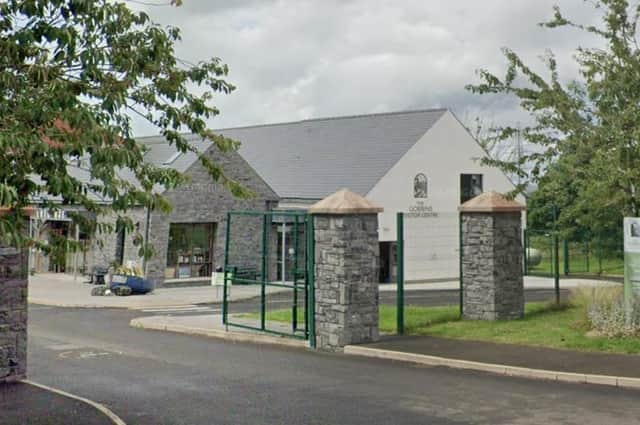
However, the commissioner indicated that the appellant disagrees and claims that the appeal development complies with criterion because the glamping pods would be provided close to the Gobbins Visitor Centre, which is “an existing and approved tourist amenity and a significant visitor attraction in its own right” and that the appeal development would be “subsidiary in scale and ancillary to the primary tourism use”.
He continued: “The appellant stated that the visitor centre functions as the sole access point to The Gobbins Cliff Path and the appeal development is sited close to it.
“In respect of visitor numbers, at the hearing, the appellant listed published data from sources such as the council’s website and Tourism NI which showed in 2019, some 33,000 persons visited the visitor centre and related Gobbins Path, in 2021 – 2023, the figure was 32,640 persons. In 2024/2025, the figure was some 33,000 persons.
“The council nevertheless argued that the building functions on a dual- purpose basis and that the cliff path is the attraction not the visitor centre.”
However, the commissioner said: “I am therefore satisfied that the visitor centre is a significant attraction in its own right. As such, the council’s concerns in this regard and the related concerns of third parties are not sustained.”
He went on to say that new development “should not dominate the listed building or detract from it in a way that diminishes the understanding and appreciation of the listed building”.
At the hearing, the Historic Environment Division: Historic Buildings representative and third parties raised concerns that the appeal development would “adversely impact on the setting of the listed building”, the report said.
“The objection centred on the fact that the listed building was located beyond and elevated above the appeal site. As such, the appeal development would appear in the foreground and would adversely affect the rural setting and visual appearance of the listed building,” it was stated.
The appellant said that she believed the appeal development would not “adversely affect the setting and visual appearance of the listed building”.
“From my on-site observations when looking in a north-easterly direction towards the thatched cottage from numbers 1, 3 and 5 Gobbins Road, the thatched cottage is clearly visible,” Mr Gillespie said.
“The appeal development would introduce an urban form of development into the foreground of this rural landscape. The proposed car park and amenity block with the pods on higher ground beyond would be between the viewer and the listed cottage. From this viewpoint, the appeal development would obscure views of the listed building and erode rural character.
“Overall, the proposed development would be a prominent feature which would obscure views of the listed building and negatively impact on its rural setting.”
“I conclude that the appeal development considered would result in the significant loss of key public views of the listed building negatively impacting on its setting,” Mr Gillespie said.
“Furthermore, given that it is a rare example of an exposed thatched vernacular building left in Northern Ireland within a rural setting, I attach significant weight to its rural setting.”
The Commissioner concluded:“Overall, the appeal development would not be sympathetic to the special characteristics of the listed building and its setting.”
Michelle Weir, Local Democracy Reporter