
These are the need to develop increasingly sustainable farming systems and the fact that the conveyor belt of new herbicide and fungicide chemistries has, effectively, stopped.
All of this is coming at a time when arable sector incomes remain under intense pressure.
Grain prices have been in the doldrums for the past three years while there is every prospect of input costs rising again in 2026.
Benchmarking has confirmed that profitability within production is governed by three very defined factors – final yield, crop nutrient applications and control of costs.
It is in this context that the principle of Integrated pest management (IPM) starts to take on a greater significance.
ADAS
Significantly, ADAS has released a new update to its IPM tool. The enhanced facility will be of specific interest to growers and crop advisors.
The tool provides specific guidance on the IPM control measures that are relevant to crop management and the particular pests, weeds and diseases that are a problem on farms.
Using the tool will also complete and record an IPM plan for crops.
Funded by the Department of Agriculture, Environment and Rural Affairs (Defra), the planning Tool has been used by over 2000 registered farmers, agronomists and advisors in the UK since 2023 to create over 5400 bespoke IPM cropping plans for free online.
Courtesy of the updates tool, improved functionality is provided with regard to a number of key crop management objectives.
These include the option to add information on the success of previous IPM control measures, thereby enhancing the ability to review the farm progress of IPM uptake.
Also featured is an improved layout of the summary and reporting function, which now includes all the information entered into the IPM plans by the user to create better IPM summaries.
Significantly, new general questions added for those who keep livestock.
There is also an ability to add land areas for each crop type entered into the IPM plans.
Mark Ramsden, IPM Principal Consultant at ADAS, commented: “Effective crop protection depends on making informed, evidencebased decisions, and the IPM Planning Tool helps growers do that.
“By guiding users towards integrated monitoring, thresholds and targeted interventions, users of the tool are supported to use pesticides only where and when they truly add value.
“By embedding IPM planning into routine decisionmaking, we not only improve the reliability of pest management today but also protect active ingredients, slow resistance development, and support the longterm sustainability of cropping systems and wider environmental health in the UK.”
The IPM tool was produced by crop protection and IPM specialists at ADAS and SRUC.
It links to guidance from AHDB and other independent sources. The development of the tool was funded by Defra as part of a test and trial project.
The principles associated with IPM will also be of direct interest arable farmers in Northern Ireland.
The science behind integrated pest management Integrated pest management
Meanwhile, the science behind IPM techniques continues to evolve.
For example, a Herbicide Resistance Weed Conservation Plan documents decisions by producers who agree to implement a system of conservation practices and IPM techniques.
It places an emphasis on herbicide use orientation in order to suppress herbicide resistant weeds and the potential of herbicide resistant weeds establishing again in the treated area.
This is achieved by the adoption of the following IPM strategies: prevention, avoidance, monitoring and suppression.
The approach will be implemented with the augmentation of one or more of the following key essential conservation practices: crop rotations, cover crops, and residue tillage
management practices.
Specifically, where weed control is concerned, the Department of Food, Environment and Rural Affairs (DEFRA) envisages a mix of three methods being used.
Physical control measures can include mechanical and had rogueing. Biological controls include the use of predatory species and bio pesticides.
However, if chemical pesticides are mandated, the minimum effective dose and application frequency should be adhered to with targeted applications used to minimise potential negative impacts.
Improved varietal disease resistance in wheat can be a game changer
The Agricultural and Horticultural Development Board (AHDB) has highlighted the role for wheat varieties with inherently improved resistance to disease.
The reality is that varieties with higher levels of disease resistance allow greater flexibility in fungicide programmes.
This includes the omission of sprays and the use of reduced doses, while still maintaining acceptable yield and quality.
But even with stronger disease resistance, AHDB analysts point out that environmental factors, disease pressures and crop management practices still influence the effectiveness of reduced-input strategies.
However, if varietal resistance is high, weather is not conducive to disease and fungicide applications are well-timed, lower-input approaches could help increase crop profitability.
In some cases, skipping T0 is feasible for resistant varieties, unless early disease pressure is high.
But T1 and T2 applications remain crucial, especially for septoria tritici and rust management.
Meanwhile, the need for a T3 spray depends on fusarium and brown rust risks, as well as market requirements.
So, what is the general economic result of this crop management approach?
In overall terms, the higher the disease resistance ratings score for a specific wheat variety, the lower the risk of unacceptable losses.
Wet and humid weather conditions tend to drive disease pressures, which may require a more robust fungicide programme.
Many farm-specific risk factors affect crop susceptibility, including cultivation, rotation, drilling date, regional disease trends and spraying capacity.
Numerous AHDB research projects have examined these factors in detail, with most focusing on septoria tritici.
One study showed how sowing dates influence recommended list disease ratings for this specific disease.
When sown early (average sowing date 22 September), the effective disease rating decreased by about 0.6. This is because crops were consistently associated with higher disease severity during the main yield-forming period.
Conversely, when sown late (average sowing date 20 October), the effective disease rating increased by 0.6.
This shows how a flexible, risk-based approach can underpin efforts to reduce fungicide inputs.
By sowing varieties with stronger disease resistance later in the autumn, there is scope to reduce the risk of a damaging septoria epidemic and enable the use of lower fungicide inputs.
The same study also examined other ways to tailor strategies to reduce disease pressure and fungicide use.
So, to sum up, using varietal resistance with other integrated pest management (IPM) approaches, such as monitoring, forecasting and agronomic practices, will help you protect crops.
It will also help growers reduce fungicide resistance risks.
Grain contamination
Meanwhile, the issue of grain contamination has become an interest of growing concern to arable producers throughout the UK.
Recent years have seen crop production challenged by a combination of growing pest resistance to herbicides and fungicides in tandem with the reduced availability of new crop management chemistries.
Grain contaminants are defined as those materials that make cereals unfit for either human or livestock consumption.
Contaminants can be physical, biological or chemical in nature. They can also be derived from a range of sources, including the environment plus storage and processing equipment.
The Agricultural and Horticultural Development Board (AHDB) hosted a recent webinar for grain specialist, during which a review of the organisation’s current work on contaminants monitoring was delivered.
The backdrop to the event was the growing evidence that biological contaminants will become a greater challenge for the grain sector as the impact of climate change continues to build momentum.
Related to this is a possible change in contaminant standards which may well become a reality in the wake of a future plant health agreement involving the UK and the EU.
AHDB’s grain contaminant survey is carried out in conjunction with a number of industry partners.
The work delivers an independent source of information regarding contaminant levels freshly harvested and stored UK grains. All the data generated through the survey is publicly available.
AHDB analysts recognise ergot as a specific challenge for the grain sector. It is a fungal pathogen that affects cereals.
There are several factors that can contribute to the risk of ergot.
These include cereal type, weather conditions at flowering plus the impact of grass margins and grass weeds: including
blackgrass.
Ergot is highly toxic when ingested by humans and livestock.
A recently completed review of ergot management practices has allowed AHDB to issue new guidance to help farmers reduce disease pressure, limit crop infection and keep clean grain clean.
The review work was undertaken by ADAS. A number of key ergot management prevention strategies are recommended.
Higher-impact interventions cover the strategic use of cultivations and drilling high-quality, clean seed (whether certified or home-saved). Cultivations should aim to bury ergots to at least 5 cm for at least one year.
Although ploughing is best for burial, any cultivation is more effective than direct drilling.
Growers are advised to include rotational adaptations, such as growing a non-cereal crop or a less susceptible cereal crop.
In order of decreasing susceptibility, these are: rye, triticale, wheat, barley and oats.
Although information on varietal risk is limited, higher risk is associated with varieties that are open-flowering, flower for longer or produce more late tillers.
Ergot affects a wide range of grass species, including blackgrass.
As blackgrass flowers earlier than cereals, it is a key target for management.
The higher-impact interventions are based on integrated weed management approaches to reduce grass-weed pressures.
Careful management of high-risk fields or areas, such as headlands, tramlines and grass margins will always be required.
It is particularly important to harvest infected areas separately and segregate contaminated grain from other grain.
Although it is possible to clean grain to some degree, it is not always completely effective, especially as some ergot fragments are extremely small.
The risk of ergot infection is especially high in wet seasons, so farmers should be be on the lookout for this pathogen when combining or buying grain for livestock feed.
Infected grain can make cattle seriously ill by constricting blood vessels and damaging the nervous system, resulting in seizures, loss of muscle strength, poor co-ordination and, in severe cases, death.
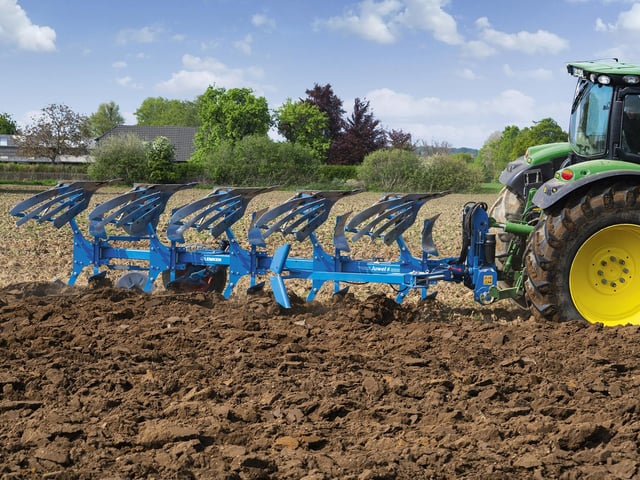
1. ploughing 2022.jpg
Ploughing is widely regarded to be at the heart of an effective integrated pest management programme. Photo: Submitted
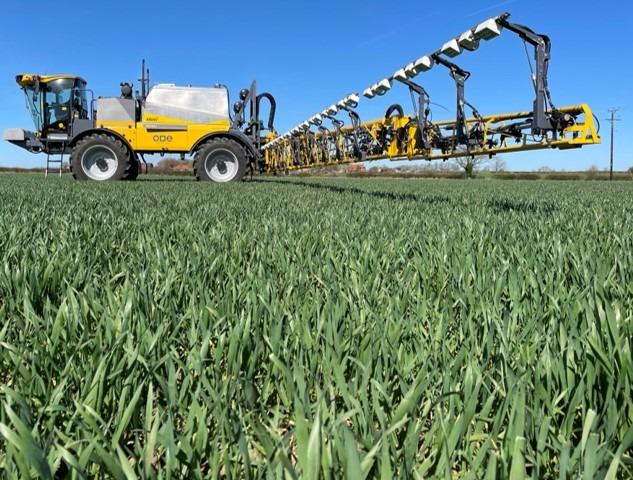
2. Chafer sprayer with cameras for blackgrass.jpg
Managing Blackgrass grass weed infestations is fast becoming a major challenge for arable farmers. Photo: Submitted