
Ballymoney academic spearheading new student nurse training initiative to spot violence against women and girls
A Ballymoney nursing academic is leading a new initiative at Queen’s University Belfast, aimed at raising awareness of domestic abuse and violence against women and girls.
Steph Craig, who is a lecturer at Queen’s University’s School of Nursing and Midwifery, says that the goal is to educate student nurses on how to support patients or colleagues who may be experiencing abuse.
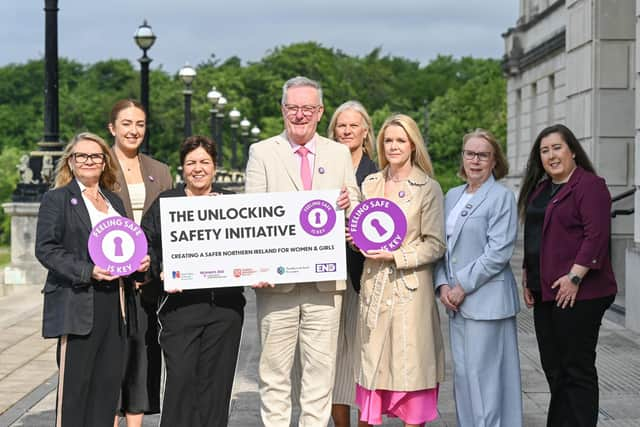
The Unlocking Safety Initiative is the first of its kind and is designed to equip future nurses with the skills to recognise signs of abuse, respond appropriately to disclosures, and connect individuals with the right support services.
Former Ballymoney High School and Dalriada student, Ms Craig graduated from Queen’s University in Belfast with a first class honours degree in 2021 and was later named as Student Nurse of the Year at the 2021 Student Nursing Times Awards.


Ms Craig, who then went on to complete a PhD at Queen’s University Belfast, said of the Unlocking Safety Initiative: “For me, education is the key to a safer Northern Ireland.
"Together with Johanna McMullan (Director of Education, School of Nursing and Midwifery), I am delighted to announce the launch of Unlocking the Safety, an educational initiative designed to equip student nurses with the knowledge and tools to identify and support those affected by domestic abuse and violence against women and girls.
"Thanks to the generous support of Professor Rita Devlin (Royal College of Nursing, Northern Ireland) and Sarah Mason MBE (CEO, Women’s Aid NI ), this project is set to make a meaningful impact. With backing from the Violence Against Women and Girls Strategy and the Change Fund via the Executive Office (TEO), we are able to bring this vision to life.”
During their three year period of study, student nurses will learn about awareness of domestic violence.
In Year 1 student nurses will learn to recognise signs of domestic abuse or violence against women and girls among patients or colleagues, understand its prevalence, and confront their own potential assumptions. Year 2 will concentrate on building on awareness, with students gaining practical skills for asking about abuse sensitively, listening with empathy, and offering reassurance and basic support.
In the third year of their studies, students will develop full confidence to advocate for patients, provide clear signposting to specialist services, and support through onward referral.
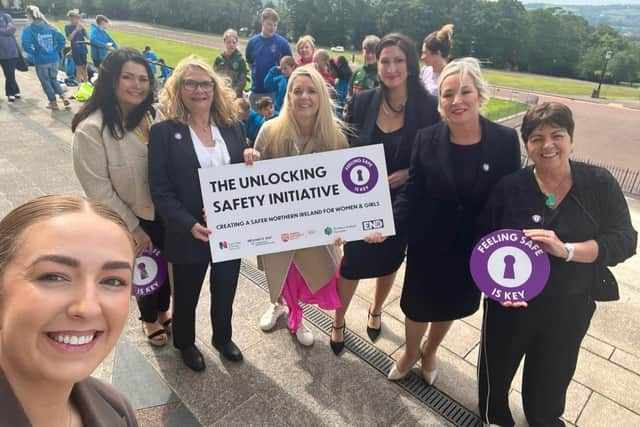
As a visual symbol of trust and support, student nurses will also wear a badge on their lanyards. It is hoped that the badge will come to be recognised across all Northern Ireland’s Health and Social Care (HSC) services. This badge will act as a signals to patients and staff that they can talk safely and confidentially.
Ms Craig said she was delighted to have the support of First Minister Michelle O’Neill, Deputy First Minister Emma Little-Pengelly and Health Minister Mike Nesbitt at the launch.
With the first awareness session taking place this Autumn, Ms Craig continued: “Northern Ireland continues to face alarmingly high rates of domestic abuse, higher even than England, Wales, Scotland, or the Republic of Ireland – earning it the grim label of a “gender‑based violence epidemic”.
"In 2024 alone, there were over 30,500 domestic abuse incidents, including more than 18,600 crimes, and seven domestic-abuse‑related murders (six victims were women). Educating our future nurses is therefore more urgent than ever.”