
Breastfeeding support helps the tiniest babies thrive at Ulster Hospital
When Steph Clarke’s son Rowan was born at just 27 weeks, she found herself beginning a journey she knew all too well.
Having already experienced a Neonatal admission with her first son, she understood the challenges ahead.
What she could not have prepared for was the reassurance, encouragement, and expert breastfeeding support that would help both her and Rowan through one of the most difficult times of their lives.
Steph's first son was born at 30 weeks and spent six weeks in the Neonatal Unit. When Rowan arrived even earlier at 27 weeks, he spent more than 10 weeks receiving specialist care.
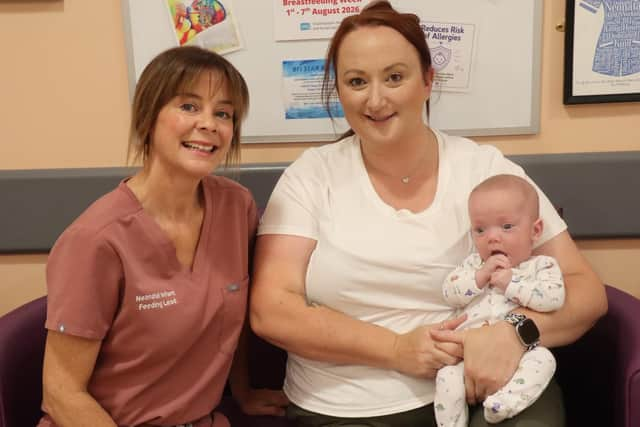

Steph explained: "Our two Neonatal journeys were very different because Rowan was born much earlier and was much sicker.
"Despite everything we were going through, the care, support and kindness we received from the staff was incredible. They really became part of our journey.
"I breastfed both of my boys. With Rowan, I expressed milk every two and a half hours from the very beginning.
"At first he was only taking tiny amounts through his feeding tube, but every drop mattered. By 32 weeks he was able to latch and continue breastfeeding.
"The support I received from the team was amazing. Whether it was three o'clock in the afternoon or three o'clock in the morning, there was always someone there to help and encourage me.
"I had Mastitis twice and also developed Sepsis and there were times when I could easily have given up.
"The staff supported me every step of the way and without them I do not think I would have been able to continue breastfeeding.”
South Eastern Trust, Neonatal Infant Feeding Lead, Cathy Flinn, works closely with families throughout their Neonatal journey.
Cathy stated: “Every family’s breastfeeding journey in Neonatal care is unique.
"Many parents expect to breastfeed their baby shortly after birth, but when a baby is born prematurely or is unwell, that journey may begin with expressing breastmilk while their baby grows and develops the skills needed to feed at the breast.
“We encourage mothers to begin expressing their breastmilk as soon as possible after birth, ideally within the first two hours.
"Early and frequent expressing helps establish their milk supply and enables babies to receive the benefits of their mother’s own milk from the earliest possible stage.
“In Neonatal care we often describe a mother‘s own milk as her baby’s first medicine, every drop counts!”
Support continues after discharge through a dedicated neonatal infant feeding follow-up service for families whose babies are receiving breastmilk at time of discharge. Cathy continued: “I contact families within the first week after discharge to offer ongoing feeding support and address any questions or concerns they may have.
"Depending on each families individual needs, support can be provided by telephone, text or through the face-to-face appointments.
"Going home after a Neonatal admission can feel daunting, so it is important that families know they are not alone.”
Steph added: “Breastfeeding was not just about feeding Rowan. It helped us bond through skin-to-skin contact and knowing he was receiving all the benefits of my breast milk gave me reassurance during such a difficult time.
" The staff laughed with us, cried with us and celebrated every milestone."