
Child feeds himself for first time thanks to Trust’s 'Ready, Steady, Play' programme
A young child has achieved a major milestone for the first time, feeding himself, thanks to the ‘Ready Steady Play’ programme developed by Occupational Therapists in the South Eastern Trust.
The programme is delivered across schools in the South Eastern Trust area where Occupational Therapists work with Primary School Teachers, Speech and Language Therapists, Classroom Assistants and parents to support children who may be experiencing difficulties with play, communication and motor development, helping them to develop these skills.
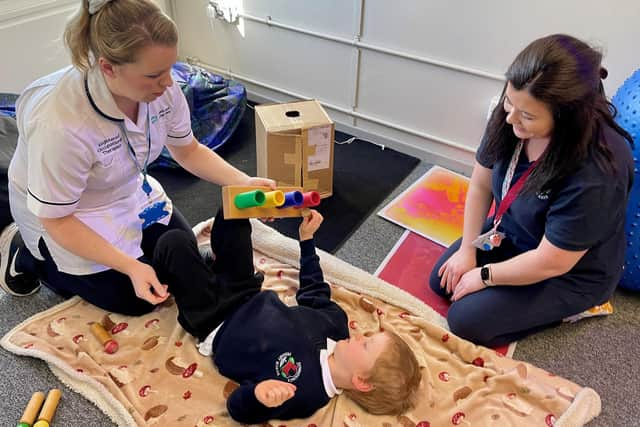
Therapists use a range of sensory and adult-led activities to encourage children to engage with toys and develop essential skills for learning and everyday life. Activities such as blanket sways, bubbles and sensory play help motivate children and build their confidence in engaging with toys.
The programme is already making a difference for children like Thomas.
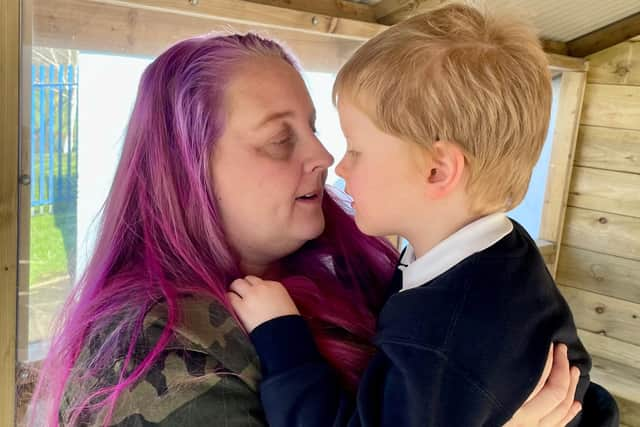

Thomas’ mum, Laura Geddis, explained that before joining the programme, her son found play very challenging.
“Thomas was not really engaging with everyday toys and the demand of toys seemed overwhelming for him,” she explained.
“The Ready Steady Play programme has really helped Thomas. He seems much more engaged with toys now and his eye contact has really improved.”
Laura recently celebrated a special milestone for her son. “We got a video yesterday showing Thomas lifting a spoon by himself and feeding himself for the first time ever,” she said. “Since he was born, we have always had to spoon feed him, so that was a really special moment for us. The programme has really helped with that.”
South Eastern Trust, Schools Lead & Occupational Therapist, Meghan Roberts-Barr, explained that play is a vital part of children’s development.
“As Occupational Therapists, we encourage engagement in everyday activities, which we call occupations,” she explained.
"For children, their main occupation is play, so that is a big focus for our Team.
“We use a range of sensory or adult-led activities and gradually encourage children to manipulate toys.
"We then grade the activity to make it just the right challenge for each child. If it is achievable for them, we slowly increase the difficulty which helps improve their motor and cognitive skills.”
Clinical Specialist Occupational Therapist, Sarah Alexander explained that when the Team first met Thomas, engaging with toys was extremely difficult for him.
“Thomas was pushing toys away and finding play very overwhelming and stressful,” she said.
“Once we identified sensory activities he enjoyed, such as deep pressure and blanket swings, we were able to introduce interaction with toys while also meeting his sensory needs. He responded really well to that and it allowed us to begin challenging his motor skills.
“Early intervention is a key part of the programme’s success.
"It is really important that we identify any challenges early.
"Sometimes children have not had enough opportunities to play with a range of toys that build strength, dexterity and motor skills.
"If we can support those skills early in a way that is motivating and enjoyable for the child, it can make a real difference,” she added.