
Heard the haemochromatosis song on TV? Coleraine woman shares her experience of living with the 'Celtic Curse'
An infectious TV advert with a potentially lifesaving message is bringing the condition of haemochromatosis to the airwaves across Northern Ireland – and one Coleraine woman has shared her story of living with the ‘Celtic Curse’.
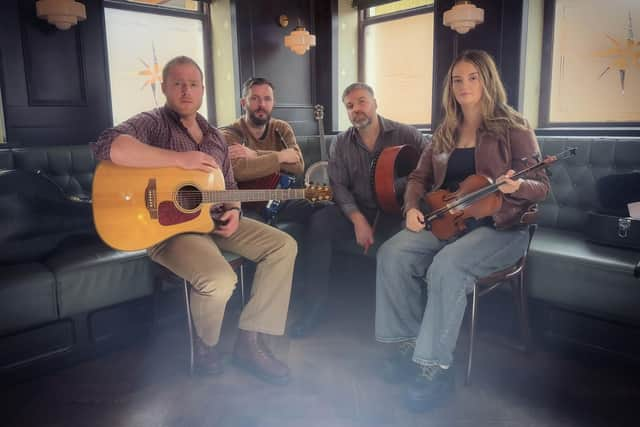
The song Hey Ho! Haemochromatosis is performed by The Celtic Curse, a specially assembled group of accomplished traditional musicians

fronted by Stephen Butler, who himself lives with the condition.
Featuring bodhrán, whistle, accordion, fiddle, guitar and banjo, the song turns one of medicine’s more difficult-to-pronounce words into an unforgettable chorus, encouraging listeners to recognise potential symptoms and understand their inherited risk.
The jingle has been airing on our screens since Monday, November 2, and will run throughout the month. The campaign highlights an estimate that one in ten people in Northern Ireland have genetic variants associated with an increased risk of iron overload.
Genetic haemochromatosis causes the body to absorb too much iron from food. Its association with Irish and Celtic ancestry has earned it the nickname ‘The Celtic Curse’.
Symptoms can include persistent fatigue, joint pain and brain fog. Without treatment, iron can accumulate in organs and tissues, potentially causing serious complications including liver cirrhosis, diabetes, heart disease and, in some cases, premature death.
Early diagnosis and treatment can prevent serious damage. Treatment usually involves regular blood removal, known as venesection. Some patients may also be eligible to donate blood. Anyone concerned about symptoms or family history should speak to their GP.
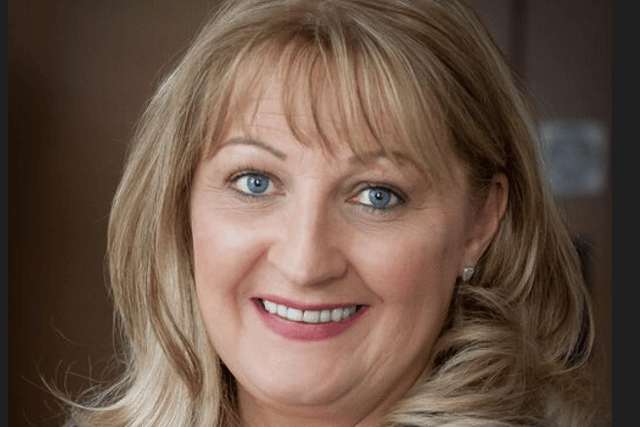
One Coleraine woman has shared her story of living with the Celtic Curse for 20 years – despite having her symptoms dismissed as being the menopause.
Aly Davidson had repeatedly sought medical help for chronic fatigue, painful joints and brain fog.
"My medical records document those consultations, yet nobody thought to investigate genetic haemochromatosis,” she said.
"Instead, I underwent years of investigations, including uncomfortable and invasive colonoscopies and biopsies, with the medical focus frequently on ruling out cancer. When those investigations failed to explain my symptoms, I was often told they were probably menopausal or related to depression.

"Yet I was otherwise a happy, fulfilled woman who knew something was physically wrong.
"How many other women are being told that exhaustion, joint pain and brain fog are simply part of perimenopause or getting older, when something else could be happening?
"Meanwhile, my health deteriorated considerably. I developed heart failure and non-alcoholic fatty liver disease, despite being virtually teetotal. Pain and exhaustion increasingly restricted my physical activity. Brain fog affected my professional work and academic studies.
"My weight increased, not only because painful joints had drastically reduced my activity levels, but because I felt my exhausted body was constantly screaming for quick energy from sugary foods. It became a difficult cycle of exhaustion, reduced movement and weight gain.
"I have recently been told that I am now in the pre-diabetes stage, another worrying development given that diabetes is a recognised potential complication of haemochromatosis. I am actively trying to address this while there is still an opportunity to reduce my risk of developing type 2 diabetes.
“I cannot help wondering whether earlier diagnosis and treatment might have helped me avoid reaching this stage. Eventually, I retired on grounds of ill health, closed my business and lost my income.
"It wasn’t until 2024 that my cardiologist considered haemochromatosis and ordered genetic testing. The result confirmed that I was homozygous for the C282Y variant. After 20 years, I finally had an answer.
"Since beginning regular venesection treatment and reaching maintenance iron levels, my fatigue has lessened and my joint pain has eased somewhat. I now appreciate the importance of early diagnosis and treatment in preventing potentially serious complications.
"But there is another aspect of haemochromatosis that I believe deserves far greater public attention. A diagnosis of hereditary haemochromatosis isn’t just about one person. It’s potentially about an entire family.
"When one person is diagnosed, their biological relatives may also carry the genetic variants or be at risk of developing iron overload. My diagnosis has made me look differently at my own family’s medical history, including the loss of my sister to pancreatic cancer and my mother’s heart attack.
"I cannot say haemochromatosis was involved, but I now wonder whether anyone ever considered it. I was born in Northern Ireland but spent approximately 40 years living in England, where I experienced those two decades of unexplained symptoms.
"Perhaps the condition’s historical association with Irish ancestry was less immediately apparent to the doctors treating me there. Having returned to Northern Ireland, I feel fortunate to be living somewhere with a strong connection to haemochromatosis awareness. I hope that connection encourages more people, and their doctors, to consider the condition earlier.
"I don’t want my story to be about blaming doctors or dwelling on what might have been. I want it to help others avoid the same experience. My message is particularly important for women and families.
"To women whose persistent fatigue, joint pain or brain fog is being attributed to menopause, I would say: menopause may well be part of the explanation, but please don’t assume it must be the only one. Ask your GP whether haemochromatosis should be investigated.
"And to anyone with a family history of haemochromatosis: please tell your GP. An inherited condition can affect more than one generation, and appropriate screening could make an enormous difference.
"If my story encourages another woman to ask one more question, or another family to seek testing, perhaps someone else won’t have to lose those years.
The sooner we recognise the possibility of haemochromatosis and raise it with our GP, the sooner it can be appropriately investigated, confirmed or ruled out."