
Lisburn woman stresses the importance of spotting the signs of diabetes as early as possible
A young Lisburn woman has spoken out to share her story of living with childhood diabetes.
Ellie Tennyson, who is now 21, has been living with Type 1 Diabetes since she was just 12 years old.
Ellie’s journey began in May 2016, when she started experiencing extreme fatigue, increased thirst, frequent urination and unexplained weight loss.
At first, she thought it was due to playing football and being fit, until she suddenly became very unwell and was admitted to hospital, where she was diagnosed with Type 1 Diabetes.
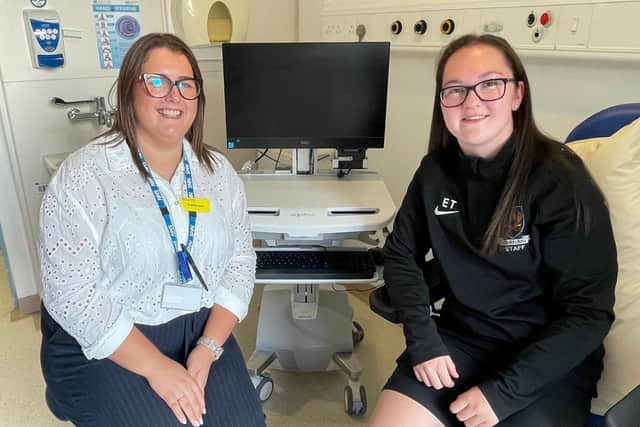

“It was quite a shock,” Ellie admitted. “I had never expected it. I was not really educated about Diabetes and thought it was just down to sport. But then all these symptoms came at once after gradually building up for a long time, it was a big shock.”
Now, nearly a decade later, Ellie is in control of her condition. “My Diabetes is manageable,” she continued. “It is about not letting it control you, you control it! I play sport four times a week and while it is hard and every day is different, it is manageable.”
Ellie uses an Omnipod, a tubeless insulin pump, which she controls via her smartphone.
“I enter my carbs and it calculates and delivers my insulin levels,” she explained. “My diet is balanced with fruit, vegetables, carbs, low sugar, low fat, everything in moderation. I would not be where I am without the Omnipod. It is hard to calculate everything manually, but this makes it so much easier.”
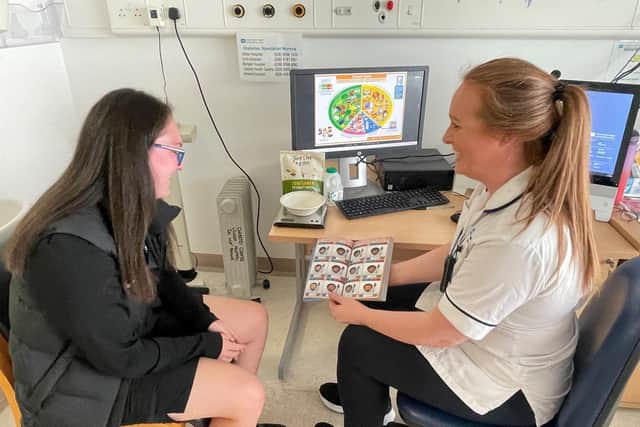
Having transitioned from the Paediatric to the Adult Diabetes Service, Ellie highlights the excellent support she has received throughout.
She added: “The support has been brilliant from childhood to adulthood, they are only ever a phone call away.
"During appointments, I can speak to a Doctor, Dietician, or whatever I need. I feel much more informed now. They are always introducing the best technology to help manage my condition.”
South Eastern Trust, Diabetes Young Adult Transition Co-ordinator, Catherine Harvey explained: “Type 1 Diabetes is an autoimmune condition where the body stops producing insulin, so insulin therapy is essential.
"There are four main symptoms of Diabetes that we look out for, running to the toilet, being thirsty, losing weight and being really tired.
"We diagnose by checking blood sugars and HBA1C levels, which show average blood glucose over the past three months.”
Catherine supports young people as they move from paediatric to adult services through a dedicated monthly Transition Clinic, which takes a multi-disciplinary approach involving both adult and paediatric teams.
“Our goal is to ensure that every young person feels supported,” she continued. “We have helplines and rapid access clinics to help them manage their condition and know who to turn to if they need help.
“Every day, those with the condition face decisions about their diet and insulin.
"Friends and family need to understand what it means to live with Diabetes, so they can offer support.
"We want young people to live well with Diabetes and know we are here to help them every step of the way.”
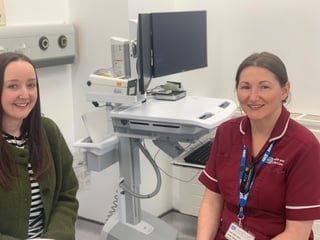
Ellie added: “It is so important to raise awareness, especially for young children and adults.
"Early diagnosis makes a huge difference.
"Diabetes is manageable.
"It is hard, but you will get through it and support is always there.”