
Roisin Scullion shares her experiences of 'Befriending' people in need in Magherafelt for over 25 years
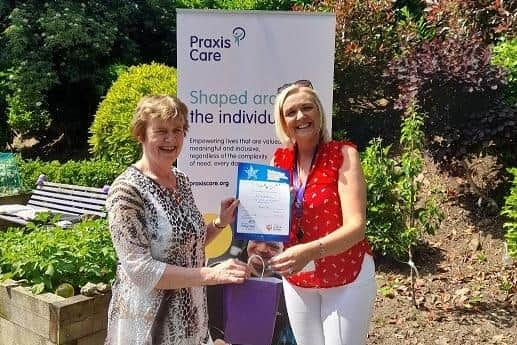
For more than 25 years Roisin Scullion has been a befriender for people with physical and mental health disabilities in the Magherafelt area.
As National ‘Befriending’ week (November 1-7) takes place, Roisin has been sharing her experiences and the differences befriending can make to some people.
This week also marks a special milestone for Praxis Care, a leading social care charity, which started the first befriending service in Northern Ireland 40 years ago.
Over the years, Praxis Care’s befriending program has grown into a lifeline for many, offering emotional support and companionship to those in need.

Tell us Roisin a bit about yourself and how long you have been volunteering for?
My name is Roisin Scullion and I turned 60 this year. I began volunteering with Praxis Care 25 years ago, when my daughter started primary school, really just as something to do. I had seen an advertisement in a local bulletin for my church and I thought it would be worth trying. The training provided by Praxis Care was brilliant, I really enjoyed it, and I’ve been volunteering with the charity ever since.
What drew you to befriending?
I just thought it would be nice to give something back. I used to work in a hospital and I would have seen patients with no visitors. I felt sorry for them. Then I thought ‘maybe this is something I could do – visit or spend time with somebody who was on their own’.
What does a typical day look like for you when befriending?
I meet up regularly with people who may have mental health or other challenges, and we would go on trips together, go for coffee together, have a laugh, or just chat on the phone – some of the women I’ve befriended weren’t comfortable leaving the house so I would come to them, others have loved getting out and about. I usually give half an hour of my time a week, so it’s not a lot, but you can commit to whatever suits you best. The people I visit just enjoy the company and a chat.
Are there any memorable experiences that stick out in your mind?
Yes! There was one lady who needed to tax her car, and I took her to get it sorted but she had brought the wrong details with her. She was so annoyed! I said ‘its ok, we’ll get it sorted.’ She mentioned to me afterward that I had really help calm her down. She said ‘if I had of went there myself I would have broken down and cried.’ Another person I’ve befriended told me how lovely it is to have someone independent from family to talk to about her problems.
What personal benefits have you seen from volunteering?
You really feel as though you are doing somebody good, and that gives you a good feeling. It’s also kept me involved after stopping work. I’ve met a lot of friends through befriending, other volunteers, the leaders at Praxis Group – there are always meet-ups and social gatherings. You get quite close to the people you befriend too, we share stories together and they are just as interested in hearing about what is happening in my life. They become a good friend to you as well. I’ve learnt a lot. I find you really do learn a lot from others. One lady I befriended was very intelligent – she shared lots of her life experiences with me. Hearing about others’ worries helps me to reflect on my own concerns – there are things I used to worry about that I don’t anymore. It puts things into perspective. I think the training Praxis Care provides to new befrienders is great too – it really helped me to feel more confident in myself. I would have been a very quiet person. I find it easier to talk to people now.
Has your perception of mental health changed since you started volunteering?
Oh definitely, you have a different outlook. I don’t judge people as quickly. When I used to see a child cry or misbehave in public I’d think ‘would the parent do something?’ Now I say to myself ‘no, you don’t know what is going on with that person’. I’d also consider going over to offer help or assistance.
How does the process work of matching you to a person?
Praxis Care notifies me when there is someone who would like a befriender who they feel would be a good fit with me. We then meet together to see if it would be a good fit. If the person is happy with the fit then we start meeting regularly.
Praxis also reviews the match with the supported person and I every six weeks. You remain matched with the same person unless their needs or circumstances change. I have befriended three women in my 25 years; all eventually went into nursing homes or other care facilities.
What advice would you give to people considering becoming a befriender?
When you are giving to someone else, you get just as much out of it. Don’t let people put you off giving it a go. When I first told my family I was going to volunteer they said ‘oh you’re not cut out for that’. People try to put you off. You have to be caring, and be there for that person, but I get a lot of good out of it. When I first signed up to become I befriender I thought ‘I don’t know what’s ahead of me’, but I just seemed to slot in. I haven’t looked back.
For more information on how to become a befriender with Praxis Care, visit www.praxiscare.org