
The survey, the first in half a century, will be led by Professor Graeme Warren of the School of Archaeology, University College Dublin.
Using a variety of non-intrusive methods, Professor Warren and his team will possibly be able to add to the Mountsandel story, furthering understanding of the site of the earliest known settlement in Ireland.
Dredging of the Lower Bann in the 1930s uncovered artefacts including the famous Bann Disc near Loughan Island, as well as more than 130 rare bone implements discovered near the Cutts. Believed to date from 7,000–9,000 years ago, the bone points may have been used in fish traps made from hazel rods.
The dredging operations of the 1930s were monitored by Andrew McLean May, a keen amateur archaeologist. McLean May came from his native Scotland to Northern Ireland to work for the newly established Department of Agriculture in 1922. From his base in Coleraine, he had the opportunity to explore historical finds unearthed by ploughing on farms and building works.
Andrew McLean May recognised the potential of the site at Mountsandel when a small landslip on a steep precipice at the side of the river exposed an abundance of worked flints. This led to a small excavation in the spring of 1959, with a further excavation in 1968.
It was during excavations on the river side of Mountsandel Fort in 1972 that numerous flints and an area of charcoal-stained soil was noticed in a ploughed field close to the fort.
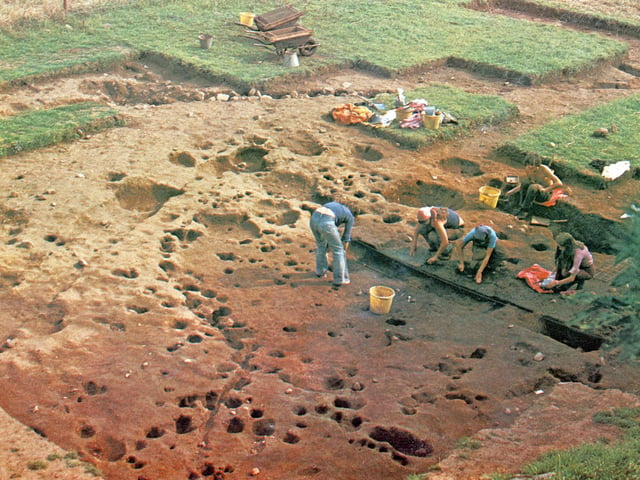
From this discovery followed the 1973 excavations by Peter Woodman and his team which led to one of the most important archaeological discoveries in Ireland.
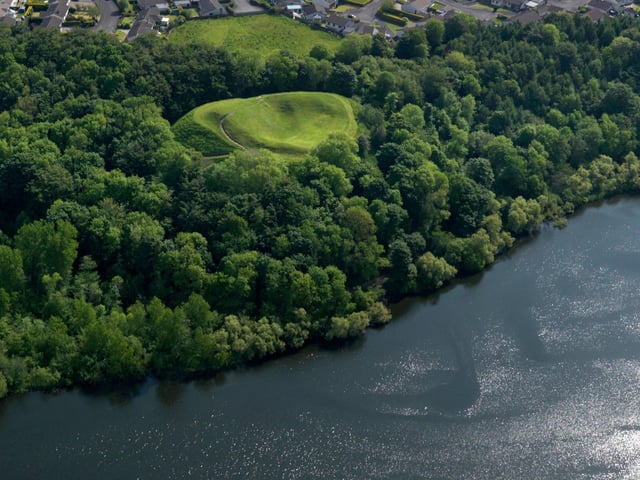
Woodman described Mountsandel as “the cradle of civilisation in Ireland.”
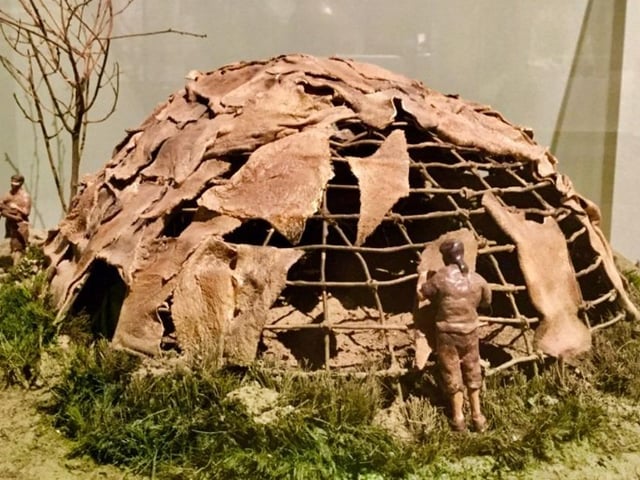
The excavations, in advance of a proposed housing development, uncovered evidence of a settlement site dating back nearly 10,000 years. The Mountsandel site, whilst not occupied all year round, is thought to have been home for a considerable part of the year.
Many of the tools found at Mountsandel were crafted from flint, which was ideally suited for arrowheads and blades, wood and bone.
The dig site at Mountsandel, which came into public ownership in 2022, has remained undeveloped since the archaeologists left nearly 50 years ago, with the planned archaeological survey, being the first archaeological activity since that time.
Causeway Coast and Glens Museum Services is to host an information session on Monday, May 25, ahead of the archaeological survey.
Artefacts from previous excavations at Mountsandel will be on display at the event. The information session will be held in Coleraine History Hub, the Diamond Centre, Coleraine from 2-6pm.
For further information email [email protected] or telephone 028 2766 0230.
1. NEWS
In 1973, archaeologist Peter Woodman described Mountsandel as “the cradle of civilisation in Ireland.” CREDIT CCGBC Photo: CCGBC
2. NEWS
A representation of a Mesolithic hut. CREDIT CCGBC Photo: CCGBC
3. NEWS
Aerial view of Mountsandel showing the site of the 1970s archaeological excavations in the undeveloped ground beside the Fort. CREDIT CCGBC Photo: CCGBC