
Martin McCauley: Man accused of murdering three police officers at Kinnego Embankment has bail conditions altered
One of the so-called Columbia three, now charged with the murder of three RUC officers at Kinnego Embankment more than 40 years ago, has had his “onerous” bail conditions varied.
Craigavon Magistrates Court heard that since January this year, Martin McCauley has been reporting to his local Garda station twice a day, morning and evening, as well as doing a near 200-mile round trip to report to Newry PSNI once a week.
Lodging an application to have those reporting restrictions relaxed, defence counsel Andrew Moriarity emphasised that since the conditions were imposed in January, “there has been complete and utter compliance”.
He also revealed that recently the health of McCauley’s wife has deteriorated, putting extra caring responsibilities on the defendant.
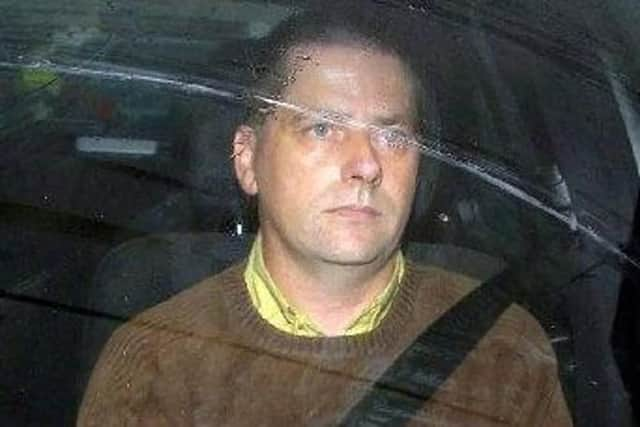

McCauley, 62, formerly of Lurgan and now with an address in Naas, Co Kildare, is charged with the murders of RUC officers Sergeant Sean Quinn and Constables Paul Hamilton and Allan McCloy on October 27,1982.
The three officers were in an unmarked car on Kinnego Embankment when a 200lb bomb was detonated remotely by way of a command wire.
Responsibility for the explosion, which left a 3.5m deep crater in the road, was later claimed by the IRA.
McCauley, one of three men arrested at Bogota International Airport in August 2001 for allegedly training FARC rebels, was extradited from the Republic of Ireland earlier this year and the court has heard that he denies the offences.
During a fiercely contested bail application when McCauley first appeared in court, a prosecution lawyer said police believe they can link him to the scene of the command wire by forensic evidence.
Despite police objections that McCauley posed a risk of flight and of committing further offences given the charges which arose in Columbia, he was granted bail but only freed after £100,000 in cash sureties had been lodged with the court.
In court on Friday, Mr Moriarty mentioned the complexities of the case including the disclosure of 56 boxes of documents from the Stalker / Sampson, shoot-to-kill enquiry.
He contended that it will “take months, rather than weeks” for the PPS to go through that so it could be into next year before the case is returned to the Crown Court.
A detective sergeant said, from the PSNI’s point of view, the reporting conditions were necessary so that the police can monitor where McCauley is.
He reminded the court that McCauley fought extradition proceedings before he was forced back to Northern Ireland so if the reporting conditions were removed and he stayed in the Republic, “costly” extradition proceedings would have to be recommenced.
District Judge Michael Ranaghan said it was accepted all round that the bail conditions are onerous and that McCauley had been complying with all of his bail conditions.
He said it was also clear that the case “will be remaining in my lists” for a lengthy period and the health of McCauley’s wife “has become more pressing”.
Judge Ranaghan said while he would vary bail conditions, it would only be to remove the daily evening signing condition at Naas station.
He said while it was a burden for McCauley to have to travel to Newry to sign at weekends, he believed it was a necessary condition, as was reporting to Garda every morning.
The case was adjourned to October 3.