
Co Tyrone man charged following public protests about fuel prices pleads not guilty to charge of obstructing road
A man charged following public protests about the price of fuel has entered a not guilty plea to a charge that he obstructed a road.
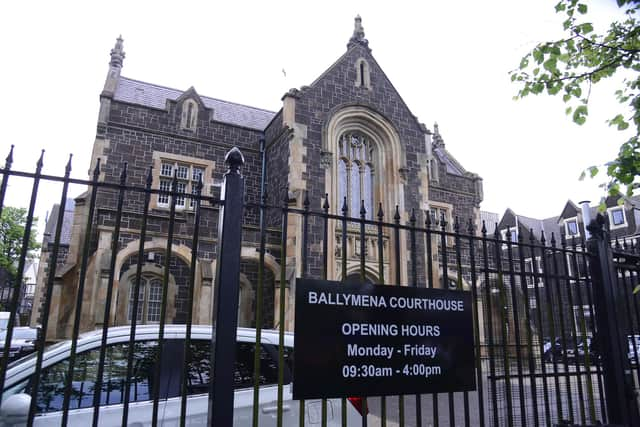
Antrim Magistrates Court, sitting in Ballymena, was told the charge is a "fine only" offence.
The charge faced by Damien John Neeson (50), of Ballynagilly Road near Cookstown, is that on April 14 this year at Moneynick Road, Toome, 'without lawful authority or reasonable excuse, intentionally or negligently obstructed the free passage along a road contrary to Article 88 of the Roads (Northern Ireland) Order 1993'.
On April 14 there had been a number of protests at various locations in Northern Ireland about the price of fuel.

A defence barrister told the court: "This was a protest with a few thousand people present."
He said representations are being made to prosecutors about the case and "we are asking for an alternative resolution". The case has been adjourned to October 6.
A PSNI press release on April 14 said: 'A number of protests, involving slow moving vehicles, took place across Northern Ireland today, Tuesday 14 April. Areas affected included the Sydenham Bypass, Westlink, M2, A1, A4 and A5. The A6 at Toome was also blocked by protesters for a period of time.
'A proportionate policing response was implemented to ensure public safety and to help minimise disruption to the wider community. During the policing operation the drivers of a number of vehicles were issued with Fixed Penalty Notices for road traffic offences and a number of other persons were cautioned for public order offences.
'Chief Superintendent Norman Haslett said: “Today’s policing operation was designed to minimise disruption to the strategic road network, maintain business as usual at critical infrastructure and to prevent escalation and prolonged disruption.
“The right to freedom of speech and freedom of assembly are fundamental human rights which are protected in law and allow individuals to engage in peaceful protest. However, these rights are balanced by the need to uphold the rights of others, protect public health and safety, minimise disruption to normal life and by the need to prevent and detect crime.
“An evidence-gathering operation was in place and we will now review the footage gathered in order to consider further prosecution for any potential offences".'