
Antrim and Newtownabbey: best bin system debate as council aligns itself to Welsh model with 'second best recycling rates in the world'
Antrim and Newtownabbey Borough Council has entered into a debate over which household recycling system is the best after the issue was raised at a meeting of a neighbouring council.
Speaking in the chamber at Mossley Mill at a recent meeting, Antrim DUP Councillor Paul Dunlop highlighted differing approaches.
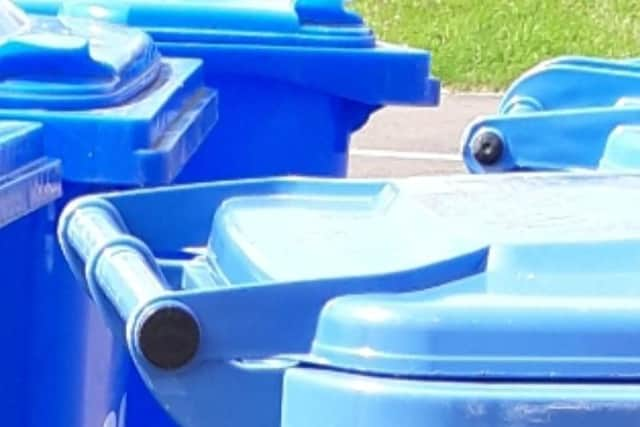
Antrim and Newtownabbey Borough Council has just completed roll-out of a triple stack wheelie box system to 25,000 households in the Antrim, Randalstown, Crumlin, Templepatrick and Toome areas after ditching the blue bin system, while Mid and East Antrim Borough Council is planning to ditch the box system in favour of mixed recycling in blue bins in Carrickfergus and Ballymena areas alongside Larne where the system is already in operation.
A public question to Mid and East Antrim Borough Council submitted in advance of last month’s meeting queried which system is best.
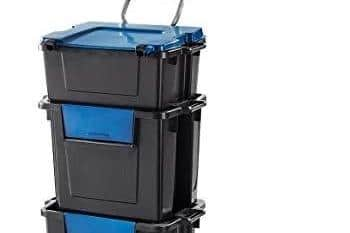

Antrim and Newtownabbey was the first council in Northern Ireland to adopt the wheelie-box system when it was introduced to 37,000 households in Newtownabbey in 2016 allowing residents to sort recyclables (glass, plastics/cans, paper/card) at the kerbside into separate, stackable boxes.
However, the local authority has demanded a meeting with contractor Bryson Recycling amid complaints from residents over missed bin collections across the borough.
A director told members that policy guidance given to councils has been to look at increasing quantity of recycling and quality of recycling, and “kerbside sort” would deliver the highest quality of recyclables.
He explained that in terms of recycling rates in the UK, Antrim and Newtownabbey Borough Council “aligns itself to the Welsh model”. “Welsh authorities have the second best recycling rates in the world. That is the lead we are following,” he said.
Statutory Targets
The Welsh Government’s Collections Blueprint 2025 says: “Prior to devolution in 1999, Wales was one of the world’s worst recyclers, recycling around 5% of municipal waste. This has risen to a rate of 66.6% in 2023-2024, with Welsh Government having set statutory targets for local authorities to recycle a minimum of 64% of waste by 2019-20, and 70% of waste by 2024-25.
“When it comes to recycling performance, Wales is first in the UK, and now second in the world, behind only Austria.”
The Collections Blueprint says that a minimum service requires separate presentation at the kerbside under a ‘kerbside sort’ system. Materials to be collected include paper and cardboard; plastic bottles, pots, tubs and trays; metal tins, cans, aerosols, and foil; cartons and other paper-based composite products; and glass jars and bottles. There should be a weekly kerbside collection of dry recyclables.
A weekly collection of separate food waste with kitchen caddies and lockable kerbside collection containers should be provided. Food waste liners should be provided to residents for free.
It also says that with “increased recycling and less material going into disposal, significantly less residual capacity is needed” stating that collection once every three to four weeks is “sufficient and more frequent collection should be avoided” with residual waste capacity equivalent to 60 litres, or less, per week is “sufficient for the standard service”.
Cardiff Council provides householders with glass and garden bins as well as a black bin for general waste that cannot be recycled, a food waste caddy, a blue sack for paper and cardboard and a red sack for plastic and cans.
Every household that uses black bags for general waste instead of wheeled bins in the city has received two 70-litre “seagull sacks”, so called by Cardiff Council which says the seagull proof sacks are the equivalent of a 140-litre wheeled bin and a “simple but effective solution to stop birds and pests from tearing open rubbish bags and scattering litter across our streets”.
Swansea Council provides green bags for glass, paper, cardboard and cans, pink bags for plastic such as milk bottles and yoghurt pots, green bin for a weekly food collection, white bags for garden waste and black bags for non-recyclable waste with a maximum of three collected every fortnight.
At last month’s meeting, Mid and East Antrim Borough Council’s interim chief executive Valerie Watts explained the local authority’s decision to move to the blue bin mixed recycling system in 2026/27.
She said: “Before elected members resolved to move to a co-mingled recycling collection system, officers researched which councils had the highest recycling rate in Northern Ireland and also in England.
“Consequently, the highest performing councils collect their recycling waste in a single bin co-mingled system and based on research undertaken, the council is confident that the only option for achieving the government’s recycling targets was to adopt the blue bin.
“The council is unable to comment on whether Antrim and Newtownabbey or Mid and East Antrim Council is right – Antrim and Newtownabbey Council will have had to make their decision based on affordability, acceptability and expected outcome.”
Michelle Weir, Local Democracy Reporter