
Deceased swans removed from Carrickfergus Mill Ponds
The Department for Agriculture, the Environment and Rural Affairs (DAERA) has advised people to not pick up or touch sick, dying or dead birds, and to keep pets away from them.
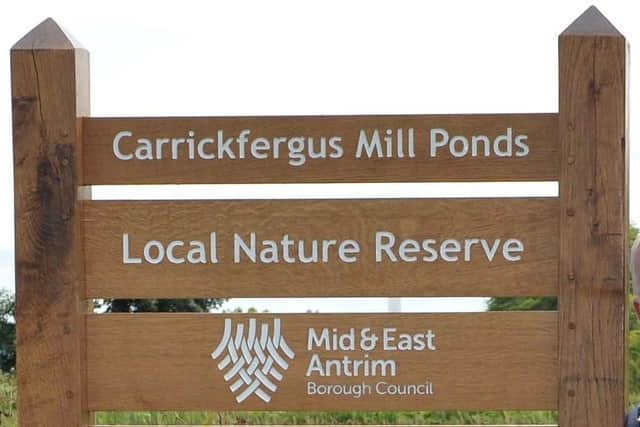
It comes after Mid and East Antrim Borough Council removed two dead swans from Carrickfergus Mill Ponds on December 3.
“Council contacted [the Department] to notify them of the dead birds and they were disposed of accordingly,” a MEABC spokesperson said. “A further swan was put to sleep on veterinary advice.”
Dead waterfowl (swans, geese, or ducks) or other dead wild birds, such as gulls or birds of prey can be reported online at https://www.daera-ni.gov.uk/services/daera-dead-wild-bird-online-reporting-tool..

"Reports will be assessed and a decision made on whether to collect and sample the carcase for AI (Avian Influenza),” a spokesperson for DAERA said.
"Where dead wild birds are not required for surveillance purposes, the routine collection of dead wild birds and their disposal, if deemed necessary, rests with the landowner. If you find any other single dead birds, or dead garden birds, these do not need to be reported to DAERA.”
Animals that are considered to be wild, i.e. not under the care or control of any person, are not required under legislation to be provided for in terms of immediate veterinary treatment nor intervention from landowners.
If you find a sick or dying wild bird, these can be reported to the landowner who will determine any further course of action.
DAERA continues to communicate key messages in conjunction with the Public Health Agency, which has advised that human infections with Avian Influenza are rare as it is primarily a disease of birds. The risk to the health of the public is very low.
Current public guidelines from the PHA are:
- Do not pick up or touch sick, dying or dead poultry or wild birds, and keep pets away from them;
- Avoid contact with surfaces contaminated with bird faeces;
- Avoid untreated bird feathers (such as those found in the environment) and other bird waste;
- Maintain good personal hygiene with regular hand washing with soap and use of alcohol-based hand rubs.
Furthermore, the Food Standards Agency has advised that AI poses a very low food safety risk for UK consumers, and that properly cooked poultry and poultry products, including eggs, are safe to eat.