
Perseid meteor shower: when, where and how to see it in Northern Ireland
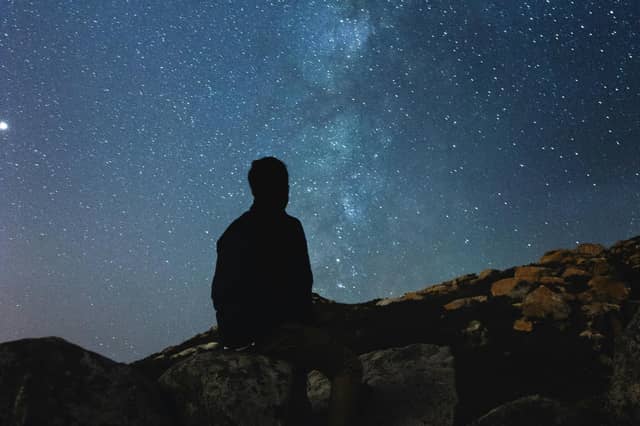

Sky watchers across Northern Ireland could be in for a spectacular sight over the next few nights.
The Perseid meteor shower, considered the best meteor shower of the year, is known to provide the sight of up to 100 swift and bright meteors per hour.
Terry Moseley of the Irish Astronomical Association explained: “The Perseid is the best-known meteor shower of all, and this year it peaks on August 12, so the nights of August 11/12 and 12/13 will be equally favourable.
"The First Quarter Moon will make the sky a bit bright until it sets later in the night, but that’s when meteor activity is at its best, so if you are keen, it's worth waiting until then.
Meteors are tiny particles of dust and small grains of rock that are left behind in the path of a comet as it orbits the Sun. The Perseids come from a comet called Swift-Tuttle, after its two discoverers.
“We don't see the particles themselves, as they are much too small; what we see is the flash of light given off as they burn away and ionize air molecules when they collide at very high speed with the Earth's atmosphere,” said Terry.
"Most burn away at a height of about 80 - 100 km in the upper atmosphere, but bigger ones can penetrate a bit lower before finally burning up. Believe it or not, the brighter ones are only the size of a grape pip, and a really bright one would be only the size of a pea!
"They can be seen in any part pf the sky, but if you trace their paths backwards, they will appear to come from the constellation Perseus, which is how they get their name. Perseus will be rising in the NE part of the sky as it gets dark, and it then gets higher and higher up as it gets later, which means we see more meteors. You can get an app for your phone which will show you where Perseus is at any given time.”
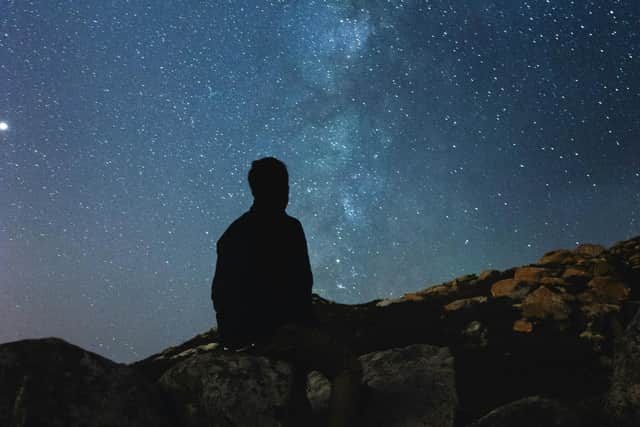
To see the most meteors, you need to be well away from bright artificial lights, especially later in the night when you can enjoy real darkness after the Moon gets low and sets. The best direction to look is about 40 - 50 degrees on either side of Perseus, and at a similar height above the horizon, as long as that's in a dark part of the sky. That's about half of a right-angle, as a rough guide.
“They are best seen with the naked eye - even binoculars have much too small a field of view, as you never know where the next one will appear. Use a lounger or a reclining chair for comfort, and allow at least 10 minutes for your eyes to adjust to the dark before you can see any but the brightest ones,” advised Terry.
"You can try to get photos with a phone camera, but it's a matter of luck - the meteor will be gone before you can press the shutter! So just prop the camera up pointing at the sky, in night mode, and set it to take a series of exposures each as long as possible, and hope for the best - but you'll be lucky to image even one. The best advice is - just look, and enjoy the free show.
"If you are in a dark sky site on the nights of either August 11-12 or 12-13, you might see about 60 - 80 per hour late in the night, and especially in the dark period before first twilight.”