
Causeway Coast and Glens Borough Council has been working in partnership with a number of organisations across the Borough to deliver a range of winter conservation projects aimed at enhancing habitats and boosting biodiversity.
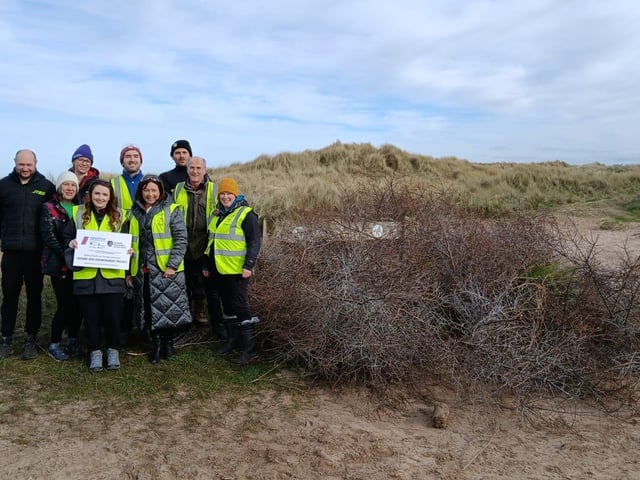
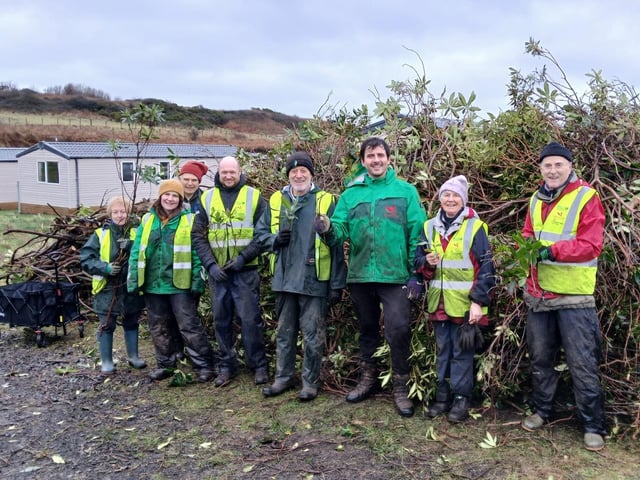
In Castlerock, Causeway Coast and Glens Heritage Trust (CCGHT) and their team of PEACEPLUS Nature & Environment volunteers have been carrying out vital habitat restoration work through the removal of invasive non-native species.
The team focused on clearing Rhododendron Ponticum from The Moors at the Black Glen to prevent it spreading further and outcompeting native plant species. Its removal forms part of a wider habitat restoration programme at the site which also includes winter conservation grazing.
Volunteers also removed Sea Buckthorn from the Castlerock sand dunes. Although originally planted to help stabilise the dunes, Sea Buckthorn is not native to Northern Ireland and has since become invasive, threatening native dune vegetation and the wildlife that depends on it.
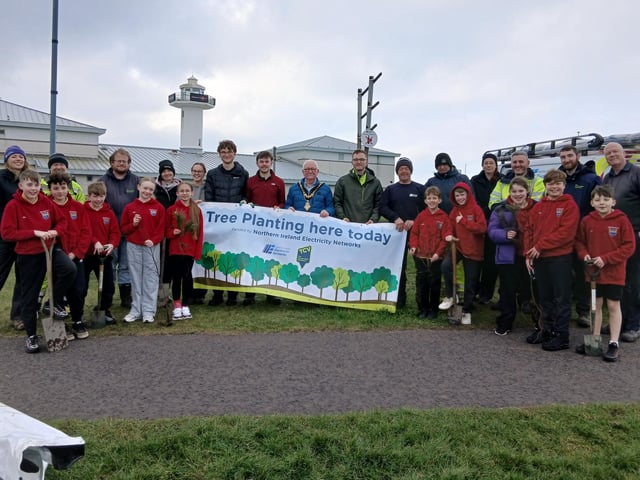
In Portrush, more than 2,000 native trees have been planted along the banks of The Bowl as part of a collaborative project to increase tree cover and enhance biodiversity in the area.
Council partnered with Portrush Primary School P7 pupils, The Conservation Volunteers, Northern Ireland Electricity staff, CCGHT volunteers and members of the local community to deliver the planting initiative.
Council has also removed an area of Sea Buckthorn along Dunluce Avenue to make way for future native tree planting. In addition, coastal wildflower seed will be sown in front of Portrush Recycling Centre, creating a coastal meadow that will provide valuable habitat for pollinating insects once established.
At Waterfoot, CCGHT has been managing gorse encroachment on an area of species-rich coastal grassland. While gorse is a native plant, it can quickly dominate habitats if left unmanaged. The paddock is therefore maintained through a combination of winter conservation grazing and targeted gorse control.
The site supports important biodiversity, including yellow rattle which adds vibrant colour in spring and summer, and the rare wood cranesbill – a striking purple-blue flower whose only known global population occurs in the Glens of Antrim.
With 97% of semi-natural grasslands lost since the 1930s, work such as this plays a vital role in protecting and restoring a highly threatened habitat.
1. ENVIRONMENT
Mayor of Causeway Coast and Glens, Councillor Oliver McMullan, pictured with Portrush Primary School P7 pupils, The Conservation Volunteers, Northern Ireland Electricity staff, CCGHT volunteers and members of the local community at The Bowl in Portrush, where they came together for a native tree planting initiative. Photo: CCGBC
2. ENVIRONMENT
PEACEPLUS Nature & Environment volunteers from Causeway Coast and Glens Heritage Trust removing invasive Sea Buckthorn from the Castlerock sand dunes to protect native vegetation and support local wildlife. Photo: CCGBC
3. ENVIRONMENT
PEACEPLUS Nature & Environment volunteers from Causeway Coast and Glens Heritage Trust pictured at Black Glen, Castlerock, where they have been carrying out habitat restoration work by removing invasive Rhododendron ponticum from The Moors. Photo: CCGBC