
Puffins return to nature reserve off Islandmagee for first time in at least 25 years
Puffins were discovered nesting on the Isle of Muck Nature Reserve, off Islandmagee, during summer 2025 for the first time in Ulster Wildlife’s 25-year history of managing this seabird sanctuary.
The discovery, made during routine surveys, marks a major milestone in the recovery of one of Northern Ireland’s most iconic and vulnerable seabirds.
The comeback is the result of an ambitious seabird recovery project, launched by the local nature conservation charity in 2017, to remove invasive brown rats from the tiny island – the biggest threat to seabird eggs and chicks. A programme of winter grazing has also been implemented to keep vegetation low to reduce cover for the rats.
Rats are a major issue for many seabird islands across the UK, and similar eradication projects elsewhere have proved vital in protecting breeding sites and helping seabirds bounce back.
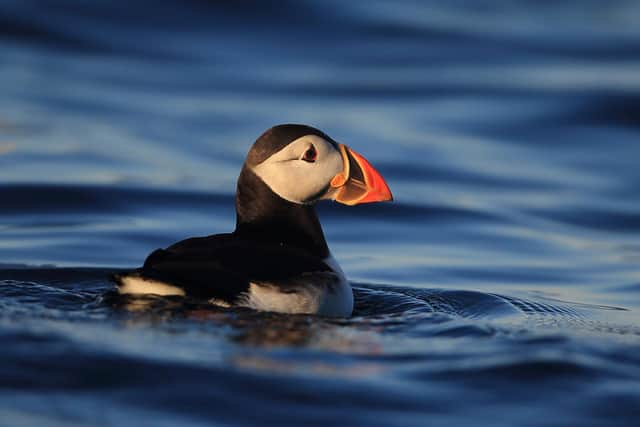

Signs of recovery at the Isle of Muck were visible fairly early on as annual surveys began to record steady increases in eider ducks, guillemots, herring gulls and lesser-backed gulls on and around the island, year on year.
But the real breakthrough came in 2024, when five puffins were spotted prospecting the island. Then, this summer, to the charity’s delight, two puffins were caught on camera coming out of a nesting burrow on the grassy cliff ledges – a positive sign that the birds are breeding.
Andy Crory, Nature Reserves Manager with Ulster Wildlife, said: “For decades, there had been whispers that puffins once bred on the Isle of Muck, a story that felt more like folklore than fact. But now, thanks to years of hard work creating a safe haven for thousands of seabirds, that myth is becoming a reality.

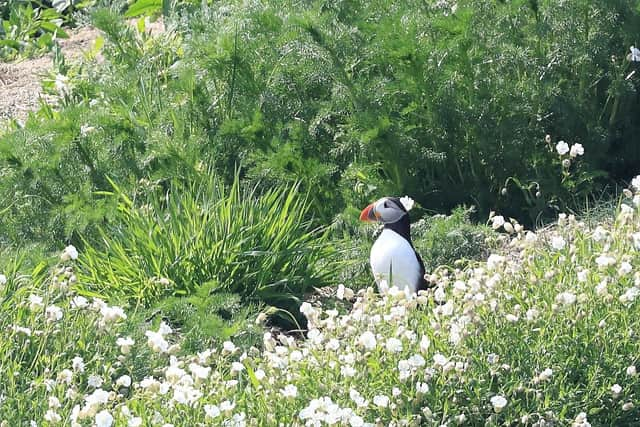
“Seabirds face immense challenges globally, with 24 of the 25 breeding species at risk of local or global extinction. So, while a handful of puffins on a tiny island may seem small, this moment is huge – it proves that seabird restoration works.
“Our hope is that the Isle of Muck will become a thriving stronghold for puffins and, in time, tempt back other lost species like the Manx shearwater. For now, we’re waiting with great excitement to see if the first ‘pufflings’ – baby puffins – appear on the cliffs next summer. That truly would be the icing on the cake.”
The ongoing rat eradication programme and species monitoring at the Isle of Muck Nature Reserve is funded by DAERA via the Carrier Bag Levy.
The Isle of Muck Nature Reserve is not accessible to the public, and crossing the tidal tombolo when it becomes visible at low tide is extremely dangerous. Ulster Wildlife is urging people to keep away and admire the island from a safe distance to give the returning puffins the best possible chance to settle and breed successfully next summer.
To find out more about the Isle of Muck Nature Reserve, visit ulsterwildlife.org/nature-reserves
Atlantic puffins are vulnerable on the IUCN Red List due to food shortages, climate change, and predation by invasive species.
They are of highest conservation concern on the British Red List, and a priority species in Northern Ireland.
Approximately 580,000 breeding pairs are found across the UK – about 10 percent of the global puffin population, making local conservation efforts especially important.