
Selma at 60: How America’s Most Important Anti-Racism March Inspired Black and Northern Irish Civil Rights in the UK
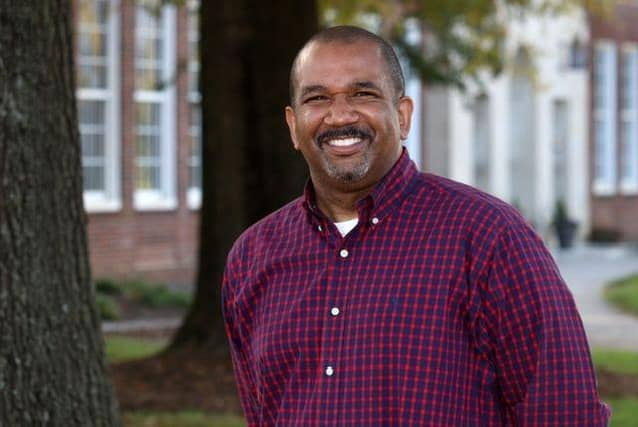

This year marks the 60th anniversary of the Selma to Montgomery march—one of the most defining moments in the U.S. civil rights movement (writes the U.S author and historian, Forest Issac Jones).
On March 7, 1965, hundreds of Black activists, led by John Lewis and Martin Luther King Jr., set out to march peacefully from Selma, Alabama, to the state capital of Montgomery, demanding an end to racial voter suppression. What followed was a violent attack by police on the Edmund Pettus Bridge, a day that became known as Bloody Sunday. The shocking brutality—captured on television screens worldwide—prompted outrage and led directly to the passage of the Voting Rights Act of 1965, which outlawed racist policies designed to disenfranchise Black Americans.
But the impact of Selma didn’t end at the U.S. border. The events in Alabama galvanised movements across the world, including in the UK, where Black Britons and Irish nationalists saw chilling parallels in their own struggles.
For Black activists in Britain, Selma underscored the urgent need to fight back against racial discrimination at home. At the time, the UK was experiencing a wave of post-war immigration from the Caribbean, Africa, and South Asia, but racism was deeply embedded in society. Landlords openly advertised “No Blacks, No Irish, No Dogs”, employers routinely discriminated against non-white applicants, and police violence was a daily reality in Black communities. Inspired by U.S. civil rights leaders, British activists—including Darcus Howe and the Mangrove Nine—began organising their own protests against police brutality, racist immigration laws, and economic exclusion.
Their efforts helped push forward landmark legislation, including the Race Relations Acts of 1965, 1968, and 1976, which banned racial discrimination in housing, employment, and public services. However, these laws were often poorly enforced, and institutional racism remained deeply entrenched.
At the same time, across the Irish Sea, the lessons of Selma were shaping another civil rights movement. In Northern Ireland, Catholics faced systemic discrimination in housing, jobs, and voting rights—just as Black Americans did in the U.S. South. Inspired by Selma, Northern Irish activists modelled their own civil rights marches on the tactics of Martin Luther King Jr., staging nonviolent protests to demand equal rights. The most famous of these was the Long March from Belfast to LondonDerry in 1969, which ended in police brutality against peaceful demonstrators. The parallels to Bloody Sunday in Selma were impossible to ignore, and the violence only deepened existing tensions, eventually spiralling into the decades-long conflict known as The Troubles.
Fast-forward to today, and Belfast is a city transformed. Once synonymous with sectarian violence, it now boasts a thriving economy, a booming tourism industry, and a vibrant cultural scene. Yet despite this progress, deep divisions remain—not just along sectarian lines, but increasingly along racial ones.
In August 2024, Belfast was rocked by violent race riots, exposing simmering racial tensions in a city still struggling with its past. The unrest followed the spread of misinformation about a stabbing in England, which fuelled xenophobic anger and saw far-right protesters clash with anti-racism activists and police. For many, it was a stark reminder that racial hatred is not confined to history.
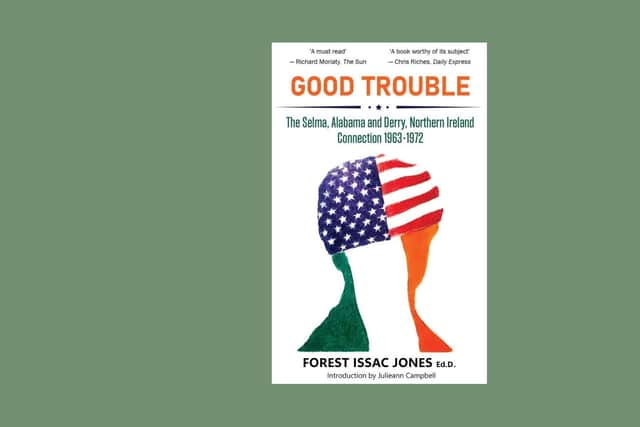
“It was devastating to witness,” said U.S historian Forest Issac Jones, author of new book Good Trouble: The Selma, Alabama and Londonderry, Northern Ireland Connection 1963-1972. “But what gave me hope was the response—thousands of people marching against hate, showing that Belfast is no longer a city defined by division, but one that can push back against racism.”
The riots also underscored an uncomfortable reality: while Northern Ireland’s conflict has been largely framed as a Catholic versus Protestant struggle, race is an increasingly significant fault line. The city has seen a sharp rise in racist hate crimes, with asylum seekers and migrant workers often bearing the brunt of hostility. Belfast’s foreign-born population has grown rapidly in recent years, but some far-right groups have used economic hardship and Brexit-related uncertainties to stoke anti-immigrant sentiment.
“It’s easy to assume that civil rights struggles are a thing of the past, but Selma’s legacy reminds us that racism is never really defeated—it just takes new forms,” Jones said. “In Northern Ireland, racism is often overlooked because the conversation is so focused on sectarian divisions. But that has to change. Black and ethnic minority communities here are fighting the same battles that the U.S. and Britain’s Black activists fought decades ago.”
Beyond Belfast, racism remains a major issue in the UK as a whole. Despite decades of progress, stop-and-search laws disproportionately target Black men, hate crimes have surged in recent years, and the UK government’s immigration policies have been widely criticised for institutional racism—most notably in the Windrush Scandal, which saw Black British citizens wrongly detained and deported.
“The Selma march showed the power of grassroots movements in forcing real change,” Jones says. “That’s just as relevant today in the UK as it was in 1965. Whether it’s fighting police discrimination, racist policies, or far-right extremism, the lessons of Selma should remind us that progress only happens when ordinary people demand it.”
Belfast, like the rest of the UK, stands at a crossroads. The city has come a long way since its darkest days, but the fight for equality is far from over. If Selma’s legacy teaches us anything, it’s that history has a habit of repeating itself—and that the struggle for civil rights is never truly finished.
Forest Issac Jones is an award-winning U.S author of non-fiction and essays, specialising in the study of Irish history, the US Civil Rights Movement and Northern Ireland. His latest essay, ‘The Civil Rights Connection Between The USA and Northern Ireland’ was awarded honorable mention in the category of nonfiction essay by Writer’s Digest in their 93rd annual writing competition. Over the years, Jones has won awards from Writer’s Digest in 2022 and 2023. His award-winning essay about African Americans at D-Day was published in 2024 by WWII History Magazine. In addition to writing, Jones is a frequent speaker who has given talks about everything from African Americans at D-Day and The Troubles in Northern Ireland. Jones holds a doctorate degree from Virginia Tech in education and a master’s degree from Hollins University in history (focusing on Northern Ireland history and South Africa history). He currently lives in Salem, Virginia. His latest book, Good Trouble: The Selma, Alabama and Derry, Northern Ireland Connection 1963-1972, is out now.
Story by Forest Issac Jones/Anthony Harvison (Belters News/News X)