
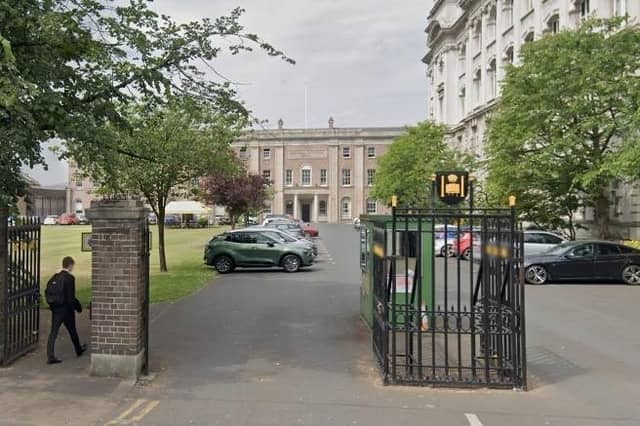

Aside from being the centres of learning that they have remained for decades, these buildings have also housed many notable students within their stunning architecture.
These buildings aren't just relics of the past; they are living monuments that continue to shape the present and inspire the future, reminding us of the enduring power of architecture and education in Northern Ireland's history. If these walls could talk, they would certainly have some stories to tell.
Here are 10 of Northern Ireland’s most stunning school buildings, with some of the history behind them
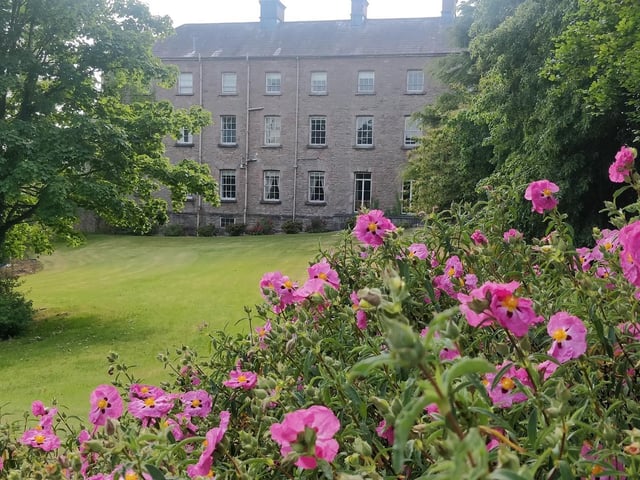
5. The Royal School, Armagh College Hill, Armagh
Regarded as one of the best schools in Northern Ireland, this grammar school was founded in 1608 alongside its counterparts in Dungannon, Enniskillen, Cavan, and Pahoe, as a ‘free school’ by King James I to educate the sons of local Protestant settlers during the Ulster Plantation. Originally to be built at the village of Mountnorris, the turmoil of the 1641 Rebellion meant that the school relocated to the relative calm of Armagh, although an early headmaster, John Starkey, was drowned. It was in the 1770s that the school relocated to its current 27-acre Georgian site on College Hill. The inaugural winner of the Rugby Schools’ Cup, the School would come to win the title a staggering seven times in ten years. Each of the School’s four houses - Darcy, Rokeby, Beresford & Armstrong - are named after Church of Ireland bishops. In 2008, Queen Elizabeth II and Prince Philip visited the school, along with its siblings, to mark the 400th anniversary of their founding. Graduates include Sir Reg Empey, former Ulster Unionist leader, and British and Irish Lion Tommy Bowe. Photo: The Royal School, Armagh Facebook
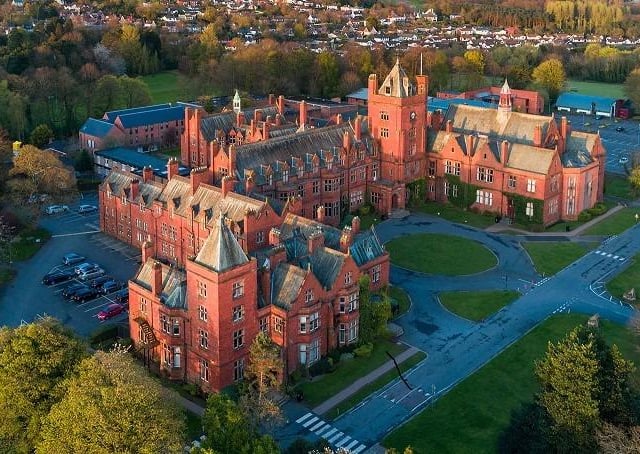
6. Campbell College, Belmont Road, Belfast
Occupying 100 acres near the Stormont Estate in east Belfast, the site of this College, founded in 1894, among its facilities, includes a lake and a small forest known as Netherleigh. Henry James Campbell had made his fortune in the linen trade, and bequeathed his money to create a school based on liberal Protestant values. The Central Hall was one of many locations across Ulster where the Ulster Covenant was signed en masse by many unionists opposed to Home Rule on 28 September 1912. In 1935, an attempted IRA raid to capture the arms housed in the College’s Officers’ Training Corps. The RUC at nearby Strandtown was tipped off, and a gun battle was fought at the gate lodge on Hawthornden Road, where Constable Ian Hay survived five gunshot wounds. During World War II, the campus was requisitioned by the War Office for use as a military hospital, with the pupils temporarily studying at Portrush. Notable alumni include C.S. Lewis, who attended for two months, before withdrawing due to a respiratory condition - the school did have its role to play in his later work, as the gas lamppost on the school drive is believed to have inspired the prominent one in The Lion, The Witch, and the Wardrobe. Snow Patrol frontman Gary Lightbody was inspired by his English teacher, while his drummer Johnny Quinn found inspiration by serving in the College Pipe Band. William MacQuitty served as producer of the 1958 British film A Night to Remember, still widely regarded as the best film ever made on the Titanic, while Mark Huffan served as an associate producer on Saving Private Ryan and as a producer on Ridley Scott’s The Martian and Scott’s upcoming biopic of Napoleon. Photo: campbellcollege.co.uk
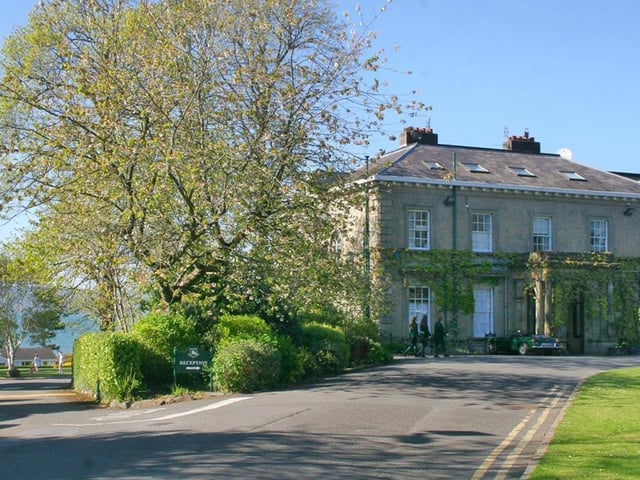
7. Rockport School, Rockport Road, Holywood
Situated among 25 acres of woodland on the shores of Belfast Lough at Craigavad near Holywood, the School was founded in 1906 by Oxford graduate Geoffrey Bing, who sought to ‘prepare boys for the Public Schools and the Royal Naval College, Dartmouth.’ The School certainly had humble beginnings - only four students, an assistant master, and a matron - but rapidly grew in size, sustained by concerts, plays, Lough swims, and sporting fixtures. The 23 ‘Rockportians’ who died in both World Wars - a huge casualty rate for such a small school - are remembered in the dedicated memorial MacBride Room. In January 2014, the School became the first in all of Ireland to be granted regional membership of the international conference of Round Square schools - only just over 200 schools worldwide are members. Photo: visitardsandnorthdown.com
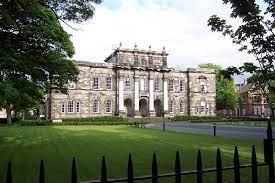
8. Union Theological College, 108 Botanic Avenue, Belfast
The College for the Irish Presbyterian Church was originally founded in 1853 as the Assembly College, with Queen’s University architect Sir Charles Lanyon building the Renaissance Revival building with Scrabo stone. Following the 1859 Christian revival in Ulster, which produced 100,000 converts, the College saw a huge influx of students, and as such, the south wing with its dining hall and student accommodation ‘chambers’ was added in 1869. The north wing, with its wood-panelled chapel, was built in 1881 by John Lanyon, son of the original architect. From 1921 to 1932, the Unionist Parliament of Northern Ireland met at the College while Stormont was under construction, with the House of Commons meeting in the Gamble Library. During this period, the College conducted its classes in a nearby house and provided library resources in University Square. In 1927, Professor J. Ernest Davey was sensationally tried for heresy, alleging that the Bible had not taught the concept of the Holy Trinity and had questioned the ‘absolute perfection’ of the character of his God. Following the Belfast Blitz in 1941, the city police requisitioned the campus as their headquarters and would remain on site until 1948. In 2003, on the College’s 150th anniversary, a £2.8 million refurbishment added individual study bedrooms, complete with ensuite facilities. Following a serious fire in November 2009, which severely damaged the Principal’s House, a £2.2 million extension known as the Training Resource Centre, with even more lecture and seminar rooms, officially opened in September 2011. Photo: Union Theological College Facebook