
America 250 events celebrate Mid and East Antrim's links to US Presidential history
As part of Mid and East Antrim Borough Council’s America 250 programme, two commemorative trees have been planted to celebrate the area’s rich links with US history.
The tree at Delaney Green, Carrickfergus is in honour of Elizabeth Hutchinson Jackson, who was born in Carrickfergus and was the mother of the seventh President of the United States, Andrew Jackson.
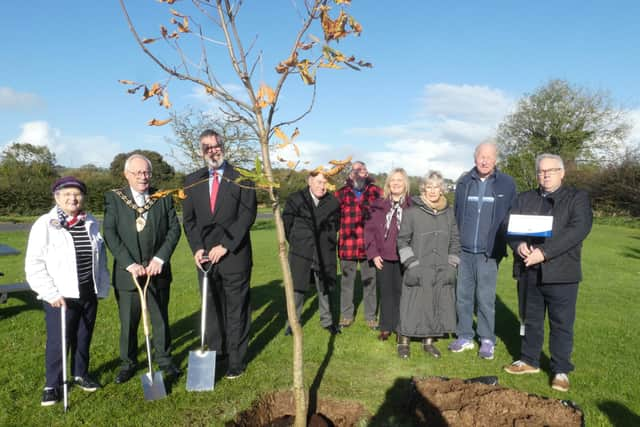
A second tree commemorative tree was planted in Ballycarry to honour local man John Neilson, who was architect and master joiner to President Thomas Jefferson.
His expert craftmanship is still evident in the intricate woodwork of Jefferson’s Monticello estate and he is credited with developing the design of the University of Virginia.
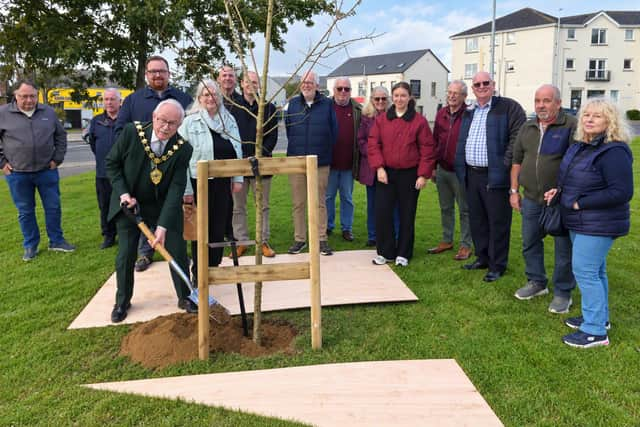

The Mayor of Mid and East Antrim, Alderman Thomas Gordon led the events, which were attended by MLAs, councillors and community representatives.
The Mayor said: "It was a privilege to take part in this special tree-planting ceremony honouring Elizabeth Hutchinson Jackson, a woman whose story is closely connected to both Carrickfergus and America. Her resilience, sacrifice and enduring legacy continue to resonate today, and it is fitting that we recognise her contribution as part of our America 250 programme. This tree will serve as a lasting symbol of the historic ties between our communities and the shared heritage that continues to connect us.”
A message was also read on behalf of Gina Bobo, Regent of the Elizabeth Hutchinson Jackson Chapter of the Daughters of the American Revolution in South Carolina, reflecting on the significance of ‘Liberty Trees’ during the American Revolution and the symbolic importance of the tree planted in Carrickfergus.
Elizabeth Hutchinson Jackson emigrated to the American colonies with her husband, Andrew Jackson, and their family in 1765. She is remembered not only as the mother of a US President, but also for her resilience and sacrifice during the American Revolutionary War.
Elizabeth lost two of her sons, Hugh and Robert, during the conflict. In 1781, while nursing relatives and revolutionary prisoners who had been held on British prison ships in Charleston, South Carolina, she contracted ‘ship fever’ and died.
After the ceremony, guests attended a screening of the Carrick to the Carolinas documentary, which traces the Jackson family’s journey to America and highlights the lasting links between Carrickfergus and the United States.