
Causeway Coast and Glens Council working to improve defibrillator provision in Borough
Causeway Coast and Glens Borough Council has approved steps to improve the provision of heart defibrillators in the area.
Members approved four officer recommendations for potential improvement at a Corporate Policy and Resources Committee meeting on Tuesday, May 28.
Recommendations included providing defibrillators at designated seaside beaches, reviewing the provision of defibrillators at council-operated facilities and reviewing expenditure in September with the view to potentially offering funding to the public for defibrillators.
Additionally, councillors approved a review of provision in the area prior to the 2025/26 budget setting process.
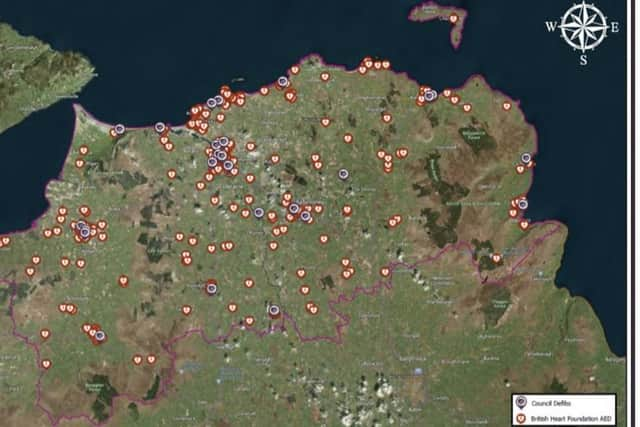

A council officer said: “Defibrillators are provided across the borough through a number of mechanisms, such as private groups, the British Heart Foundation (BHF), and via the council.
“The location of registered defibrillators is on the British Heart Foundation website and relates only to those with an external mount. Defibrillators that are located within buildings are not available for general public use and are therefore not on the BHF website.
“The RNLI provide defibrillators at major beaches they are supervising but only when staff are on duty during summer months.
“The council has approved £30,000 in the 2024/25 estimates for providing additional defibrillators where the need arises, and six defibrillators have been ordered to ensure they are available as and where the need arises.”
UUP Councillor Darryl Wilson said there were “mapping and registration issues” and asked if there was a map of available defibrillators on the council’s website. He also requested a meeting with BHP representatives about a joint approach to raising awareness.
“Many local community associations have provided these for customers and the community,” he said, “but perhaps we could help educate people as to where they are and get the map [of defibrillators] more up-to-date.”
Chief Executive, David Jackson, said there was a central database for defibrillator locations, called the Circuit, which validates that they are operational.
He said his preference was to have the Circuit “front and centre” on the website, while ensuring the council “maximises our input to that”.
“Some of our defibrillators are inside facilities and not 24/7,” he warned. “So what we’re trying to do, if possible, is externalise them to make sure they’re accessible.
“We just need to refine it, make the information as accurate as possible, share it as wide as possible, and maximise accessibility.”