
Derelict Limavady listed building poses rsk to pedestrians, Causeway Coast & Glens Council hears
Causeway Coast and Glens Borough Council has received a planning request to carry out repair works on a derelict Limavady listed building, due to unsafe conditions.
Council recently received the Listed Building Consent application, which is seeking permission to carry out stabilisation works to external walls and the removal of roof slates “due to emergency”, at the derelict building at 9-11 Linenhall Street in the town.
An accompanying structural report said an inspection, by the building owner and a structural engineer, was carried out last December to evaluate the structural condition of the building, in response to a Causeway Coast and Glens Council notification regarding its unsafe status.
The report noted the inspection did not include the upper floors and roof of the building, as they are “in dangerous condition and access would be unwise given the poor state of some of the structural load bearing elements”.
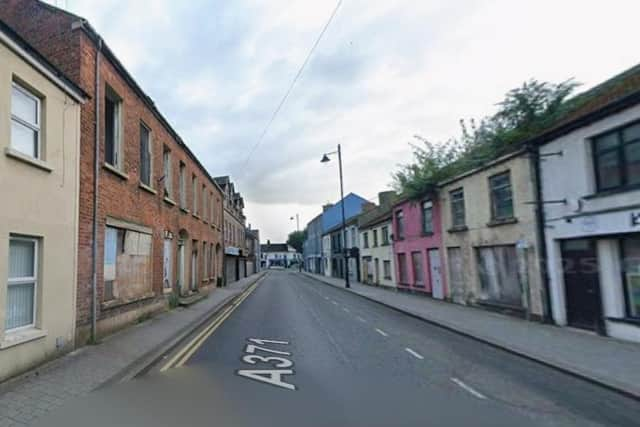

The structural engineer determined the building’s roof is in a state of “considerable disrepair”, with numerous slates either missing or displaced, while the building’s three chimneys, although structurally intact, exhibit deterioration in both the brickwork and mortar pointing.
“The current method of support [of the rear wall] appears unstable and presents a significant risk of collapse,” the report added. “The internal inspection revealed that the rooms on both the ground and first floors are in significantly substandard condition.
“The building is currently in a derelict condition and poses a safety risk to members of the public utilising the adjacent roadway. The primary concern arises from loose roof slates, which may fall or become further dislodged during periods of high winds,” councillors were told in the report.
“The contractor has subsequently undertaken emergency removal of loose slates to enhance roof security and address health and safety concerns in the Linenhall Street area.
“Due to significant deterioration of the first floor and roof timbers, including detachment from the external walls, there is a reduction in lateral restraint on the wall structures.
“Furthermore, the lack of windows — especially at the first floor level — permits internal wind pressure to impose additional loading on the walls.”