
Jay Woolsey: Coroner warns of 'emerging threat' of use of nitazenes and buying deadly drugs online as Northern Ireland tragedies rise
A coroner has warned Northern Ireland is facing an “emerging threat” from a deadly form of synthetic opioids after hearing how a healthy 33-year-old died within hours of taking drugs it is believed he bought online via the dark web.
An inquest into the death of Jay Woolsey from Portadown heard an increasing number of deaths have been attributed to nitazenes in the last 18 months.
A forensic pathologist revealed that in many cases, people don’t realise how potent the substances are.
Mr Woolsey’s death was described by coroner Anne-Louise Toal as “every parent’s nightmare”.


He was found dead in his Tandragee Road flat by his mother on August 9, 2024, having been last seen alive by a neighbour at 6.30pm the previous evening.
Gillian McCann described her son as “a very charismatic and lovely guy” who played the piano and guitar and “really loved making music”.
"He was a great son and brother and tried to be the best father he could to his wee boy,” she told the inquest.
Ms McCann said her son suffered with mental illness from a young age but the family encountered “a lot of problems” trying to get help.
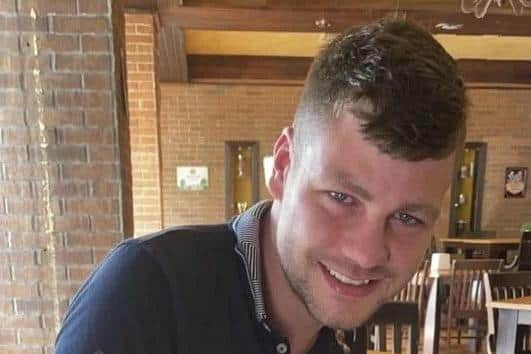
She said he really wanted help and, towards the end of his life, he “definitely was making headway”.
"He was engaging with counselling and was always trying to improve himself, better himself. He’d got a new job, a new flat and he was definitely planning on being a happier man and looking forward to his future” she said, describing her son’s mood as "happy and relaxed".
"We were really happy and believing there was going to be a new Jay, a new happier Jay.
"He sent me a text telling me how well counselling had went two nights before. So our hope was pretty much built up.”
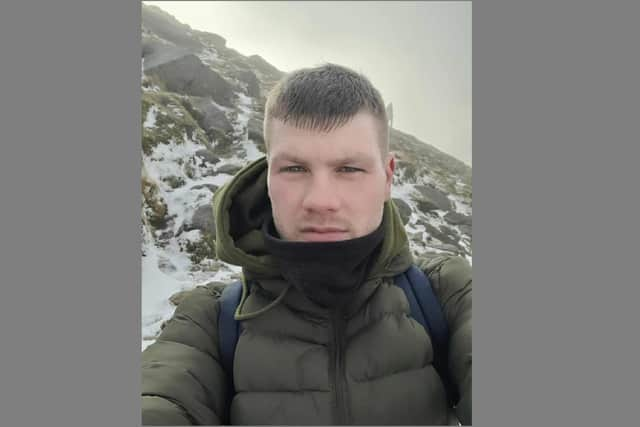
Ms McCann said she knew about alcohol and cannabis but wasn’t aware of any other drug use other than what was prescribed to him.
She described Mr Woolsey’s death as being “completely life-changing for so many people”.
"He was one of five children that we have, myself and my husband and Jay’s dad and his nanny – our lives have been devastated. We will never be OK again without having Jay there. Also his wee boy, it’s heartbreaking.
"I struggled to believe there was one single drug capable of doing that. I just thought of all the people in the past who have lived to an old age, rock stars and film stars who lived to their 60s and 70s and known to have taken so many drugs. I thought, what on earth is strong enough to have done this to Jay? It just didn’t make sense to me.”
She said she has been “very vocal, open and honest” about the fact they don’t have any shame in how Jay died or had mental health issues.
"I’m just constantly trying to make more awareness for people to really recognise when it is an addiction, when it is mental health and when they do need to get help.
“I would just love there to be more help and shorter waiting lists.”
Ms McCann said that following her son's death she accessed his computer and found search history entries relating to drugs.
In her findings, the coroner said a number of drugs were found in Mr Woolsey’s property, including some believed to have been bought on the dark web.
She said a detective constable confirmed there was evidence of drugs at his address which had been delivered by post.
Following a post mortem, forensic pathologist Dr Mark Egan said, in his opinion, the primary cause of Mr Woolsey’s death was supperative bronchitis, bronchopneumonia and the effects of N-pyrrolidino etonitazene which belongs to a group commonly referred to as nitazenes.
The inquest heard how this form of nitazene is a new psychoactive substance which is illicitly manufactured and marketed as a drug of abuse. It is a potent, synthetic opioid reported to be 20 times more potent than fentanyl and several times more potent than morphine.
Dr Egan said the powerful sedative effect of nitazenes would have rapidly overcome Mr Woolsey, causing him to fall asleep, significantly impair his lung function and the resulting bronchopneumonia would quickly become fatal within a few hours.
Forensic scientist Amy Quinn said nitazenes were sold as tablets, powders, nasal sprays, taken intraveneously, snorted and vaped. They have also been found in other illicit products like cocaine, heroin and fentanyl.
Coroner Toal thanked those who gave evidence, describing Mr Woolsey’s family as being “courageously very vocal” in raising awareness of the dangers of drugs.
"I find that sometime between 6.30pm on August 8 and August 9, the deceased had taken several drugs including nitazenes and methamphetamine,” said the coroner.
"As a result he fell asleep and developed bronchopneumonia and supperative bronchitis which ultimately caused his death. Methamphetamine further diminished his ability to withstand the effects of bronchitis and bronchopneumonia.
"This inquest highlights the emerging threat of nitazenes of a drug of abuse. Their potency and risk of fatal overdose cannot be overstated which is evidenced by their increasing appearance in drugs-related deaths over the last two years," said Coroner Toal.
"In some cases they have found to be more than 20 times more potent than fentanyl, itself a powerful opioid. The dangers of drugs are well known, however, the additional danger of buying drugs online is also becoming more and more apparant.
"It should be stressed that for anyone doing so, there is a considerable risk that what you believe you are buying may not be what you are getting.
"It is clear that the death of Jay, an otherwise healthy 33-year-old man who should have been expected to have many years ahead of him, should serve to underline such dangers. I can only commend his mother and family for trying to raise awareness to prevent other families having to face the same devastating grief.”