
Magherafelt biodigestion expert pays tribute to Rev Fr Jim Conlon 'a remarkable pioneer' of wholesome farming and renewable energy
A Magherafelt biodigestion expert has paid tribute to Rev Fr Jim Conlon describing him an a "remarkable pioneer.”
Dr Les Gornall described Fr Conlon, who died on March 4 at Greenpark Nursing Home, Armagh, as a quiet pioneer of wholesome farming and renewable energy.

In a tribute he said: “Rev Fr Jim Conlon, who was for many years the farm manager at Our Lady of Bethlehem Abbey, Portglenone, died peacefully after a life devoted to faith and stewardship of the natural environment and quiet contemplation. The legacy he left is great. Those who worked with him knew that beneath his gentle manner lay a rare courage.
"In the early 1980s Fr Conlon raised the issue of the impact that modern farming was making on the environment with his Cistercian community and they made a decision that would transform the Abbey farm. Rather than follow the increasingly chemical-dependent model of modern agriculture, he chose to farm ‘more wholesomely,’ as he often described it. Artificial fertilisers, herbicides, and pesticides were removed from the system. In their place came a careful rebuilding of soil fertility, pasture diversity, and nutrient cycling. Energy to heat the monastery would come from manure.
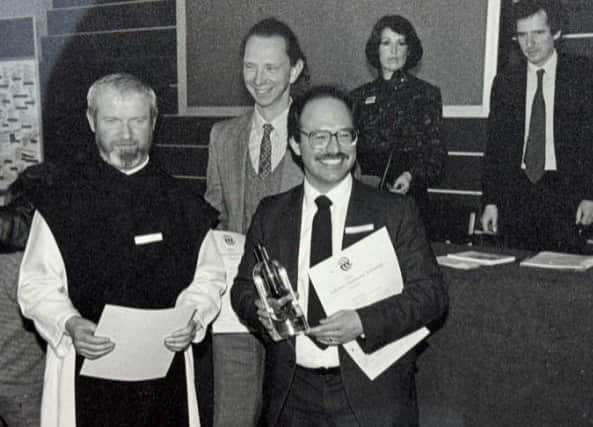
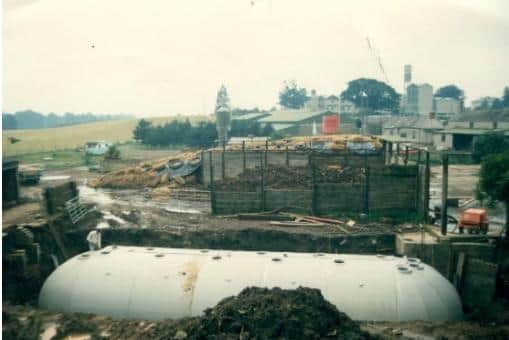
"Fr Conlon’s vision was boldly practical. Working with Leslie Gornall a research student at the University of Ulster and biogas pioneer James Murcott of Farm Gas Ltd, he helped create one of the earliest full-scale farm anaerobic digestion systems in the United Kingdom and Ireland. The digester, commissioned in 1985 at Bethlehem Abbey near Portglenone, processed manure from 300 beef cattle and 27,000 broiler chickens along with silage effluent and other organic wastes. Remarkably for its time, it worked. The system generated renewable biogas to heat the Abbey and dry organic grain, while separating nutrients so that valuable phosphorus could be captured in compost products and nitrogen returned to pasture.
"Fr Conlon did far more than approve the project; he made it work on the ground. As farm manager he oversaw the daily operation of the livestock, the feeding of the digester, and the development of an integrated system that linked renewable energy, compost production, crop drying, and organic farming. The compost produced at the abbey became a successful commercial peat substitute and a range of golf course greenkeeping products, while the farm shop sold ‘Abbycorn’ organically grown stone ground oats dried using energy from the digester.
“Under his guidance the farm itself changed. Diverse grass and clover pastures rich in medicinal herbs replaced chemically managed fields. Nitrogen came from clover and digestate. Even weed control was approached creatively: Rumex seed heads (Docks) were harvested before ripening and used as digester feedstock. The results were striking. Livestock health improved dramatically, veterinary interventions dropped sharply, and the farm demonstrated that ecological farming could also be economically successful at full scale. Organic beef was made possible.
"Fr Conlon never sought recognition for these achievements but national and international awards followed this pioneering adventure. Visitors who came to see the digester and composting systems were welcomed with quiet warmth and a simple explanation of how the farm worked. Northern Ireland consequently has more biogas plants per head of population than any country in the UK.”
Fr Conlon's funeral took place to The Church of The Immaculate Conception Tullysaran, Armagh, followed by burial in Old Tullysaran Cemetery.