
New book describes role Scottish settlers played in development of wider Cookstown area
'History of Cookstown' by Henry L Glasgow was first serialised in the Mid Ulster Mail between March 1924 and March 1926.
Glasgow was one of the founding editors of the paper and the seralisation covered events between 1866 and 1950.
It was eventually published in book form some years later.
Jim Parke says he was prompted and inspired by Glasgow’s work to write ‘Cookstown, A New Town, Founding and Development’.
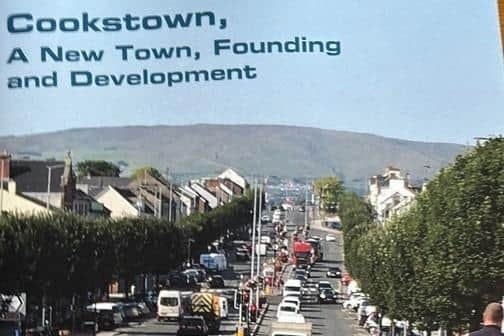

The new book includes illustrations of the maps and documents that H L Glasgow could only describe in words in his articles.
Jim said: "The book initially sets William Stewart’s project in the context of events in Irish history that were relevant to development in this part of Ulster’s.
"For example Norman influence in terms of castles and towns was restricted to the eastern side of Ulster
"It places particular emphasis on the planning and consequences of the Ulster Plantation. It describes the role Scottish settlers played in the development of the wider Cookstown area
"The measures that William Stewart took to establish the town are documented. Of great importance is the illustration of the original 'master plan' on an estate map - the six lines running up the map which set out the building lines of the town.
"H L Glasgow described this map a nd the Public Record Office in Belfast found it in their records. A picture of an early OS map is used to show the product of about 100 years development.
"The demise of the Stewart fortunes is documented and the sale of the estate. The emergence of linen business men as new patrons of the town is described. Of some importance was their role in attracting railway connections to the town.
"The book then documents the emergence of Local Government institutions and the role they played in providing the town with vital services such as a town water supply".
Mr Parke said the role of Cookstown as a market place for the products of the surrounding area is described in the book.
"This includes the actions by William Stewart to bring the market from the north end of the town to a more central location and the role of the railway connections in enhancing that role," he said.
The book is available on Amazon Bookstore.