
Newtownabbey woman (48) waiting for double lung transplant
A Newtownabbey woman has shared her story of waiting on a double lung transplant – and the help she received from a Northern Ireland charity.
Mary McGrath has idiopathic pulmonary fibrosis – a condition that causes the lungs to become scarred and makes breathing increasingly difficult.
“I was in my twenties, studying at university to become a teacher, and I started to get very breathless when walking upstairs,” recalled Mary, now 48.
"I felt really unfit, although I wasn’t, so I went to the doctor who checked me over but couldn't really find much wrong with me. This continued over the next couple of years and after more investigations I was diagnosed with having hypersensitive pneumonitis, which is an immune response to something you breathe in resulting in inflammation of the lung tissue. It was idiopathic however, which meant they couldn’t define the cause of my condition. It has progressed to pulmonary fibrosis.”
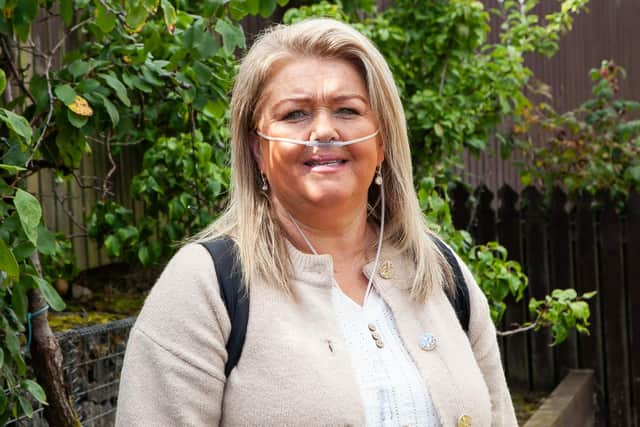

Being diagnosed with the condition was hard to accept for Mary. “I was very young, had two young children, hadn't graduated university yet, and they couldn’t pinpoint why I had it. I was prescribed a cocktail of drugs, and I took high doses of steroids from 2007 on. Meanwhile, I finished my last year at university, graduated and got a post as a primary school teacher.
"After a few years, my health started to deteriorate. I was told I needed a double lung transplant at that stage to save my life because my oxygen levels were so low. The idea of a transplant knocked me for six and I just couldn't get to grips with it.
“I begged the doctors for an alternative and the only other option was to try a heavy dose of steroids, which thankfully started to work and cleared some of the inflammation in my lungs.”
Through the years, Mary was off and on steroids as well as a chemotherapy drug as treatment. “I never really had any time off work; I just kept on going even though I was breathless and had oxygen at home,” she said. “Once the pandemic started however, I got a letter to shield and over the next two years my condition really started to impact me because the medication I was on had stopped working, and I knew something wasn’t right.
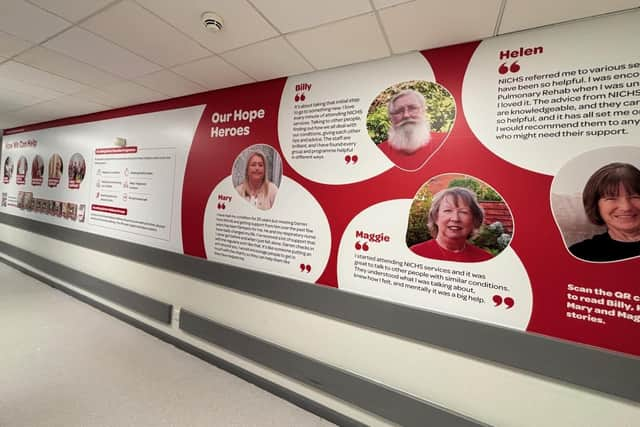
“In 2022 I was referred to a new consultant and respiratory nursing team, and they have been unbelievable. They did a revamp of my medication and I’m now what they class as stable again.
“Not being able to breathe is the scariest thing in the world; it really is so frightening. I started on oxygen about three years ago and when I went to the clinic they couldn’t believe I was moving around, never mind going to work. Getting on oxygen has really helped me; it helps keeps me independent.”
Mary’s daily routine involves getting up in the morning to get a shower before work – something she has to do very early as it takes a lot out of her, and requires her to have an oxygen tank outside the door. Other tasks like washing, hoovering, or making a bed can also be very difficult.
However, she refuses to be defined by her condition. “I work fulltime, I achieved my Master’s degree two years ago, and I’m a volunteer chair at a preschool,” Mary continued. “I want to live my life with my husband Jim who has become my carer, and Michael and Daniel, my sons. I want to see my children living their lives, see my five grandsons grow up and that helps spur me on. I'm not saying I don't have down days, but mostly I’m upbeat. I love my job, and I love the children that I teach.”
Long term, however, the Newtownabbey woman will need to have a transplant: “After transplant, I will be on anti-rejection medications which will bring some challenges, and I will have to be monitored to make sure my condition is managed. I also see a clinical psychologist to help prepare for the transplant.
“Something that has stuck with me over the years was when someone told me to ‘just live your life’. I can’t always be thinking about the transplant as I don’t know when it will happen so I just have to live my life the best I can until it actually happens.”
A place Mary has found great support is Northern Ireland Chest Heart & Stroke (NICHS). She said: “I was referred to NICHS by one of my respiratory nurses. One of the Care Services Coordinators, Darren, came to see me at home and took me through the charity’s Family Support Service. He explained about the different services and programmes the charity could offer me. Darren was brilliant, and I loved that he had so much knowledge about my condition.
“I would urge anyone with a respiratory condition to get in touch with the charity in case they can help them like they have helped me.”
Ursula Ferguson, Director of Care Services at NICHS said: “Over 176,000 people across Northern Ireland are living with respiratory conditions, people just like Mary. As well as the negative impact on physical wellbeing, respiratory illnesses can reduce independence, confidence, and happiness. They can also affect relationships, take away jobs and render some families isolated within their own homes - but NICHS is here to help with expert care and support.”
If you have been affected by a chest condition and need support visit https://nichs.org.uk/care-and-support/chest-support for further information about NICHS’s support services.
“The help available from our Care Services team is extensive and includes our Family Support service, Inspire Choir, and Breathing Better Education Programme which is designed to help participants learn more about their health and how they can manage their condition more positively,” Una added.