
NI Water’s Rural Wastewater Investment Programme reaches milestone with completion of its 200th project at Moneyglass
NI Water’s Rural Wastewater Investment Programme (RwwIP) has reached a major milestone with the completion of its 200 th project at Moneyglass Wastewater Treatment Works, near Toome.
The RWwIP was set up in 2008 to tackle the upgrade of some of the 900 small wastewater treatment works across NI which serve rural populations below 250 people.
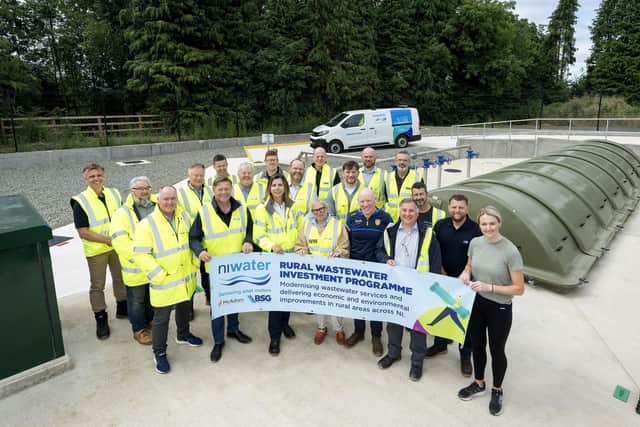

Commenting on the milestone, NI Water’s Senior Project Manager, Will Gibson said: “We’re proud to have completed our current programme of upgrading rural wastewater treatment works. The upgrade at Moneyglass is both the 24th project in this latest phase and the 200 th completed since the programme began. Since the launch of the RWwIP programme 18 years ago, we’veinvested £55m in upgrading small rural wastewater facilities, supporting the development of rural communities while protecting and improving their local environment.
“Together, our 200 completed schemes now have the capacity to meet the wastewater treatment needs for the equivalent of 26,000 people. This has been possible thanks to years of close collaboration with our framework partners, BSG Civil Engineering and McAdam Design, both local companies who have played a vital role in meeting Northern Ireland’s infrastructure needs.”
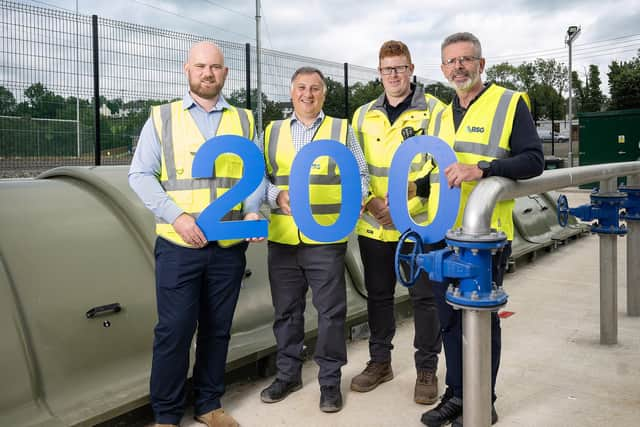
As with the majority of the RWwIP upgrades, at Moneyglass, a modern, fully enclosed treatment system was installed to replace the old open concrete tanks on the same site. Not only is the new system more efficient and effective, but its smaller footprint and partially-buried design offer a more visually pleasing layout adjacent to St Ergnat’s playing fields.
The benefits of the RWwIP have been delivered across the length and breadth of NI, and where possible, NI Water has introduced greener solutions such as reed beds, willows and solar panels, helping to further reduce power consumption and improve sustainability at rural treatment works.
Will Gibson continued: “Delivering wastewater projects in rural areas often involves working closely with landowners, residents and community organisations.
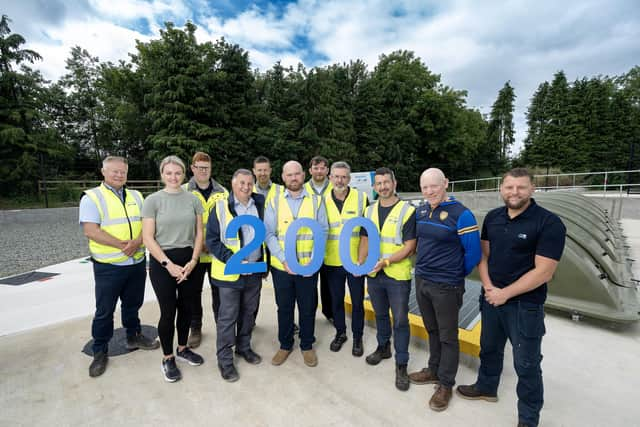
“I would like to thank everyone who has supported the programme over the years, and most recently, St Ergnat’s GAC and the wider community in Moneyglass. Reaching 200 completed schemes is a significant achievement for the Rural Wastewater Investment Programme and everyone who has contributed to its successful delivery.”