


There are already statues to some of Lisburn’s historic sons, including Frank Pantridge at Lagan Valley Island, General Nicholson in Market Square, and the Marquess of Downshire in Hillsborough.
But there are so many more people from the area, or who have connections to the city, that might deserve a statue in their honour.
Here are just a few of our suggestions for people who deserve to be memorialised. Perhaps readers have other suggestions for people they would like to see have a statue erected in their honour.
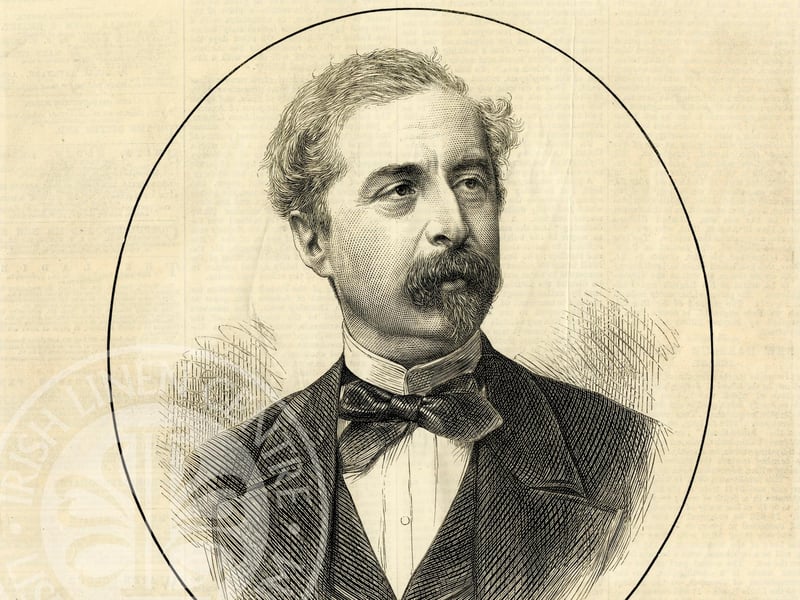
1. Do these people with connections to Lisburn deserve a statue?
Richard Wallace had a vast estate in Lisburn extending to over 50,000 acres. When Wallace visited it for the first time after his inheritance, accompanied by his wife and son, he was greeted by a crowd of 20,000 people and was welcomed in an elaborate series of ceremonies by the chief citizens. Wallace was invited to stand as its Member of Parliament, and being unopposed, won the seat and so began his parliamentary career. He built a grand residence in the town for himself, called Wallace House, more exactly intended for his son whom he intended to establish there to perform the functions of a great landlord, designed by the same architect who had remodelled Hertford House. He made many large charitable donations to the town, and was reputedly admired by the inhabitants. After his death various monuments were erected in his memory including two stained glass windows in Lisburn Cathedral, on the south wall of the chancel and on the south wall of the nave, one financed by public subscription, the other by Lady Wallace. His bequests to the town included the Wallace Park and The Wallace High School. His town house on Castle Street is now used as offices by the South Eastern Regional College. Photo: ILCLM
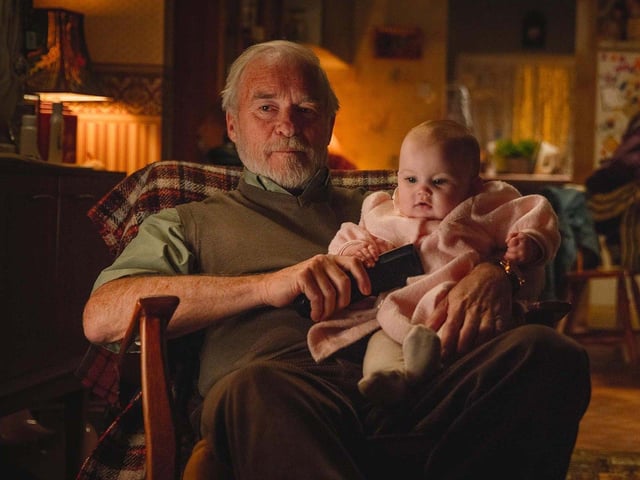
2. Do these people with connections to Lisburn deserve a statue?
Ian McElhinney, a former Friends' School student, is well known for his performances on stage and screen. Hs is well known for having taken on memorable roles in Game of Thrones and, of course, Derrry Girls. Photo: NIWD
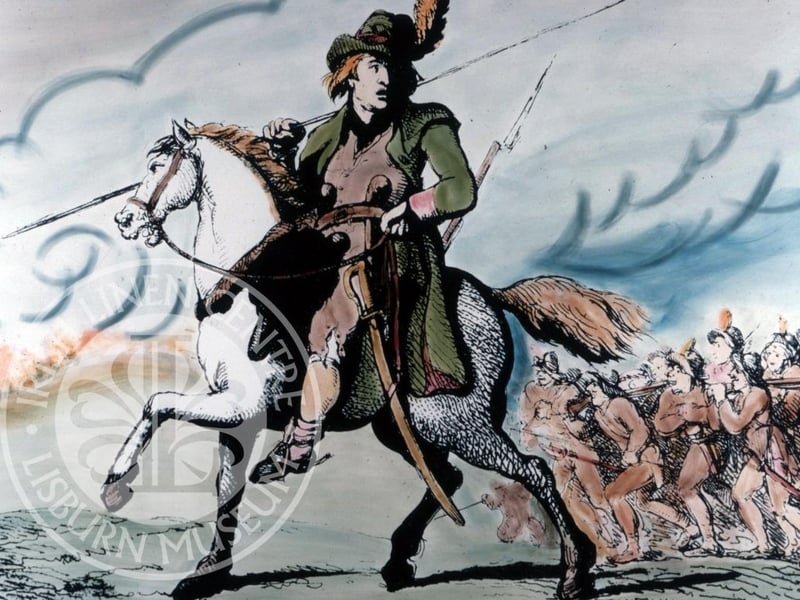
3. Do these people with connections to Lisburn deserve a statue?
Henry Munro was the only son of a Presbyterian tradesman of Scottish descent settled in Lisburn. His father died in 1793, leaving a widow whose maiden name had been Gorman. She brought up Henry and her two daughters in the Church of England and died at Lisburn about 1832. Henry received a mercantile education in his native town, and having gone through an apprenticeship entered the linen business about 1788. He afterwards paid frequent visits to England to buy silks and cloth and sell linen. While still a youth he joined the Irish Volunteers and is said to have been adjutant of the Lisburn corps. On the outbreak of the rebellion in Co. Down in the early summer of 1798, Munro, after the arrest of William Steel Dickson, was chosen by the committee of leaders at Belfast to take the command. On June 11, while at the head of a horse of rebels seven thousand strong at Saintfield, he sent a detachment to seize the town of Ballinahinch. Munro fled alone to the mountains. He was taken early in the morning of June 15 about six miles from Ballinahinch. He was immediately removed to Hillsborough, and taken to Lisburn, tried by court-martial, and hanged opposite his own door, and in sight, it was said, of his wife and sisters. For over a month, the severed heads of Munro and three of his lieutenants were displayed on pikes, one on each corner of the Lisburn Market House. Photo: ILCLM
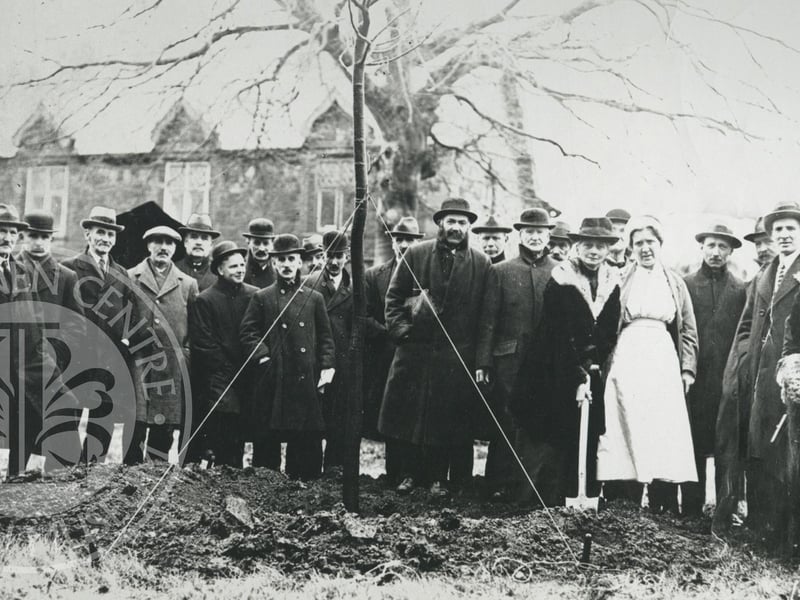
4. Do these people with connections to Lisburn deserve a statue?
Lady Gertrude Keightley married the barrister, politician, and author, Samuel Robert Keightley of Lisburn, in 1892. The couple first lived at Fort House, Lisburn, and later Drum House, Drumbeg. She was elected to the Lisburn board of guardians in 1896, only three years after the law was changed to allow women to serve on these boards. She served on this board until her death in 1929, and was the chair from 1913 to 1920. Like many other women who sat on these boards, Keightley sat on a number of sub-committees dealing with female staff, schools, clothing and workhouse visiting which were deemed suitable for women to oversee. She was the only woman on this board from 1900 to 1906, and during this time was in charge of supervising the "boarded-out" or fostered workhouse children. Keightley was among those responsible for the extension of legislation to Ireland in 1911 which facilitated the fostering of children whose parents were found to be "physically or morally unfit" rather than just those children who were orphaned or deserted. She ran unsuccessfully in the 1920 Hillsborough rural district council, possibly due to her husband's liberal politics. Around this time she was a prominent member of the National Society for the Prevention of Cruelty to Children and chaired the maternity and child welfare committee of Lisburn urban district council. She was a member of the board of governors of Lisburn and Hillsborough district hospital as well as the vice-chairman of Lisburn employment committee. She became a Lady after her husband received a knighthood in 1912. Keightley became the first woman magistrate to be appointed in County Antrim in 1925 when she became a justice of the peace. Photo: ILCLM