
Sheep being used to limit spread of giant hogweed in Armagh City, Banbridge and Craigavon borough
An environmentally-friendly way of getting rid of invasive giant hogweed plants is being trialled in the Armagh City, Banbridge and Craigavon borough – sheep!
The Woodland Trust warns that the sap of giant hogweed can cause burns. It contains furocoumarin, which makes skin extremely sensitive to sunlight. If the sap gets onto someone’s skin and it is then exposed to the sun, the skin can blister badly.
Blistering can then recur over months and even years. This is known as phytotoxicity.
A council report, presented to councillors at a recent Environmental Services committee meeting, explains that Gilford is particularly affected by hogweed, and that novel ways are being trialled to get rid of it.
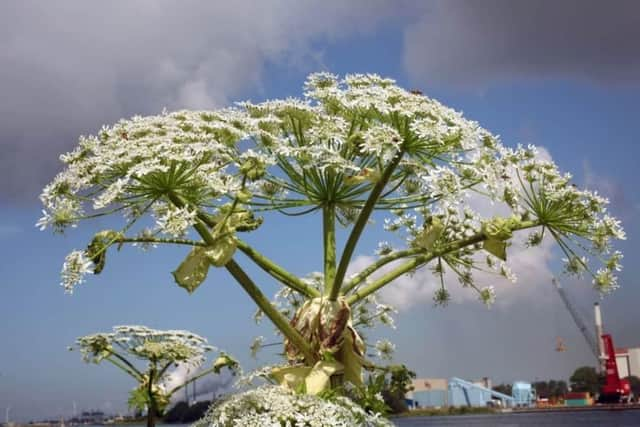

“Giant hogweed seeds are easily transportable by water and most of the infestations are along waterways, but the plant can easily spread into the adjoining land, if allowed to seed,” the report said.
“The seed can persist in the soil for up to 15 years and eradication often takes a number of years to effect. The plant can be sprayed or injected, and special clothing and measures are necessary to protect the operator.
“The River Bann has giant hogweed on much of its riparian area adjacent our towns and villages within the borough, and the resulting seed bank continually re-infests council land near the river.
“Flooding exacerbates the problem and washes seeds over the flooded areas. The council sites around Gilford are particularly badly affected, with giant hogweed spreading into the parks, and considerable effort is being expended to control it.

“Mapping of the area has shown a considerable reduction in the presence of giant hogweed on the amenity and playing areas, except for some presence in scrub or wooded areas where it can be difficult to find and treat, and also in the riparian areas where there is constant re-infestation.
“In addition to the normal control measures which include the use of herbicide, other methods are being trialled.
“Seagoe Landfill site, which has very extensive growth of giant hogweed, has been fenced off from the public while sheep, from Tannaghmore Farm, are being trialled to control the giant hogweed.
“Biodiversity Service have also partnered with Queen’s University Belfast on a PhD project to develop new methods of treatment which will avoid the need for herbicides.
“This project is also being trialled at Seagoe Landfill Site.”