
St Joseph’s Primary School closure would 'end Catholic education' in Caledon
Mid Ulster councillors heard powerful contributions from former pupils of St. Joseph’s Primary School in Caledon – which is earmarked for closure in 2027 – as they are concerned that closing it would effectively remove Catholic education from the village.
Attending the Policy and Resources committee meeting remotely on May 7 were Louise McConnell, who has children registered at the school, and Dr Luke Sherry, a member of the school’s board of governors.
Louise McConnell told committee members: “I currently have two children at the school. One child has transitioned to secondary school as well, and I do have another child who I hope will be joining the school in September 2027.
“I’m also a past pupil of the school myself, and I have joined this meeting tonight to help express the views of the parents’ collective of St. Joseph’s, and to stress that we believe the proposed closure of our school would have serious and lasting consequences for our children and for the entire community of the Brantry and Caledon.


“We are asking Mid-Ulster District Council to formally support our objection to the proposed closure, and to advocate for the retention of our school in Caledon.
“If St. Joseph’s were to close, many of our children will face significantly longer journeys each day, where they will be bussed away from the village to schools which are already oversubscribed and are teaching children in dinner halls, such as in St. Mary’s Primary School in Aughnacloy, and in [Roan] St. Patrick’s, Eglish.
“Small rural schools like St. Joseph’s are often community anchors, and our children play a vital part in this community, especially in the area of shared education with the local Protestant primary school.
“There has been fantastic cross-community work carried out in Caledon over the past number of years, with both schools taking part in projects and schemes to help foster dialogue and reconciliation between both sides of the community. This cannot be facilitated if St. Joseph’s is no longer there.
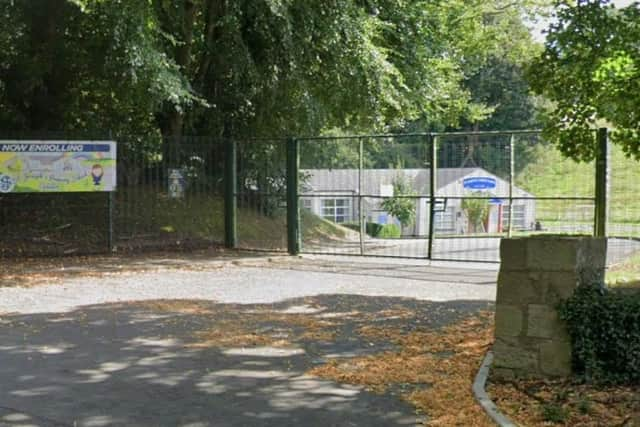
“St. Joseph’s is not just a school. It is a focal point of our community. Its closure would accelerate rural decline and remove one of the last shared spaces that brings families together.
“Us parents are concerned that the long-term projections and assumptions behind this proposal do not fully reflect the reality on the ground, or the potential for growth within our community.
“For many of our children, this is the place where they first felt confident, known, and supported. Removing that environment is not a small administrative change. It is a deeply personal loss.
“I am thinking specifically of those children who may have additional needs, where a change in school is a huge upheaval for them, or who may not get the same access to support in an oversubscribed school with limited resources.
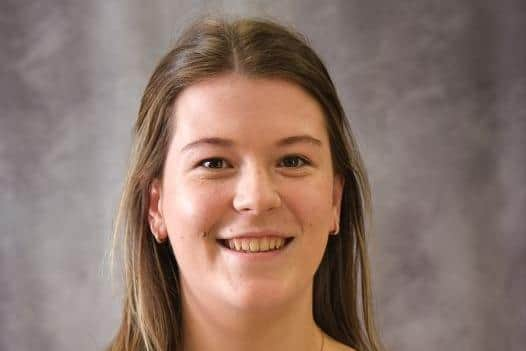
“So, the parents of St. Joseph’s Primary School in Caledon are appealing to you as our elected representatives to stand with our community, support our objection, and ensure that the voice of Caledon families is heard before any final decision is made about the future of our school.”
Dr Luke Sherry was equally concerned, telling committee members: “I’m a past pupil of St. Joseph’s and currently a member of the board of governors at both St. Joseph’s and St. Mary’s Primary School in the Parish of Aghaloo.
“I’m here to speak to you this evening not simply as a governor, but as somebody who grew up in the community, benefited from the education provided by St. Joseph’s and utilised this to serve the area professionally and personally.
“We have been heartened by the very substantial written responses, with over 3,000 submitted to CCMS, the Education Authority, and the Department, objecting to the proposed closure of our school.
“And I am also here to ask the council to continue standing with our community in opposing the proposed closure of St. Joseph’s Primary School in Caledon.
“It is deeply concerning that Mid Ulster District Council was not meaningfully consulted during this development proposal, despite the enormous impact it would have on our village.
“This proposal is framed as an issue of sustainability. But when you read the report closely, what becomes clear is that sustainability has been reduced to little more than numbers on a spreadsheet — enrolment figures, budget deficits and arbitrary thresholds.
“This school is not just a building. It is part of the social infrastructure of our village. It is woven into community life, into parish life, into sporting life and into cross-community life.
“The closure of St. Joseph’s would bring to an end over 120 years of Catholic education in Caledon.
“That history matters. That continuity matters. Communities are not sustained by economics alone. They are sustained by identity, belonging, and shared institutions.
“As somebody heavily involved in community relations locally, I can tell you clearly that the loss of St. Joseph’s would be a devastating blow to community cohesion within Caledon.
“Removing the only Catholic school from the village would fundamentally alter the balance of the community.
“This is not an abstract concern. It raises real questions under Section 75 equality obligations, particularly regarding religious equality and good relations.
“The consultation document concludes that there are no major impacts arising from the removal of Catholic education provision within Caledon. Frankly, I struggle to see how any reasonable person could arrive at this conclusion.
“This report treats transport and rural life as though it is simply a matter of distance. But I think we all know that rural life is not that simple. The rural needs assessment included within the proposal is wholly inadequate in addressing the true impact on rural life.
“St. Joseph’s is not a failing school. It is delivering a high standard of education and it has done so for decades.
“The last full ETI inspection rated the leadership and management as outstanding. As a former past pupil myself, I can personally attest to the quality of education I received there.
“There has been no attempt to calculate the social or economic value that the school adds to the community, and what impact a closure would have, and what loss this would be.
---
Read more:
---
“Instead, what we see is a rigid application of a policy [with a focus on] financial costs and enrolment thresholds over lived reality, community impact and educational outcomes.
“Meaningful alternatives have not properly been explored. The local Council was not adequately consulted. The views of the community appear to have been acknowledged but not truly considered.
“The impression created is that closure had been the preferred outcome from the beginning. This consultation seems to simply be about justifying the decision thereafter.
“This is bigger than one school. This is about what kind of rural communities we want to preserve within Mid Ulster.
“If we continue removing schools, services and institutions from villages like Caledon, we cannot act surprised when rural communities decline. Once a school closes, it almost never comes back.
“I am asking the council tonight to send a strong message to the Department of Education and CCMS that this proposal does not adequately reflect the educational, social, equality, and rural implications of closing St. Joseph’s Primary School.
“And I ask you to continue to stand with our community in calling for this proposal to be reconsidered before irreversible damage is done.”
Committee chair, Councillor Eva Cahoon thanked the speakers for their contributions, adding, by way of clarification: “You’ll be aware that the Council have responded and issued correspondence in relation to this, as agreed at our last council meeting.”
Councillors were then given an opportunity to air their own views on the matter.