
Economist questions why 'dual market access' hasn't already shown economic benefits - and warns the opposite could happen because of Irish Sea border restrictions
Benefits from Northern Ireland’s ‘dual market access’ should already be obvious – and friction on the Irish Sea border could result in the opposite of the promised economic growth stemming from the new arrangements, according to a leading economist.
In a Stormont committee on Wednesday Invest NI’s chief executive admitted there hasn’t been any foreign direct investment relating to the ‘dual market access’ heralded under the Windsor Framework – despite global leaders promising unprecedented advantages for investment.
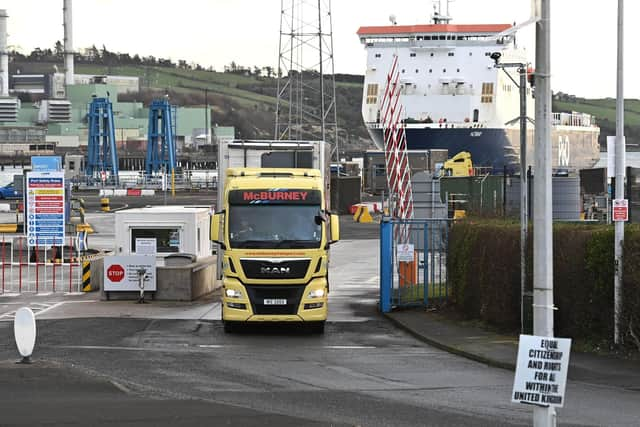

A senior department of economy official also said that trade between Great Britain and Northern Ireland “remains evolving and uncertain”.
Since the Protocol came into place, Northern Ireland has remained in the EU’s goods market – with trade from Great Britain heavily restricted. Local businesses have been promised “unfettered” trade into Great Britain, but traditional supply chains have been disrupted by EU customs rules on goods entering Northern Ireland.

Esmond Birnie, a senior economist at Ulster University says any benefits should already be apparent.
He told the News Letter: “Retaining ‘dual market access’ is a day one benefit. It is something which NI has had right from when the post- Brexit arrangements began in Jan 2021.
“This means it could be argued any benefits should have begun to be obvious. Moreover, the frictions of the ‘Irish Sea Border’ have been growing – for example the removal of grace periods .
“So, contrary to any argument we will see dual market access benefits grow over time we could see the opposite as the disadvantages of the Protocol/Windsor Framework bite more and more”.
He also said that uncertainty over regulations in Northern Ireland will be a factor for businesses.
“International investors are quite sophisticated. They will be factoring in the full range of locational factors relating to Northern Ireland, for example the Protocol and also things like it is unclear going forward whether our regulations will be closer to EU or UK, also factors such as Stormont's periodic instability, relatively low labour costs (but also low productivity)”, Dr Birnie said.