
Mixed reviews for Stormont's response to Storm Eowyn - as question of who is in charge raised in the Assembly
The Executive’s response to handling the aftermath of Storm Eowyn has received mixed reviews – as questions are raised about who precisely has been co-ordinating the overall operation.
Ulster Unionist Steve Aiken says ministers have been doing a “reasonable job” – while the TUV says it has “left much to be desired”.

The exact role of ministers in co-ordinating the response remains unclear – after the deputy first minister pointed to strategic groups and civil servants when asked by the leader of the opposition who was in charge.
It appears that departmental officials, not ministers, are taking on the lead responsibility for each stage of the crisis response, as it transfers between departments.
At the weekend, the PSNI announced that it had handed over its responsibilities to the Department for Infrastructure – but the minister John O’Dowd made no mention of this in a statement he released on the matter.
In the Assembly on Monday, the First Minister made a “strategic statement” – in which she said ministers had been working together in the aftermath of Storm Eowyn.
Michelle O’Neill said that the PSNI and local government had been in charge of the initial responses – with responsibilities then shifting to the department for communities. She said “this partnership and multi-agency working is essential”.
The News Letter understands the view within the Executive is that the departmental officials rather than ministers are responsible for these efforts under civil contingencies procedures.
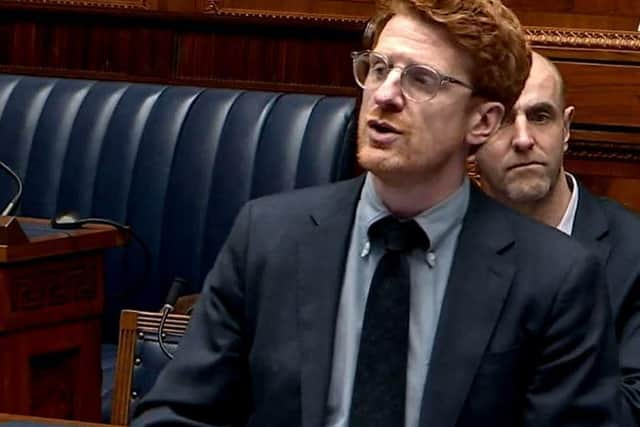
SDLP opposition leader Matthew O’Toole asked how the response was being co-ordinated centrally now that the Department for Communities officials are in charge of the current phase – and whether the Executive Office was in charge overall.
Emma Little-Pengelly said “co-ordination is key to many of these issues because we’re dealing with a number of different departments, a number of different agencies all with different responsibilities. They key thing with all of this is to make sure that co-ordination and communication is working”.
The deputy First Minister said that over the weekend there were nine strategic groups which met – involving many different agencies and departments. She said their role was to get “real time information as quickly as possible and feed that through to who it needs to be targeting and directing that help to the places where it is needed”.
The DUP minister said there were also a number of Cobra-level meetings to discuss a UK-wide response.
She said herself and the First Minister had been “in constant contact, particularly through the Head of the Civil Service and our Civil Contingencies team, sitting in the Executive Office”.
A TUV spokesperson said: “The whole response of Stormont to the storm has left much to be desired, particularly in terms of getting answers for constituents about issues which are persisting.
“For example, today we had a single statement from the Executive Office on the storm and many of the issues raised - including serious matters such as the failure to close roads even after an accident as happened in North Antrim - could not be addressed by the Ministers as it fell outside their remit”.
The UUP’s Steve Aiken said “they seem to be doing a reasonable job. There are some real issues that need to be dealt with – but these aren’t the problems of the Executive.
“NIE needs to look at its resilience process very closely. And there are some real questions that need to be asked about the mobile telephone providers and networks.
“Because there’s no point giving us all an alert and then everybody’s systems goes down”.
On Saturday, John O'Dowd's infrastructure department took charge of handling the aftermath of Storm Eowyn, after police handed over the responsibilities to the Sinn Fein-run ministry under civil contingencies procedures.
However, on Sunday there had been no official public update from the minister for over 24 hours – despite a number of posts from the deputy first minister updating the public on attempts to restore electricity to stricken homes. The responsibility for leading the next stage of the response falls to Gordon Lyons’s communities department.