
New laws could ease sea border friction - but don't deal with underlying problems - TUV
New legislation which could keep Great Britain in line with Europe on product standards – and subsequently lessen the impact of the Irish Sea border – has come in for criticism from Brexiteers.
It also poses something of a dilemma for unionists in how to respond, as while it has the potential to lessen trade friction – it does nothing to deal with the constitutional and sovereignty issues posed by the Windsor Framework.

The TUV say the new legislation works “in tandem with the Windsor Framework” to keep the UK tied into the EU single market.
However many unionists will welcome anything with eases the current situation. The DUP leadership will privately welcome anything which lessens the impact of the sea border, even if it is far from a ‘pure’ Brexit.
Others in the party are concerned about Northern Ireland being at the mercy of piecemeal legislation which may work in helping GB-NI trade this instance – but in future, as in the past, won’t.
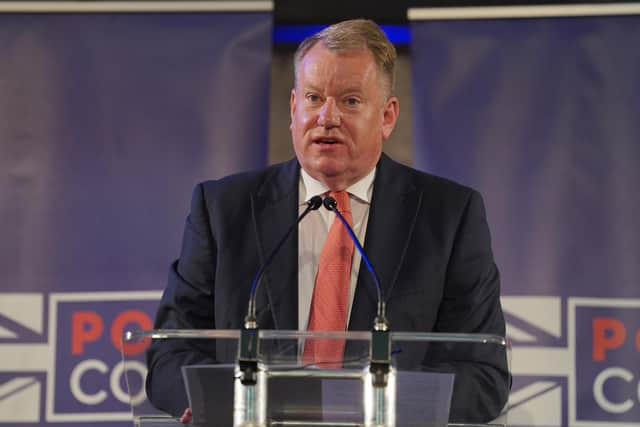
Former Tory minister Lord Frost raised the issue earlier this week, saying a new product safety Bill will see Labour reintroduce regulatory alignment with with EU.
The Product Regulation and Metrology Bill provides for new government powers to regulate the marketing and use of goods in the UK post-Brexit.
Conservative peer Lord Frost said the Bill enables ministers to ensure UK regulations automatically follow changes in EU law, which “amounts to dynamic alignment”.
He said: “This is a power to re-import EU law concepts back into our system.
“It allows UK products standards described not in UK law terms, but simply by a cross-reference to EU law. When that EU law changes, so ours will change.
“It is simply the beginning of a path in which we slip back closer, without voters noticing, into single market-like trade arrangements.”
The DUP were asked for their view on the matter, but did not respond to a request from the News Letter.
Former DUP head of policy Dan Boucher, who now works for TUV leader Jim Allister in Westminster said fundamental change to the overall structures of the Windsor Framework is still necessary.
He told the News Letter: “The notion that the EU has sought to keep Northern Ireland in the EU, or at least its single most important institution, the single market, claiming the right to make laws for Northern Ireland not just in one but 300 areas, has long been spoken of as part of an EU strategy to try to keep the UK as a whole aligned with the EU as much as possible.
“The EU desperately does not want any part of the UK to obtain a competitive advantage arising from it have a different regulatory regime.
“The Product Regulation Bill, working in tandem with the Windsor Framework, is doubtless conceived as a delivery mechanism for furthering this strategy.
“In this, as ever, the overriding imperative remains the same, the removal of the Windsor Framework and full reintegration of Northern Ireland in the UK single market for goods, and full re-enfranchisement of the people of Northern Ireland.
“At the end of the day, the EU must recognise the territorial integrity of the UK”.