
Stormont's health department says trans clinic commissioned 'when Edwin Poots was Minister'
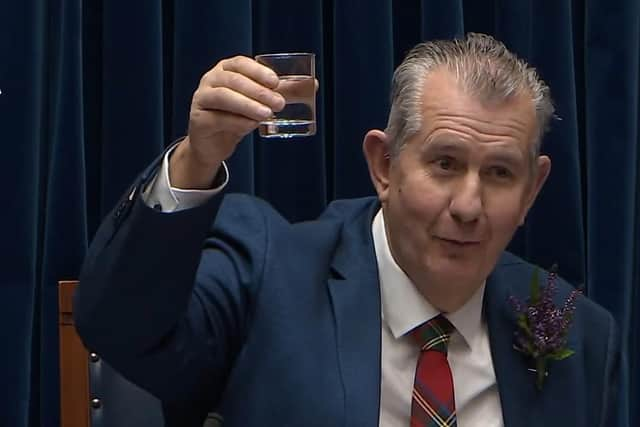
The first gender identity service for children in Northern Ireland was commissioned by health authorities in 2014, when DUP MLA Edwin Poots was health minister, officials have said.
It comes amid a growing political row over an expanded gender identity service announced by current Health Minister, UUP leader Mike Nesbitt.

The Department of Health said the service is not new, and merges existing transgender provision for children and adults – with the “model of care that has been in place for many years” continuing.
Mr Nesbitt’s approach to the service has been repeatedly criticised by DUP representatives – with Diane Dodds MLA describing it as “ideological experimentation on children by the state”.
The News Letter asked the Department of Health when the existing gender service for children was started, and which minister signed the policy off.
A spokesperson said: “A Regional Gender Identity Service (KOI) was commissioned from Belfast Trust by the then Health and Social Care Board (now the Strategic Planning and Performance Group, SPPG) in August 2014 when Edwin Poots was Minister of Health”.
A DUP spokesperson said: “We are concerned by the announcement made by the Health Minister given that the rest of the United Kingdom has moved in a different direction following the publication of the Cass Review, which raised serious evidence-based concerns.
“We will be pressing the Minister for clarity on his position and seeking answers through the Health Committee when the Assembly returns in September.”
The KOI (Knowing Our Identity) service aimed to provide “expert help to children, young people and their families in relation to gender related problems”.
Puberty blockers were previously prescribed to many children experiencing gender related distress, before the executive backed a proposal from Mr Nesbitt to ban the drugs late last year on safety grounds.
The drugs stop children developing in line with their biological sex, and are part of what LGBTQ+ groups – as well as political parties such as Alliance and Sinn Fein – have euphemistically called ‘gender affirming care’.
Many of these children went on to further medical interventions as adults, such as cross-sex hormones, castration for males, mastectomies for females and other cosmetic procedures.
Since services were commissioned in 2014, there has been growing concern over the medicalisation of children identifying as the opposite sex – most notably after the 2024 Cass report into gender services in England.