
Holywood Steiner School celebrates 50 years
In an educational world increasingly dominated by testing, targets, screens and pressure, one school in Holywood has spent the past 50 years quietly championing a very different approach to childhood and learning.
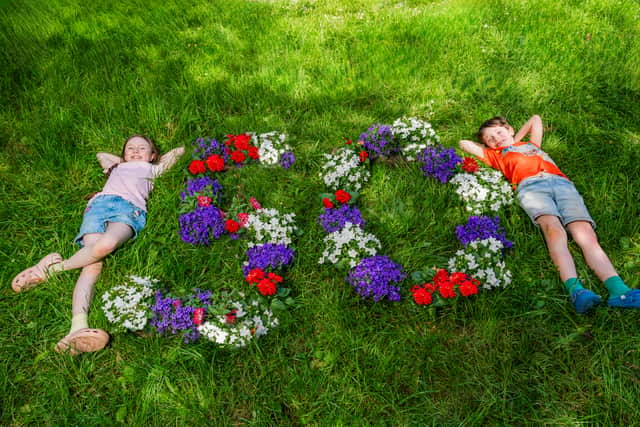
Holywood Steiner School recently celebrated its 50th anniversary with a special gathering of former pupils, parents, teachers and supporters, reflecting on five decades of child-centred education rooted in creativity, curiosity and emotional wellbeing.


Founded in 1976 by a Dutch lady, Saralies van den Briel who began the school in a single room in Holywood, the school has grown into one of Northern Ireland’s most distinctive educational communities and forms part of the worldwide Waldorf Steiner network, which now spans more than 1,600 schools globally.
Despite common misconceptions that Steiner education is less academically rigorous, Holywood Steiner School continues to achieve impressive results. In 2025, 91% of GCSE grades achieved were between A* and C, including English and Maths - significantly above the Northern Ireland average - despite the school being proudly non-selective.
For principal Peter Chambers, who came to Steiner education after years within mainstream schooling, the results reinforce the school’s belief that children thrive academically when learning is built on confidence, creativity and emotional security rather than pressure and testing alone.
“When I first came into Steiner education, I immediately noticed the atmosphere,” he said.
“There was a warmth, a calmness and a real sense of children being known properly. There’s a genuine focus on making children feel supported, cared for and included, while also helping them grow in confidence and capability.”
Peter describes the school’s philosophy as an “unhurried education” - an approach that deliberately resists the increasing pressure being placed on children at younger and younger ages.
Unlike many traditional schools, Holywood Steiner School intentionally delays the formal introduction of reading and literacy until around the age of six - an approach increasingly reflected in many high-performing education systems globally. The philosophy is rooted in the belief that early childhood should focus first on language development, movement, imagination, play, emotional security and physical development, helping children build the strong foundations needed for deeper learning later on.
“There can be a misconception that earlier always means better,” Peter explained.
“We focus first on developing curiosity, communication, creativity and confidence. When children are emotionally ready and genuinely engaged, literacy develops very naturally and often very quickly. The children are allowed to develop at a speed that is right for them.”
The school believes this approach helps children develop stronger long-term comprehension, creativity and a genuine lifelong enjoyment of learning, rather than associating education with anxiety or pressure from an overly young age.
At Holywood Steiner School, imaginative play and outdoor learning are central parts of daily life. Children are encouraged to explore, create and problem-solve through storytelling, music, movement, practical crafts, forest school activities and hands-on experiences, rather than relying heavily on screens or rigid testing structures.
Simple objects are intentionally left open-ended to encourage imagination and creativity. A climbing frame can become a cave, a pirate ship or a castle - shaped entirely by the minds of the children themselves.
“We don’t want children to lose their curiosity or their joy in learning,” Peter said.
“Many parents are concerned that childhood today has become overly pressured and heavily screen-driven and rigorously tested. At Steiner, we try to remove that fear of failure. Children are not grouped or labelled too early. Instead, teachers get to know every child individually and can support and challenge them where they need it most.”
One of the school’s defining features is its strong sense of class culture and continuity. Teachers often remain with the same class group throughout the child’s progression through the school, allowing deep relationships and understanding to develop between pupils and staff.
With average class sizes of around 14 pupils, the school believes no child becomes overlooked.
The Steiner curriculum itself is designed to evolve alongside the developmental stages of the child. Subjects introduced at an early age are revisited later with increasing depth and complexity, helping pupils build stronger understanding and deeper long-term learning.
Music, movement, languages, practical skills and creative arts are treated as equally important alongside academic achievement, reflecting Steiner’s belief in educating the “whole child”.
As Holywood Steiner School celebrates its golden anniversary, the school says growing numbers of families are seeking alternatives to heavily exam-driven and screen-focused education systems.
“Parents today are asking deeper questions about education,” Peter said.
“They’re asking: Is my child happy? Are they confident? Do they enjoy learning? Are they being seen and understood as individuals?
“What families often discover when they visit Steiner is a sense of calm, creativity and connection that feels very different from the fast-paced world children are growing up in today.”
The school is also continuing to invest in the future, with plans for further campus development including enhanced kindergarten play areas, a music hut and wider community use of the facilities.
As Holywood Steiner School looks ahead to its next 50 years, its message remains both simple and powerful - education should nurture the whole child, not simply prepare them for exams.