
Pupils at Woodlawn Primary School in Carrickfergus complete MARSBalloon experiment
Pupils at a Carrickfergus primary school have taken the first steps on their very own ‘mission to Mars’ thanks to an out-of-this-world science experiment.
Woodlawn Primary School participated in the MARSBalloon project 2024 with global space manufacturer, Thales Alenia Space.
The project carried over 150 student experiments from across the UK to an altitude of 30km - a position more than twice the height of commercial airliners and above 99 percent of Earth’s atmosphere.
Along the way they experienced conditions very similar to the surface of Mars including temperatures of -50°C, pressures 1/100th that of sea level, and an increased radiation dose.

It allowed students to test the response of a variety of items to the conditions outside of a future Mars base - helping would-be explorers to prepare for this strange and hostile environment.
At Woodlawn, children aged between 9-11 in the school's Jigsaw Room chose to send cress seeds and yeast into the atmosphere in a bid to assess the effects of the journey on the material.
Their idea originally arose following a discussion over what it would be like to be in space and the things that astronauts needed - food, water, clothes and shelter.
Class teacher, Kathryn Edwards said: "After a lot of talking about what food would be like in space and freeze dried foods mentioned, we decided to test what happens to a sandwich.
"A ready made sandwich might go off on its way to Mars, but we could test to see if the astronauts could bake bread and grow cress and actually make sandwiches in space.”
Students kept the same weight of yeast and cress seeds in their classroom, aiming to plant the seeds and use the yeast to make bread when the experiment was returned to them.
Their original hypothesis was that the yeast sent to space might not make bread as well as the yeast that stayed in the classroom – but were they correct?
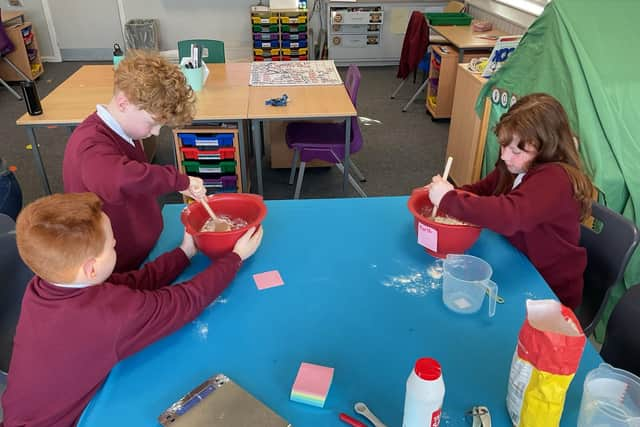
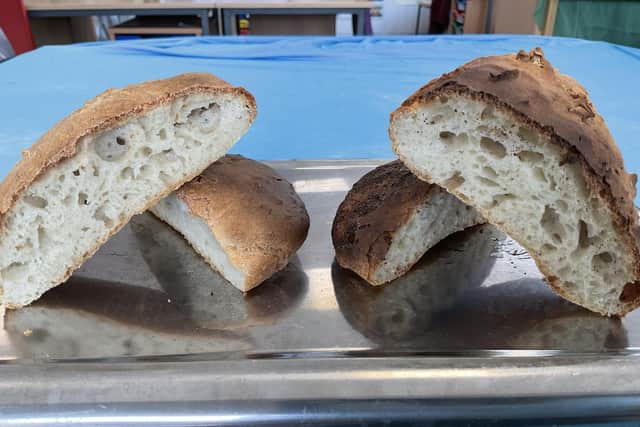
Pupils tested their theory on September 6, making bread to compare the 'space' yeast and yeast that stayed on earth.
“Our two mini loaves were very similar and they both tasted amazing,” Mrs Edwards added. “We concluded that despite the yeast being on an amazing journey, surviving temperatures of - 44°C and increased radiation, that astronauts CAN make bread in space!”