
Caolan Reynolds: PSNI ruled to have acted lawfully in stopping and searching Lurgan man up to 20 times in a year
Members of the PSNI acted lawfully in stopping a Co Armagh man in his car for searches on up to 20 occasions during the course of a year, the Court of Appeal has ruled.
Senior judges rejected claims by Caolan Reynolds that the repeated procedures illegally breached a code of practice.
Lord Justice McCloskey dismissed the 24-year-old’s challenge because he was in a properly authorised area during each of the incidents.
"The appellant has failed to establish that the stopping and searching of his person by police officers on any of the occasions in question were unlawful,” he held.
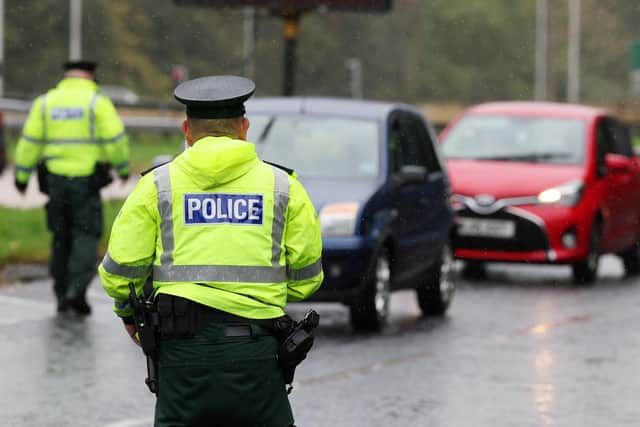

Mr Reynolds, who is from Lurgan, said he was detained by the PSNI approximately 20 times between July 2019 and July 2020.
During each incident he had to get out of the car so that police officers could search the vehicle and pat him down by the side of the road.
There is no suggestion that any illegal activity or items were ever detected.
Mr Reynolds claimed he was targeted because the security forces suspected a relative is involved with dissident republicans.
It was alleged that police acted in a bid to pressurise him into providing information.
He sought a judicial review of the PSNI’s right to subject him to the repeated actions under the Justice and Security (NI) Act 2007 without reasonable suspicion.
Under the Act, a constable who has obtained authorisation from an Assistant Chief Constable is allowed to stop and search for munitions or wireless transmitters in specific locations.
Lawyers representing Mr Reynolds argued that the powers are limited to public places which do not cover those stopped in a car.
They claimed the legislation prohibits police officers from searching private motor vehicles in the absence of reasonable suspicion.
It was further contended that police have not complied with safeguards and failed to implement a system of community monitoring around the use of the powers.
Counsel for the Police Service of Northern Ireland insisted, however, that authorised officers are entitled to stop and search cars in public or private places.
Parliament had provided the exceptional power to deal with an exceptional threat, it was contended.
Mr Reynolds mounted an appeal after his initial application for judicial review was rejected.

But upholding the earlier determination, the court identified an “insurmountable hurdle” based on the Co Armagh man stating that he was outside the car during every police search.
"We consider it incontestable that on each of the occasions under challenge the appellant was in a (lawful place of authorisation),” Lord Justice McCloskey said.
"He was, in the statutory language, a person in the specified area or place when searched by a police officer.”
The court held that issues about whether the authorisation covers private premises such as the inside of a house or vehicle did not arise.
Dismissing the challenge on Friday, Lord Justice McCloskey added: “It follows inexorably that the exercise of the statutory power to search the appellant on each of the occasions under challenge was lawful.”