
Marian Beattie: Police Ombudsman recommends independent review into Portadown teenager's murder in Co Tyrone
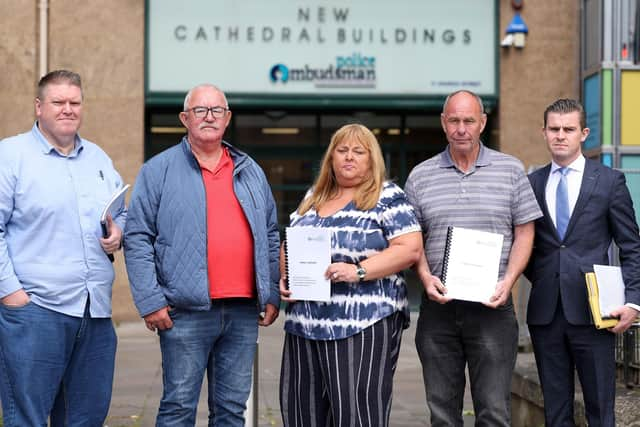
The Police Ombudsman’s Office has recommended the PSNI should commission an independent review of the murder of Portadown teenager Marian Beattie more than 50 years ago.
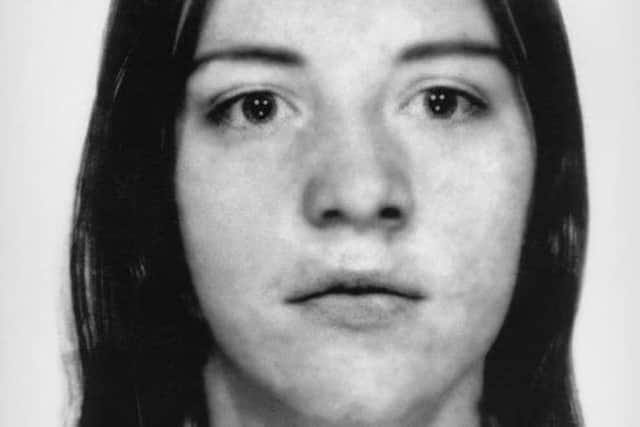
The partially-clothed body of the 18-year-old was found at the bottom of a quarry in Co Tyrone after she had left a dance with an unidentified male in the early hours of March 31, 1973.
No one has ever been charged with or convicted of her murder.
The recommendation comes after the Police Ombudsman’s investigation identified numerous failings during police enquiries into the murder.

It found that police had failed to ensure that all lines of enquiry were progressed, that all suspects were interviewed, that all alibis were checked, and that discrepancies between some suspects’ accounts and other evidence were examined.
The Police Ombudsman’s Chief Executive, Hugh Hume, said that Marian’s family had not received the service that they deserved from the police.
“In 50-plus years after her murder, up until earlier this year, there were only eight documented contacts between the police and the family. It is understandable that they have lost confidence and trust in the police,” he said.
"Although our enquiries found no evidence of individual police criminality, nor misconduct by any serving officer, the police investigation of Marian’s murder has been undermined by organisational and systemic failings.”
Mr Hume added that although Marian was murdered in 1973, there were lessons to be learned from the case of relevance to current policing.
"At the time of Marian’s murder the police faced significant policing challenges, with hundreds of murders each year being attributed to ‘the Troubles’, and that context was taken into account during our enquiries.
"Nevertheless, we must learn from past errors and omissions, particularly if we are to properly address the problem of violence against women and girls in local society. Northern Ireland has the second-highest levels of femicide in western Europe,” he said.
"Unfortunately, the Police Ombudsman has found a similar lack of investigative rigour and pre-emptive conclusions in some recent PSNI femicide investigations.
"Police Ombudsman investigations are critical to learning lessons, and it is my hope that our recommendation for an independent review will help to ensure that future police enquiries into Marian’s murder are comprehensive and focused.”
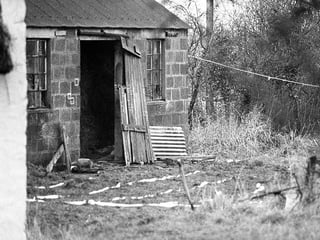
Marian went missing after attending a dance at Hadden’s Garage in Aughnacloy on the evening of March 30-31, 1973. After being unable to find her following the event, Marian’s brother reported her missing at Aughnacloy Police Station. Police conducted searches and her body was found at the bottom of the quarry, beneath a 90-foot drop, at around 6am on March 31, 1973.
A post mortem examination undertaken later that day concluded that Marian had died from multiple injuries. Some of these were consistent with a fall to the quarry floor, particularly injuries to the left side of her body.
However, other injuries were deemed to have been sustained separately.
The Police Ombudsman investigation found the RUC reacted quickly following the discovery of Marian’s body.
Items were recovered, including articles of clothing and forensic samples. These were submitted for analysis to the forensic science laboratory and returned to the police on January 18, 1974. There is no record of what happened to them after their return to police and all are now missing.
They include a palm print, formed in mud on the heel of Marian’s right shoe, which became a significant focus for police. Although a photograph of the print does still exist, the shoe itself is missing.
Police records indicate that 419 people who had been at the dance were located and interviewed by police, using a standard questionnaire format. Although the questionnaire that was used is still available, all completed questionnaires are amongst the missing documentation.
The Police Ombudsman’s investigation identified that police investigating Marian’s murder had missed numerous evidential opportunities, including “reasonable lines of enquiry that do not appear to have been followed”.
However, it also found that - due to the passage of time, the loss of records and exhibits, and the fact that investigators were unable to speak to many officers involved in the murder investigation - it was not always possible to establish whether lines of enquiry had been followed and not documented, or whether they had not been progressed at all.
For the same reasons, Police Ombudsman investigators were often unable to determine the rationale for decisions taken during police enquiries.
Nevertheless, Mr Hume said it was clear that there were significant outstanding lines of enquiry in relation to suspects that had not been pursued.
The Police Ombudsman’s investigation found that up until earlier this year, there are only eight documented contacts between police and Marian’s family in the five decades since her murder - although investigators noted that records of the actions taken by police were incomplete.
"I am concerned that the family were led to believe that the investigation was effectively complete, because that does not appear to have been the case,” said Mr Hume.
"Marian’s family have lost confidence in the police. There should have been greater levels of communication and transparency.”
Family members also advised Police Ombudsman investigators that police had made comments on four separate occasions that led them to believe there were potential links between suspects and either police, military / security services or paramilitaries.
Although there were no police records of this being discussed, available information suggests it is more likely than not that such comments had been made.
The Police Ombudsman investigation found that three suspects had paramilitary links and two were former police officers.
"Although our investigation has found significant errors and omissions during the police enquiries into Marian’s murder, it is my hope that the independent review we have recommended will ensure that every effort is made to uncover the truth about her murder, and to finally bring her killer, if still alive, to justice,” said Mr Hume.