
NIEA officers liaising with Antrim and Newtownabbey Council after tyres dumped in Mallusk
An investigation is underway into the dumping of tyres on private land in Mallusk.
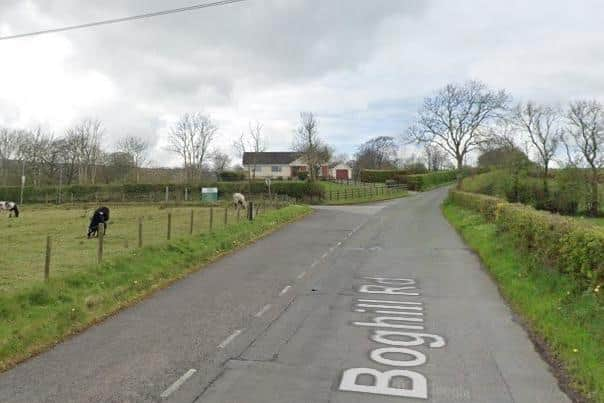
Pictures shared on social media this week appear to show dozens of vehicle tyres dumped on the edge of a laneway in the Boghill Road area.
Antrim and Newtownabbey Borough Council and the Northern Ireland Environment Agency (NIEA) are now liaising “on next steps”.
Responding to the Newtownabbey Times about the issue on August 28, a spokesperson for the local authority said: "The council's Environmental Health section is aware of fly-tipping incidents involving tyres within the past few months occurring on private property in the Boghill Road area of Newtownabbey.

"The council is responsible for managing small-scale fly-tipping, while larger-scale incidents fall under the jurisdiction of the Northern Ireland Environment Agency (NIEA). In this case, the council conducted an initial investigation and has since informed the NIEA about the fly-tipping in the Boghill area.
"Under the Waste and Contaminated Land (NI) Order 1997, both the council and NIEA have the authority to address fly-tipping incidents if a perpetrator is identified.

"The council can issue a fixed penalty notice of £400 to individuals caught illegally dumping waste, or prosecuted for the offence. The council would like to remind everyone that whether you are a business owner, a sole trader, or an individual looking to dispose of excess waste, the law is clear it is your responsibility to manage and dispose of your waste properly."
In a statement issued to this newspaper, a spokesperson for the NIEA confirmed that the most recent incident for this area was reported on August 30, 2024, adding: “NIEA officers will liaise with the council on next steps. The fly-tipping protocol between councils and NIEA seeks to determine which body will take the lead regarding specific cases of illegal dumping.
"Under this protocol NIEA takes responsibility for investigating large deposits of non-hazardous wastes of 20m³ or more and hazardous materials such as asbestos that cannot be accepted by councils. Councils are responsible for dealing with all other deposits."
Asked when the site is set to be cleared, the NIEA spokesperson stated: “This will depend on the nature and quantity of waste present.”
Detailing what action can be taken if the perpetrator can be identified, the Departmental spokesperson explained: “NIEA focuses its enforcement actions primarily on cases which are high risk to health and or the environment and large-scale waste dumping activity rather than low level ad-hoc dumping often referred to as ‘fly-tipping’, which is primarily addressed by district councils.
"NIEA utilises powers contained within the Waste and Contaminated Land (Northern Ireland) Order 1997 to pursue prosecutions which are often coupled with confiscation proceedings under the Proceeds of Crime Act 2002 aimed at depriving those convicted of the proceeds generated from their crimes whilst asserting the ‘Polluter Pays Principle’.
"The NIEA needs the assistance of the public. If you have any information which would help with the detection and prevention of environmental waste crime, this can be reported to the NIEA’s incident hotline on 0800 807 060.
"Alternatively, you can contact the NIEA’s Enforcement Branch by email at [email protected] or on 028 90569453.”