
PSNI on speed camera 'myths and facts' - from fines to where vans are allowed to park
The Police Service of Northern Ireland is aiming to ‘set the record straight’ when it comes to myths and facts about speed cameras.
In a social media post, the PSNI said there were “so many misconceptions about how speed enforcement works - from who is allowed to operate cameras, to where vans can park to what happens with the money from fines”.
Through a dedicated webpage with information on the topics such as the Road Safety Partnership, speed limits, and statistics, the Service has also produced a list of the most common myths about speed cameras – and the facts behind enforcement.
Among the top queries about speed detection vans was where they are entitled to park.
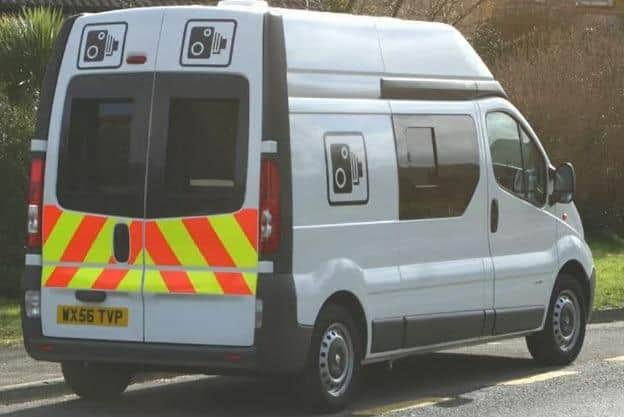

"A camera van isn’t subject to parking regulations when carrying out speed enforcement; however, we expect our staff to use discretion and common sense while adhering to local guidelines and designated parking locations,” the PSNI said.
Countering another common assertion that road safety vans are simply about gathering money for the government, the Service added: “The revenue generated by the vans and from the fixed sites is reinvested into road safety, such as upkeep of the vans and sites, and supporting other road safety educational programmes such as the award winning Roadsafe Road Show for our young people.”
The webpage also gives clarity about the so-called threshold for speeding, often cited to be 10 percent of the speed limit plus 2mph – meaning, for example, a driver could hypothetically travel at 35mph in a 30mph limit zone. “Thresholds vary and can change without notice. Any offence occurs at 1mph over the limit – officially you can be prosecuted at that speed; however, most forces will allow a variance.”
Other frequent misconceptions include the myth that only a police officer can carry out speed enforcement; however, the Service notes that a trained civilian who has authorisation from the Chief Constable can do so.
There are also no laws about the required ‘visibility’ of the vans to motorists, with Police reiterating that being visible acts as a deterrent: “Therefore, we only use marked vehicles and all speed cameras are high-vis yellow.”
Vans are also not required to place signage at an enforcement site; however, speed limit signs fixed to the street furniture or placed at the roadside will be visible to drivers before entering the enforcement area.
Operation Lifesaver
Earlier this year, 700 drivers were caught breaking the speed limit on Northern Ireland roads in just one day.
A day-long road safety operation on Wednesday, April 16, was part of Operation Lifesaver, the PSNI’s new approach to speeding carried out by officers and road safety camera vans.
Officers conducted almost 260 speeding operations across Northern Ireland, spanning all 11 policing districts.
Around 800 motoring offences were detected, of which approximately 700 were specifically for speeding.
Operation Lifesaver is part of an ongoing commitment to tackle the ‘Fatal Five’ – speeding, drink or drug driving, careless driving, not wearing a seatbelt, and using a mobile phone while driving.
The PSNI said these high-risk behaviours continue to be the “leading causes of deaths and serious injuries on our roads”.