
Asian hornet: Public warned after first confirmed sighting of 'harmful invasive species' in Northern Ireland
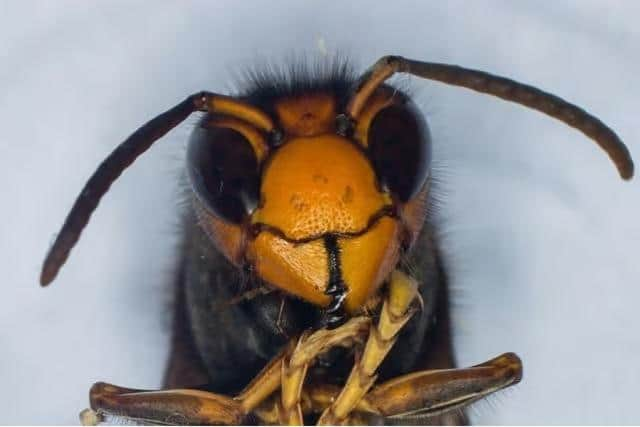
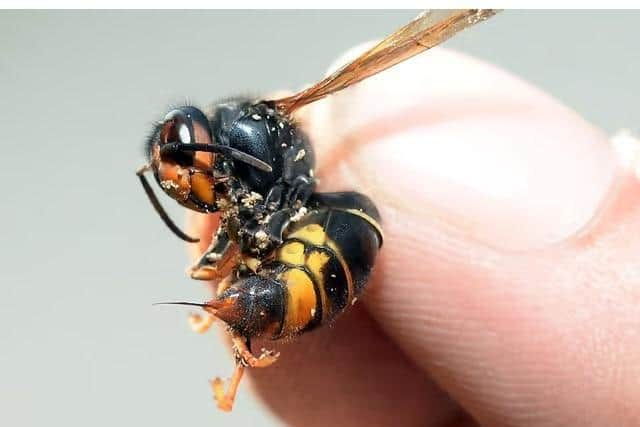
The first confirmed sighting of an Asian hornet has been confirmed in Northern Ireland.
The insect, described by the Department of Agriculture, Environment and Rural Affairs (DAERA) as a “serious threat to both biosecurity and local ecology” was captured in the Dundonald area of Belfast on October 10 by a vigilant member of the public.
The Northern Ireland Environment Agency (NIEA) confirmed on Monday that the insect was indeed an Asian hornet and officials are now trying to establish if there may be a nest.
Also known as a yellow-legged hornet, the species originates from east Asia and was first recorded in Europe in 2004.

Individual insects and nests are increasingly recorded in southern counties of England and two nests were found and destroyed in the Cork area earlier this summer.
DAERA said the species is a highly effective predator of insects including honeybees, wasps and other important pollinators, such as hoverflies. Due to its aggressive nature and feeding habits, it could have a serious impact on native insect biodiversity and on pollination services more widely.
NIEA officials have deployed specialist equipment and commenced a monitoring programme involving live traps and visual survey to determine if this is an isolated individual insect or whether there may be a nest.
If other Asian hornets are detected and confirmed, intensive monitoring will continue to trace and remove any nest, with monitoring afterwards to ensure that there is no further Asian hornet activity.
NIEA officers are being assisted by colleagues from the National Biodiversity Data Centre, as part of the Shared Island Biosecurity and Invasive Species Initiative, benefiting from the practical experience they have gained from recent Cork and Cobh incursions.
Andrew Muir, Minister for Agriculture, Environment and Rural Affairs commented: "This is a harmful species that I do not wish to see becoming established in Northern Ireland as it presents a serious threat to both biosecurity and local ecology, particularly valuable pollinating insects.
"On current evidence this is a solitary Asian hornet, but a Departmental response is underway to ensure that no other Asian hornets are present. I am grateful to the Dundonald householder who captured and reported the Asian hornet and would urge the public to remain alert to the potential presence of this insect."
How can I identify an Asian hornet?
The Department said the public can find out more details from the following websites:
What should I do if I see an Asian hornet?
To allow for a rapid and proactive response to any confirmed sightings in Northern Ireland, NIEA published the Northern Ireland Rapid Response Contingency Plan for Asian Hornet in 2020, which can be found on the DAERA website at https://invasivespeciesni.co.uk/wp-content/uploads/2020/06/Northern-Ireland-AH-RR-Contingency-Plan-minus-contacts-details.pdf
Members of the public are also urged to be vigilant and report any suspect insects, ideally with a photograph, to DAERA via the Asian Hornet Watch app at https://www.brc.ac.uk/app/asian-hornet-watch or via CEDaR invasive species online recording at http://www2.habitas.org.uk/records/ISI.
Members of the public are warned never to disturb or try to deal with a suspected Asian hornet nest but that it should be reported immediately.