
Body of Royal Canadian Navy man recovered 79 years after plane crash near Garvagh
The body of Royal Canadian Navy man has been recovered 79 years after a plane crash near Garvagh, thanks to an experienced team of Northern Ireland aviation archaeologists and the Canadian military.
The team worked over the summer to successfully find and excavate the remains of a 1947 Fairey Firefly aircraft and, along with it, the remains of a missing Canadian Royal Navy passenger who was killed in the tragic accident.
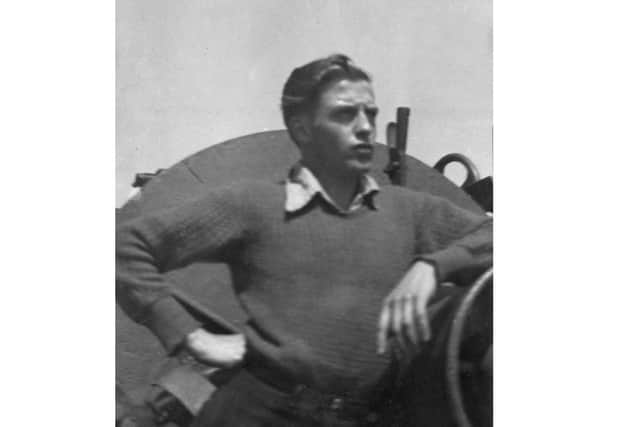

The project came to a significant conclusion recently when the Canadian Casualty Identification Board formally concluded that the recovered remains were indeed those of missing Senior Mess Steward James Willard MacDonald, aged 25.
Mr MacDonald was the Senior Mess Steward with 803 Naval Air Squadron (NAS) who were assigned to the Canadian aircraft carrier HMCS Warrior which was being refurbished in Belfast docks. His squadron was temporarily based at Eglinton Royal Naval Air Station (RNAS) during this refitting.
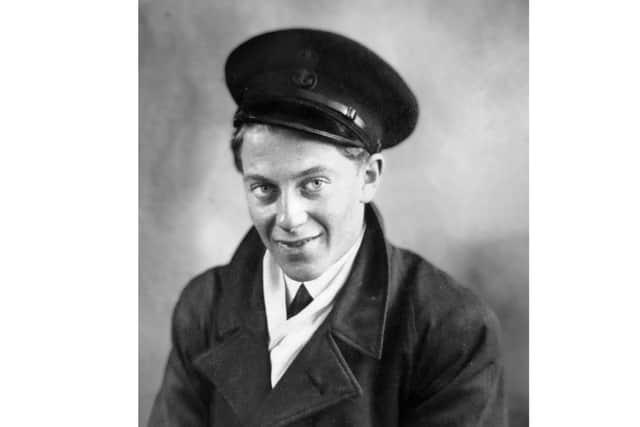
On November 4, 1947, he had been given permission, as non-flying Navy personnel, to go on an air experience flight. A pilot from 825 NAS, who were also based on Warrior and were similarly,temporarily based at Eglinton, took him up in one of their two-seater Fairey Firefly aircraft.
Shortly after noon, the aircraft got into difficulties over Garvagh. Despite urgent instructions by the pilot to bail out, James in the rear seat was totally unfamiliar with the bail out procedure and was unable to take to his parachute. The pilot bailed out successfully shortly before the spinning aircraft dived vertically into a boggy agricultural field.
Local farm workers were quickly on the scene and described a large crater full of liquid mud and surrounded by a few pieces of very twisted wreckage.
Other workers brought the grief-stricken pilot, who had landed a few fields away, to the spot where he urged everyone to dig to try to find James. A determined effort two weeks later by the crash team from RNAS Eglinton also failed to make any serious headway in the difficult digging conditions.
Sadly, James was recorded as ‘Missing - Presumed Killed’ as, in the absence of a body, death could not be absolutely confirmed by the Canadian military. He was commemorated on the Halifax Memorial in Nova Scotia, Canada, which honours over 3,000 Commonwealth sailors and merchant marines from the two World Wars who have no known grave.
In the years after the crash, the Garvagh branch of the Royal British Legion erected a small granite cross close to the impact point and each year have continued to pay their respects at the spot around Remembrance Sunday.
Jonny McNee, who was awarded a British Empire Medal in the King’s 2026 New Year Honours List for voluntary services to military aviation archaeology in Northern Ireland, spent 12 months carefully researching and surveying the site, north east of Garvagh.
Assisted by Dr Alastair Ruffell (QUB), who undertook the Ground Penetrating Radar surveys, and a PSNI PolSa (Police Search Advisor) officer who assisted with additional surveying, the team accurately mapped out the extent of the impact point and the surrounding buried debris field.
They were also joined in these surveys by a dedicated team of pupils from the Foyle College Aviation Team (FCATs) who ensured accurate mapping and plotting was carried out.
The issue of undertaking a licensed mechanised recovery attempt to locate Mr MacDonald was then raised with all the relevant licensing authorities – both in Northern Ireland and within the Ministry of Defence. Discussions then moved up to the Canadian Naval Attache in London.
Six months of further deliberation took place until in December 2025, the Canadian Armed Forces agreed to fund a recovery attempt based on the detailed surveying information that had been provided to them and which set out data on the wreckage depth and soil conditions they were likely to encounter.
The logistics
With official permission secured, Mr McNee had six months to organise all the NI logistics. Greatly supported by the landowner, Ivan McAleese, whose father David had been to the crash site on the day it happened, all the resources were discreetly arranged.
"Given the forensic nature of the project and the likelihood of recovering the aircrafts armament, many sections across the entire NI-based British Armed Forces and PSNI were involved and offered support – either plant operation, logistics supply or expert services and staff,” said Jonny McNee.
"This added a great deal of pressure on the organising team to keep the project discrete and secret. The project started on July 20 and at a depth of approximately 20ft, the main compacted bulk of the aircraft Firefly TW736 was located sitting on solid rock having punched through layers of mud and running sand.
"From within this wreckage, the task of removing the remains of Mr MacDonald was meticulously undertaken by both the Canadian Casualty Identification Team, the Head of Recovery from the Commonwealth War Graves Commission, and officers from the PSNI Disaster Victim Identification team who hand searched every piece of wreckage.”
Working alongside this team, Jonny McNee inspected all wreckage to identify those parts that could be legally used to conclude that this crash site could be none other than Firefly TW 736.
Jonny described working alongside these forensic teams as "an honour and a privilege”.
Mr McNee also thanked those PSNI officers from the Causeway Coast and Glens area who attended the site every night to watch over the remains which were specially stored until they could be finally removed by the NI Coroner when all the wreckage had been declared searched and forensically clear.
The sailor missing on land
The determination by the Canadian Casualty Review Board on Wednesday, November 18, 2026, that the recovered remains were indeed those of James Willard MacDonald now enables the Royal Canadian Navy (RCN) to plan for a full military honours funeral in Northern Ireland.
Next of kin for James were located and have been kept updated throughout the project by the Canadian Armed Forces. They will also be attending the funeral being planned by the RCN for next year.
The entire project has been filmed by the BBC archaeology series ‘Digging for Britian’ and will air early in 2027.
Jonny McNee paid tribute to everyone who respectively and collaboratively participated to ensure James, a WW2 Battle of the Atlantic veteran, could be recovered from this Garvagh field.
Mindful of the 3,000 plus names on the Halifax Memorial in Nova Scotia to missing Commonwealth sailors, Mr McNee added the irony of James being a sailor missing on land drove him and the team on to undertake the project.
"In Waters Deep” by Eileen Mahoney is frequently read at Commonwealth and Naval Remembrance ceremonies: “There are no poppies blooming on the sea, No rows of crosses standing tall and white; Beneath the waves, where restless waters sweep, The young hearts of the brave now sleep”.
Jonny McNee said: “But for us, we had a young sailor who had survived the Battle of the Atlantic and was now serving with his comrades in the early years of peace. His whole life was ahead of him – career and family aspirations.
"And on a day when he had sought to experience the magic of flight, it had tragically gone wrong, and he ended up as a missing sailor, uniquely missing on land and only 20 ft beneath our feet, but thankfully remembered each year by the RBL.
“We just felt we had to try to see if there was a chance that the appropriate authorities would at least consider the notion of undertaking a licensed recovery attempt. And here we are now, delighted he is no longer missing and looking forward to meeting his family relatives and paying our respects at his funeral next year in Northern Ireland.
“He will be buried next year with full Canadian Naval honours 80 years after the crash that took his young life. It has been a long wait for this sailor. Soon he will have peace and fair winds.”