
James McHenry: blue plaque to be unveiled in honour of Ballymena native
James McHenry, the surgeon, soldier and politician who signed the Constitution of the United States in 1787, is to be commemorated with an Ulster History Circle blue plaque in his native Ballymena.
A close friend of George Washington, McHenry (1753-1816) was appointed President Washington’s first Secretary of War.
He was a political ally of Alexander Hamilton, and served as both surgeon and soldier in the American War of Independence.
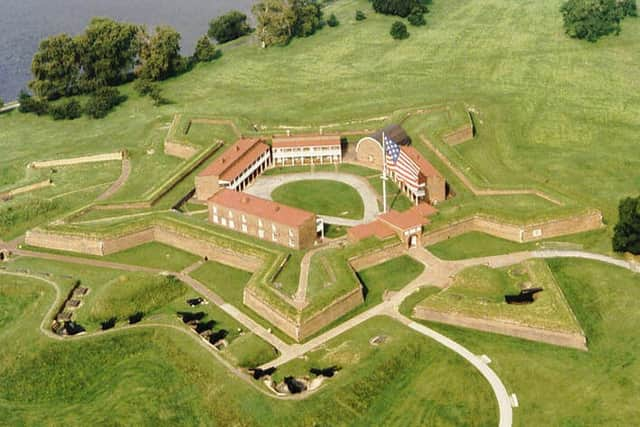
A fort in Baltimore named after him was the inspiration for the U.S. National Anthem.
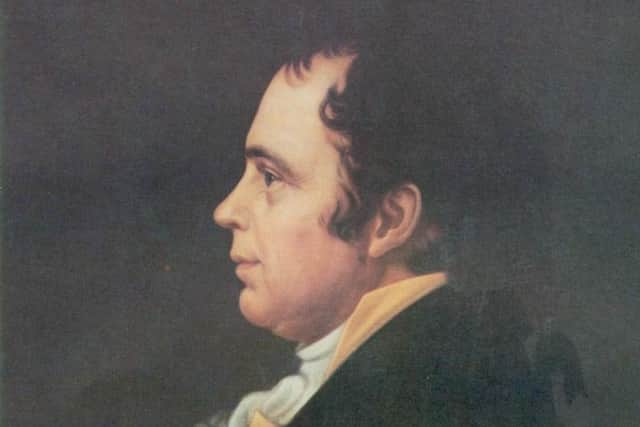

James McHenry was from a Presbyterian family in Ballymena and was educated in Dublin. When he was 18, suffering bouts of ill-health, he sought a new life in America and settled first in Philadelphia, the most important city in the colonies.
He studied medicine and became an apprentice to Benjamin Rush, who was to be one of those who signed the U.S. Declaration of Independence. When the war with the colonial rulers Britain started, McHenry joined Washington’s army. He was captured, and as a doctor as well as a soldier he treated fellow prisoners-of-war while in captivity in New York. He was later released in a prisoner exchange and rejoined the army.
He’d impressed Washington enough for him to make McHenry his assistant secretary – the start of a lifelong friendship.
James McHenry later joined the staff of the Marquis de Lafayette, and was at his side when the French commander’s troops won a famous victory at Yorktown where American independence was finally achieved.
At the end of the war, Washington wrote a letter of recommendation for McHenry. He described him as “a man of letters and abilities, of great integrity, sobriety and prudence…of an amiable temper; very obliging, and of polished manners.”
In 1781 McHenry left the army to pursue a career in politics. He was elected to the senate in Maryland, represented the state in the Constitutional Convention and was one of those who signed the founding document on September 17, 1787.
He was still regularly exchanging letters with his friend Washington, who as President made McHenry Secretary of War, after three others had refused the office.
McHenry reformed and enlarged the army, in spite of conflict with Congress, who saw it as directly opposed to the interests of the people. Eventually James McHenry convinced them a large standing army was vital for the defence of America’s sovereignty.
He continued to serve under the second president, John Adams, but found himself caught between Adams, who was easily angered, and “two domineering generals”- Washington, by then back in the army, and Alexander Hamilton, McHenry’s ally on policy and Adams’ political enemy. Eventually Adams forced McHenry to resign over his loyalty to his friend.
McHenry retired to his estate in Maryland, named “Fayetteville” after the Marquis. He himself had a fort named after him in Baltimore. Fort McHenry was bombarded by the enemy after war with Britain was renewed in 1812. After a successful defence, a large U.S. flag known as the “Star-Spangled Banner” was flown above the fort in triumph. A lawyer named Francis Scott Key was so inspired by what he saw that he wrote the poem which became the lyrics for the national anthem of the United States.
McHenry also had a successful career in business and was a prosperous merchant.
Dr David Hume, historian and author, said: “James McHenry was an outstanding political figure in the early years of the U.S. and someone who connects us to the first President, George Washington, who thought highly of the Ballymena man. It is good that he will be remembered in his native town.
"As was common at the time, he had slaves in his household while declaring his belief in equality of the sexes and the races, highlighting the complexities of the society of his generation. McHenry is in fact defined as supporting gradual emancipation. He unsuccessfully supported a bill in the Maryland Assembly in 1798 to this effect. He also stated publicly that ‘the powers of the mind are disconnected with the colour of the skin’.”
James McHenry and his wife Peggy had five children, only three of whom made it to adulthood. James himself died in May 1816 aged 62. He is buried in Westminster Hall and Burying Ground in Baltimore.
Chris Rendo, U.S. Consul General in Belfast, said: “McHenry’s journey took him from Ulster across the Atlantic, where he played a pivotal role in the founding and early administration of the United States. From serving as a military surgeon during the American War of Independence and a trusted secretary to General George Washington, to signing the United States Constitution and serving as US Secretary of War - a legacy permanently remembered in the naming of Fort McHenry - his life exemplified extraordinary vision and public service.
"This Ulster History Circle blue plaque permanently weaves his legacy back into the physical landscape of his birthplace.”
Chris Spurr, chairman of the Ulster History Circle, added: “James McHenry has the distinction of being not only a Founding Father of the United States but also the sole County Antrim-born delegate to the Constitutional Convention of 1787.
"In this anniversary year of the American Declaration of Independence, the Ulster History Circle is recognising this statesman and surgeon with a blue plaque in his hometown, and the Circle is grateful to the Mid and East Antrim Borough Council America 250 programme for funding the plaque.”
The plaque to James McHenry will be unveiled on Thursday, November 26 2026 at 11.30 am at the Pavilion, People’s Park, Ballymena.