
James Sayers: blue plaque to commemorate north Antrim-born scientist, whose work ranged from developing microwave technology to the Manhattan Project
A pioneering County Antrim scientist who played a crucial role in the development of radar and microwave technology will be commemorated through the latest of the Ulster History Circle’s distinctive blue plaques.
James Sayers, who was born in Corkey, Loughgiel in September 1912, worked in the development of centrimetric radar, now used in microwave ovens.
He also worked on the Manhattan Project, which developed the first nuclear weapons, and was an important member of the team which launched the UK’s first space rocket.
The Sayers family ran the local post office in the rural community of Corkey, with James the eldest of two sons of James Sayers and Rachel (nee Matthews). His younger sister, Dr Dorothy Sayers later became a teacher in Ballycastle High School, while his brother John carried on the family farming tradition.

Interested in science from his boyhood, as a youth he constructed a waterwheel on a small river near the farm to power a dynamo and supply the farm with electricity.
After attending Ballymena Academy, James studied physics at Queen’s University, Belfast. He developed a lifelong interest in negative ions and the ionosphere and after obtaining a MSc in 1935, he continued postgraduate research at St John’s College, Cambridge.
By the summer of 1938, when war seemed imminent, Sayers was one of a large group of scientists who was recruited to work for the Admiralty. His input into the development of radar was a decisive factor in securing the Allied victory in the crucial battle of the Atlantic.
Later, long after the war, the magnetron technology Sayers had pioneered was used in developing the domestic microwave oven.
In 1943, Sayers was seconded with many other British scientists to work in the United States on the top-secret Manhattan Project, developing the atomic bomb. After the war, he returned to Birmingham in 1946 to become professor of electron physics in the university there.
In 1955 he was one of the founding members of a small sub-committee established by the Royal Society, which mapped out the future of British upper atmosphere research, marking the beginning of the UK’s space programme.
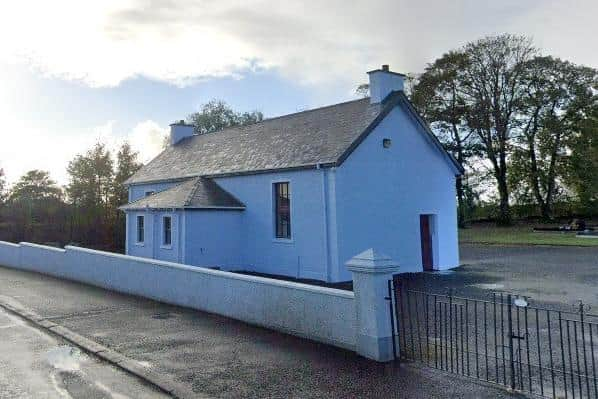
Chris Spurr, Chairman of the Ulster History Circle, said, “James Sayers was a pioneering physicist whose discoveries in the fields of radar and microwave technology have changed the world. The Ulster History Circle is delighted to commemorate this eminent scientist with a blue plaque on the former National School at Ballyweaney. The Circle is grateful to Causeway Coast and Glens Borough Council for their financial support towards the plaque, and to Ballyweaney Presbyterian Church and the Rev Robert Hanna for their kind assistance.”
Retired cleric Rev Robert Hanna, who grew up near the Sayers family, said: “In early life, James Sayers was a neighbour of mine in Corkey. I have long felt that he should be recognised, so I am delighted that this will now be the case.”
The plaque will be unveiled on Thursday, October 17 at 2pm at the former National School next to Ballyweaney Presbyterian Church, located two miles from Cloughmills.