
PSNI officers acted ‘proportionally’ in shooting cows on M1 motorway and on A4 dual carriageway, Police Ombudsman finds
PSNI officers acted ‘proportionally’ in two separate incidents where cattle had to be put down, the Police Ombudsman has found.
The Ombudsman’s office reviewed both cases, which happened in May this year, as police firearms had been discharged.
In the first incident, on May 15, at 4.12pm, police received emergency calls reporting a cow loose on the Old Eglish Road near Dungannon. The animal was heading towards the A4 dual carriageway and described as highly aggressive.
Traffic was halted in both directions, and armed officers deployed alongside eight veterinary professionals. Despite efforts to subdue the animal safely, the most senior vets who attended determined euthanasia was the only viable option due to the cow’s volatility and the risk posed to the public, particularly as motorists had started to get out of their vehicles to observe what was happening.

Following a coordinated assessment, two officers discharged firearms using specialist ammunition, resulting in the humane destruction of the cow near the central reservation of the A4.
Police Ombudsman investigators reviewed body-worn video, footage from police vehicles, and operational logs.
The Police Ombudsman review of evidence concluded PSNI officers carried out the task to protect the public as well as ensuring the animal did not suffer unnecessarily.
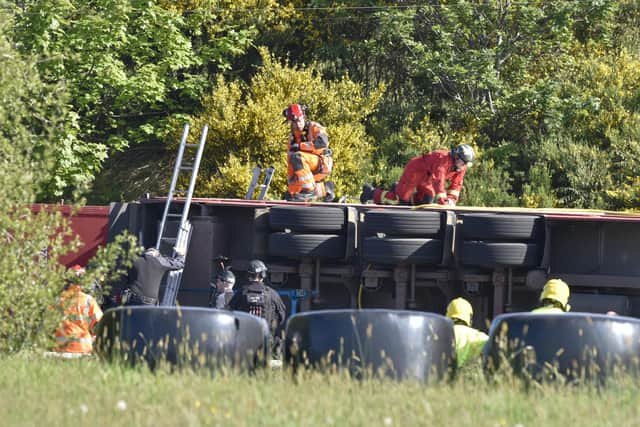
In the second incident, on May 16, at 5.29am, police were alerted to an overturned livestock lorry on the M1 eastbound between Junctions 14 and 13. The driver was reported as ‘walking wounded’ and both lanes were blocked.
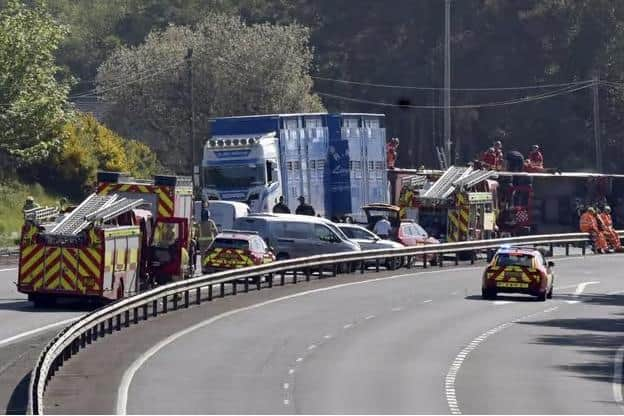
Roads Policing Units, NIAS, and Northern Ireland Fire and Rescue Service (NIFRS) attended the scene. Due to concerns about a potential cattle stampede and possibility of injured animals requiring humane destruction, armed officers were deployed, and a veterinary professional called in.
NIFRS personnel began cutting the roof off the two-deck lorry to extract cattle and the vet identified animals with fractures and unclear conditions. It was decided that if the vet could not use captive bolt euthanasia as she was unable to reach or get close to the animal, armed officers would be authorised to use firearms.
Initial inquires by Police Ombudsman investigators found the lead PSNI officer had consulted with the Department of Agriculture, Environment and Rural Affairs Humane Slaughter Team and it had been agreed the correct procedures had been put in place.
At 9.42am, a specialist firearms PSNI officer euthanised one animal in the lower deck of the trailer that was identified as suffering unnecessarily and could not be reached. The vet also euthanised two further injured animals using the captive bolt method.
By 1.18pm, all livestock were removed from the trailer and armed officers left the scene four minutes later.
The Police Ombudsman’s review concluded no issues of police conduct required further investigation.
Their inquires found that both incidents were appropriately notified under automatic procedures and officers acted in accordance with their training, legal powers, and operational protocols.
The review also found decisions to euthanise animals were made in consultation with veterinary professionals and, were necessary to protect the public and animal welfare.
The use of firearms was ‘proportionate, justified, and executed with care and coordination’.
The Police Ombudsman’s Director of Investigations, Nikki Davis, said the public can be reassured that police officers “acted with compassion while ensuring the safety of the community was protected”.