
Rev Martin Smyth had ‘enormous influence’ in unionism, despite never taking the UUP leadership - Alex Kane
Rev Martin Smyth “exercised enormous influence” in the Ulster Unionist Party – and across unionism generally – a former communications chief has said.
The former South Belfast MP died on Friday aged 94, prompting tributes from former and current politicians. He also served as grand master of the Orange Order during the Troubles, between 1972 and 1998.
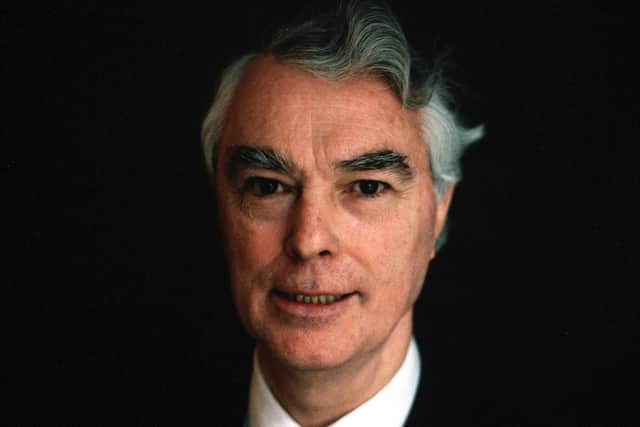

Alex Kane, a former director of communications for the UUP, has described Mr Smyth as an “important and influential politician” – despite never having succeeded in attempts to lead the party.
“Martin Smyth exercised enormous influence in the party, and across unionism and the Orange Order generally”, Mr Kane said.
“He was quietly spoken and lacked charisma, but he was respected, often in the most unexpected quarters.
“As unionism began to collapse, particularly after 1968/9, he veered towards the right of the UUP and aligned himself with William Craig and his Vanguard pressure group (which had links to new-generation loyalist paramilitarism).
“But when Craig left the UUP in 1973—after the UUC endorsed the White Paper which embraced power-sharing and the ‘Irish dimension’—Smyth stayed with the party. It was a wise move politically and strategically.
“Yet the major political step-up for him didn’t come until March 1982, when the won South Belfast in the by-election following Robert Bradford’s murder by the IRA in November 1981”, he said.
“He had hoped to succeed Jim Molyneaux as leader in 1995, but performed very badly on selection night, winning just under 8% of the vote and then eliminated in the first round.
“At 65 he was also too old a successor to Molyneaux, and Trimble secured the backing of the Orange vote after his ‘victory’ at Drumcree. He was opposed to the Good Friday Agreement and played a key role in both the Union Group (an internal UUP opposition) and wider anti-agreement unionism—but again, and unlike many others, didn’t leave the party.
“Although he did challenge Trimble for the leadership in March 2000. He was an important and influential politician, rightly described as a ‘heavyweight’ by Mike Nesbitt”, the former Ulster Unionist spin doctor said.