
Robert Hamill Public Inquiry: Multiple failings by RUC investigation into murder of Portadown man but no collusion
The public inquiry into the murder of Portadown man Robert Hamill found multiple failings in the RUC investigation but found no collusion.
The Inquiry concludes unequivocally that Robert Hamill was murdered. Mr Hamill died after he was beaten and kicked by loyalists in Portadown town centre in 1997.
-


-
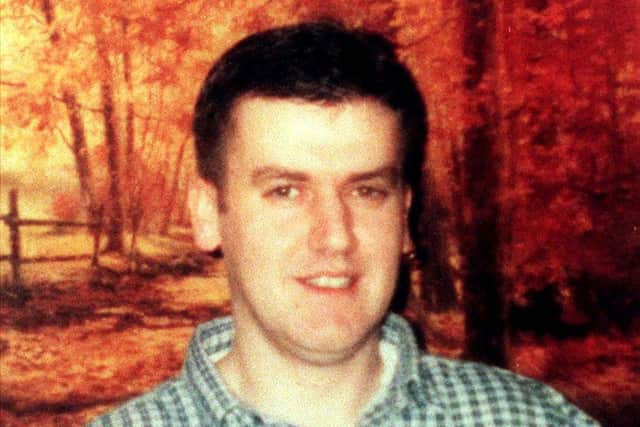
The 25-year-old father, whose partner was expecting their third child when he was murdered, had been attending a function in St Patrick’s Hall in the Co Armagh town on Sunday April 27, 1997. While on his way home, Mr Hamill and a friend were set upon by a gang of loyalists near the Thomas St, Market St junction.
The inquiry found that his fatal brain injuries were directly caused by the assault. It found the injuries were consistent with at least three significant blows to the head, potentially including kicks or stamping while he was on the ground.
Soon after the attack, with tensions high in Portadown, there were claims that officers in a nearby Land Rover did nothing to prevent the attack. There were further claims of police collusion and cover up regarding the investigation into Mr Hamill’s murder.
The Inquiry found that the assault began before the officers got out of the vehicle, but that the officers were not aware Robert Hamill was being attacked because their attention was focused elsewhere.
The Inquiry concluded: "We find that Robert Hamill had been assaulted before the Land Rover officers got out of their vehicle.
"However, they were not aware of the assault and after they had got out of their vehicle, they attempted to restore order.
"They did not in any way condone or collude with attackers."
The Inquiry found there was ‘no wrongful act or omission’ by the RUC that ‘facilitated’ Robert Hamill's death.
However its conclusions regarding the aftermath of the incident are clear in that the Inquiry said police failures obstructed the murder investigation.
The Inquiry identifies a series of wrongful ‘acts and omissions’ that obstructed the investigation.
One of the findings is that a RUC sergeant ‘deliberately withheld’ relevant information about a suspect and therefore ‘deliberately obstructed’ the murder investigation.
That officer also telephoned the suspect’s home. The Inquiry found this warning resulted in that suspect destroying, or putting beyond police reach, the clothes he had been wearing that night.
The Inquiry is also highly critical of Detective Chief Superintendent's handling of the investigation. Among the problems it identifies were failure to keep a policy book; inadequate investigation of the Atkinson tip-off; failure to exploit telephone evidence and timelines; failure to investigate inconsistencies and false accounts properly; inadequate searches, particularly regarding clothing; failure to pursue evidence from officers at the scene; and inadequate management of forensic/scientific evidence.
The then Office of the Director of Public Prosecutions was also criticised for a number of failures.
The Inquiry, held in 2009, ran for 77 days. It was established after years of campaigning by Mr Hamill’s family.
So far no one has been convicted of Mr Hamill’s murder. Three people were convicted of perverting the course of justice – including one RUC reservist.