
'When I contemplate William’s life, I will not dwell on the hard times but remember him for the unique brother he was'
Bestselling author and novelist Christina McKenna has been remembering her recently deceased brother William – “a special Mid Ulster farmer” – who lived his entire life on the family farm near Draperstown.
She writes:
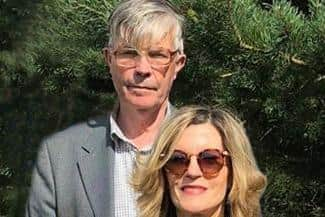

William Vincent was the second-born in our family of nine. Sadly, he was taken from us on August 25th in a sterile hospital room, when the sun shone steady at the window from a brilliant blue-blue sky. He had just turned 78 years and had a lot more living to do.
Like all of us, his sentient life began with the discipline and rigour of schooling. Between the years 1952 and 1964 he attended schools in Maghera and Draperstown, where corporal punishment was the norm and learning took second place.
At sixteen he fell into farming and helping his father on the land, which seemed a natural progression for boys raised in the countryside in those times. The outdoor life suited William. He was hardy and strong, loved animals and being close to nature. He was much happier in the great outdoors than being confined to the airless house, at one with what
Heaney described as “. . . the ground itself . . . black as butter melting and opening underfoot. . . ”
Although William’s schooling was limited, it did not stop him from educating himself, wresting back what was denied him in that terror-filled classroom. He had a keen intelligence and thirst for knowledge, which led him to read widely, particularly in the areas of Irish and European history.
Having acquired such knowledge, however, he did not allow it to lie dormant. He had near-perfect powers of recall and could ably discuss the politics and rationale for this war or that war, throwing out facts, figures and dates with an ease that was enviable. Indeed, in another life he could easily have been a professor at the podium.
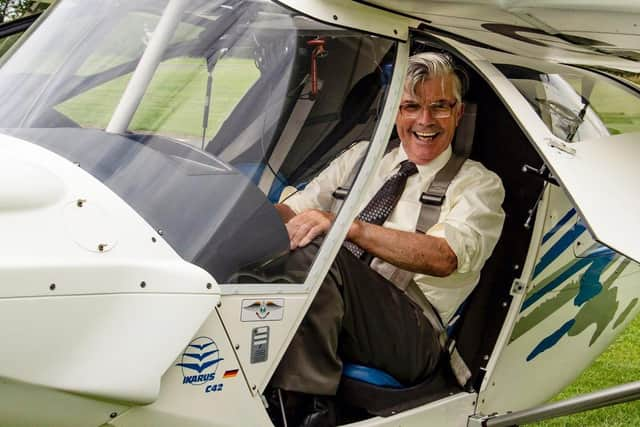
One highlight of William’s life was surely the monumental milestone that was his 70th year. He’d always wanted to fly but was too afraid to board a commercial plane. So, his sisters hit upon the best alternative: a thirty-minute flight on a microlight aircraft with Tandragee Flying School. William was in seventh heaven that day, emerging from the plane after touch-down proclaiming it to be the best birthday present ever.
No crowds or heavy baggage to bother with, just the pilot and himself soaring through the clouds on a windless July day, free as a proverbial bird.
The pilot was mightily impressed also. With mission accomplished, he turned to us and exclaimed, “Well, I learned more about the aeronautics of the Second World War in that half hour than I ever did in the classroom.”
In his farming life, William had little opportunity to travel far from the terrain he knew so well. The fields he walked, the soil he ploughed, the grass he cut and potatoes he pulled from the earth with his bare hands were his reality, his language and his inheritance.
When he passed, and those hands that had done so much finally lay inert and still on the bedsheet, the poetic words of Edmund Spencer seemed a fitting and lasting tribute to all the work he’d done:
“Sleep after toil. Port after stormy seas. . . . Life after death does greatly please.”
When his father died in 1999—a loss he felt keenly—the void thus created gifted him a degree of liberty he hadn’t known before. Finally retired from his years of work, his life became less encumbered and that bit more enjoyable.
He so appreciated having days away. There were outings to Belfast, jaunts to Carlingford and Portstewart—that hallowed seaside resort from his childhood, where the white gulls wheeled above a golden strand, and his man-sized feet now retraced his ten-year old footprints in the sand.
The thrill and pleasure of having meals in restaurants heralded another milestone—meals set before him by strangers—on tables that were nothing like the scrubbed creation his father had hammered together in the 1960s, and which had taken pride of place in our humble home for decades. Now William could eat in quarters that were not the farmhouse kitchen, fumbling with the napkins and settings that were so novel and new.
In closing, when I contemplate William’s life, I will not dwell on the hard times but remember him for the unique brother he was—a man who was able to drag himself from the rubble of a damaged schooling and become a true scholar in his own right—no briefcase and suit to parade his intellect, just his workaday clothes, a tractor, shovel and his wellington boots.
And I’ll remember him through these laudable lines—lines which he’s certainly earned the right to, and which express the true essence of the brother he was:
William, the dedicated worker who always gave of himself.
William, the great communicator who could discuss and recall so much.
William, the avid reader who never tired of the written word.
William, my biggest fan who loved every book I wrote.
William, the unfailing giver who had such a generous heart.
. . . and in his final hour . . . William the fighter, struggling for the breath that would keep him on this Earth—that God-given breath so many of us take for granted every moment of our lives.
So; rest in peace, dear brother. You have gone before the rest of us through that “unknown, remembered gate,” back to the beauty of God’s own realm, which was surely yours before.
Long, long before the trials of this earthly life took hold.