


Of all the men who have served as President of the United States of America, almost half of them (20) could claim some Ulster-Scots heritage.
Among those is Bill Clinton who spoke proudly of his ties on his two visits here in 1995 and 1998 (his ancestors were the Blythe and Ayer families), and many of his predecessors who were also the product of Northern Ireland’s contribution to the American ‘melting pot’.
While many of these Presidents boasted recognisable Ulster-Scots names - Jackson, McKinley, Wilson - others, like Cleveland and one of the two Roosevelts, are less obvious.
Here are the 14 US presidents with roots in Northern Ireland:
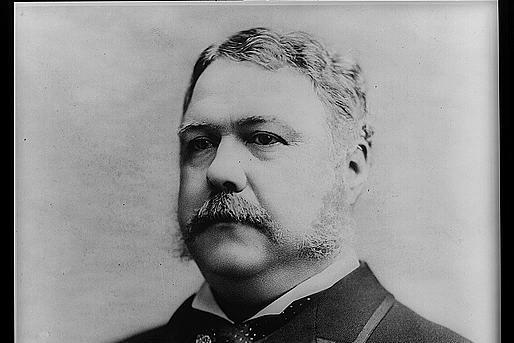
5. Chester A. Arthur (1881-1885)
The 21st President was born at Fairfield, Vermont, in October 1829. His father, the clergyman William Arthur, was born in December 1796 near Cullybackey, County Antrim, He would study at Belfast College (now the RBAI), and emigrated to Quebec, Canada, in 1819 or 1820, before moving to Vermont. Chester, a graduate of Princeton and a lawyer who became a teacher, served as an officer in the New York state militia during the Civil War. He also served as Vice-President for six months to James A. Garfield before Garfield’s assassination in September 1881. In office, he presided over the first significant growth of the U.S. Navy, and significantly restricted immigration - ironic, given the background of most Americans. Today, William Arthur’s cottage has been restored and is open to the public in Cullybackey, complete with an open fire, baking demonstrations, and apple orchard. Photo: Library of Congress
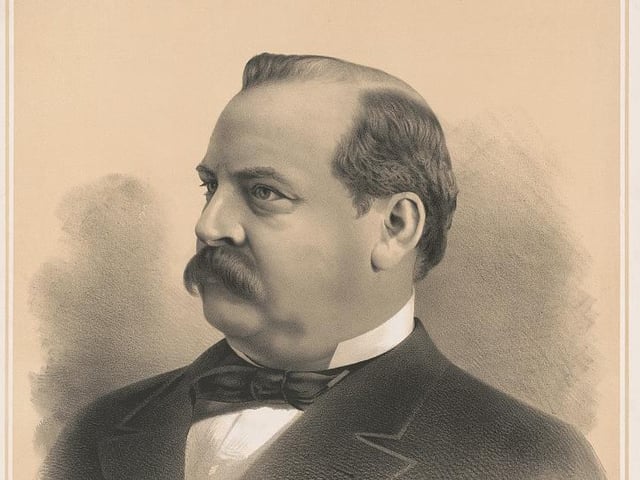
6. Grover Cleveland (1885-1889 & 1893-1897)
The only President to serve two non-consecutive terms was born in March 1837 in Caldwell, New Jersey. His maternal grandfather Abner Neal left Co. Antrim in the late 18th century. A lawyer by profession, Grover would serve as mayor of Buffalo, New York, and Governor of New York before winning the White House. An anti-imperialist who opposed the planned annexation of Hawaii, he intervened in the 1894 Pullman Strike to keep the railroads moving, angering labour unions nationwide. While severely unpopular by the end of his second term, he is today praised for his integrity, honesty, moral code, and effective leadership. Photo: Library of Congress
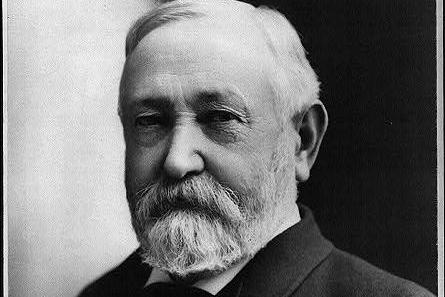
7. Benjamin Harrison (1889-1893)
Born in August 1833 in North Bend, Ohio, and grandson of the 9th President, William Henry Harrison (who died in 30 days), he was related to Ulster emigrants James Irwin and William McDowell. His mother, Elizabeth Irwin Harrison, was raised in Mercersburg, Pennsylvania, a strong Scots-Irish settlement, and his father served in the House of Representatives. Facilitating the creation of the first national parks, he also admitted six new states into the Union, as well as modernising the Navy, and conducting an active foreign policy, threatening war with Chile following an attack on sailors on an American ship. However, his proposals to secure federal education funds as well as the enforcement of voting rights for African-Americans were not successful. Photo: Library of Congress
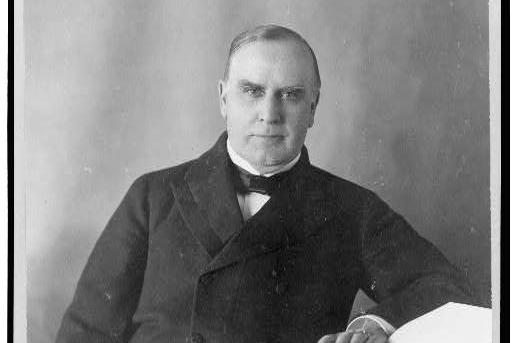
8. William McKinley (1897-1901)
The first American President of the twentieth century was born in January 1843 in Niles, Ohio. His father’s immigrant ancestor was David McKinley, born in the Co. Antrim village of Dervock, and who emigrated from Conagher near Ballymoney around 1743. McKinley’s grandparents fought for the Americans during the Revolutionary War and the family was also involved in iron manufacturing. William had served as a Congressman for 12 years and Governor of Ohio for four. (He was also the last President to see action in the Civil War.) In the White House, McKinley oversaw rapid economic growth, promoting tariffs to protect domestic manufacturers from overseas competition, and introducing the Gold Standard Act. During his presidency, the USA also acquired its first overseas territories; its victory in the brief Spanish-American War of 1898 saw it obtain the Spanish colonies of Puerto Rico, Guam, and the Philippines. The Republic of Hawaii was also annexed that same year. He would be assassinated at the Pan-American Exposition in Buffalo, NY, on 6 Sept 1901, by anarchist Leon Czolgosz. Photo: Library of Congress