


Of all the men who have served as President of the United States of America, almost half of them (20) could claim some Ulster-Scots heritage.
Among those is Bill Clinton who spoke proudly of his ties on his two visits here in 1995 and 1998 (his ancestors were the Blythe and Ayer families), and many of his predecessors who were also the product of Northern Ireland’s contribution to the American ‘melting pot’.
While many of these Presidents boasted recognisable Ulster-Scots names - Jackson, McKinley, Wilson - others, like Cleveland and one of the two Roosevelts, are less obvious.
Here are the 14 US presidents with roots in Northern Ireland:
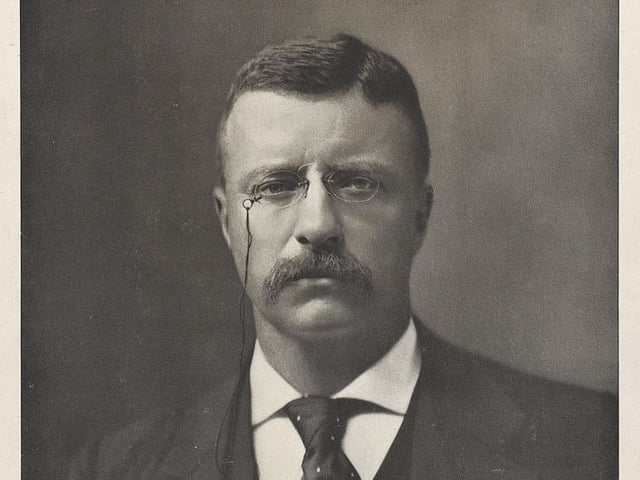
9. Theodore Roosevelt (1901-1909)
Born in New York City in October 1858, this rugged frontiersman, (and the fifth consecutive Chief Executive of Ulster-Scots stock) who maternally descended from Larne, wrote admiringly of the courage and exploits of the ‘stern, virile, bold and hardy’ Ulster-Scots in the American wilderness. East Antrim folklore links him to the Irvines of Carneac near Larne and the Bullochs from the same area. His exploits in leading the Rough Riders in the Spanish-American War, saw him be easily elected Governor of New York in 1898 before becoming McKinley’s Vice President. At 42, he remains the youngest person to hold the office (John Kennedy was the youngest elected, at 43), and immediately pursued what he called the ‘Square Deal’; fairness for all citizens, regulation of railroads, and pure food and drugs. An early advocate for conservationism, he pursued the creation of national parks, forests and monuments to preserve both natural resources and unspoilt beauty. In foreign policy, he supervised construction of the Panama Canal between two oceans, expanded the Navy, and became the first President to win a Nobel Peace Prize in 1906 for his mediation in the Russo-Japanese War. And yes, this was the President whom the teddy bear is named after. Photo: Library of Congress
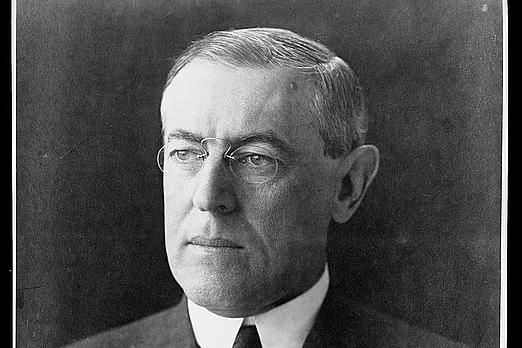
10. Woodrow Wilson (1913-1921)
Born in December 1856 in Staunton, Virginia, Woodrow was the grandson of James Wilson, who emigrated to North Carolina from Dergelt near Strabane, Co. Tyrone, in 1807. A staunch Calvinist, Wilson frequently spoke of his pride in his Ulster-Scots roots. ‘I myself am happy,’ he said, ‘there runs in my veins a very considerable strain of Irish blood, and a Scottish conscience.’ In 1899, while a professor at Princeton, he would visit Ireland, including a stop-over in Belfast, although it is unlikely that he ever visited Strabane. At the outbreak of the First World War in August 1914, he sought American neutrality, being narrowly re-elected in November 1916 on this peace platform, but following unrestricted German submarine warfare against American vessels, he requested Congress to declare war in April 1917 to ‘make the world safe for democracy.’ Leaving military matters to the generals, he instead focused on diplomacy, drafting his ‘Fourteen Points’ which included the principle of national self-determination, free trade, and democracy. Following the Allied victory, Wilson dominated the Paris Peace Conference, successfully creating the League of Nations - but the Republican-controlled U.S. Senate refused to endorse the Versailles peace treaty. Following a devastating stroke in October 1919, power effectively passed to his wife, Edith, who made no significant decisions due to his incapacitation. While his idealism in foreign affairs is to be commended, Wilson must also be criticised for his support for racial segregation, ousting many African-Americans from their government posts, and applauding D.W. Griffith’s The Birth Of A Nation (1915) - which champions the Ku Klux Klan - as ‘like writing history with lightning.’ Photo: Library of Congress
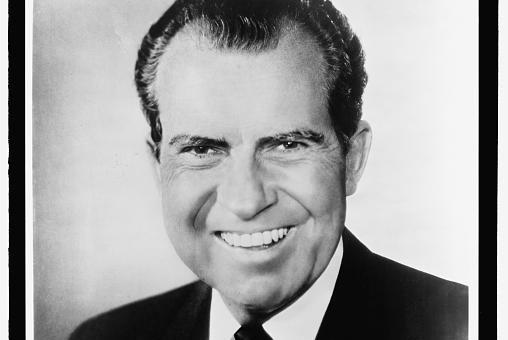
11. Richard Nixon (1969-1974)
Born in the Southern California town of Yorba Linda in January 1913, ‘Tricky Dick’ could claim Irish connections on both sides of his family. His Nixon Presbyterian ancestors left Co. Antrim for North America around 1753, while the Milhouses came from Carrickfergus and Ballymoney, in Co. Antrim. His wife, Pat Ryan, also bore Irish Catholic connections within her family, earning her nickname due to her birthday being 16 March. Outside of Watergate, Nixon remains one of the most controversial Presidents, given his escalation in ending the Vietnam War, spying on domestic political opponents and cracking down on campus protestors. However, any judgement of his character must also include successes alongside failures, such as his pursuing detente with China and the Soviet Union, creating the Environmental Protection Agency, and winning the Space Race through the landing of Apollo 11. He became the first President ever to resign in August 1974, in the face of near-certain impeachment, when it emerged that he had ordered that the FBI’s investigation into the Watergate affair be stopped. His expertise in foreign policy, however, led to a partial rehabilitation of his image before his death in April 1994. Photo: Library of Congress
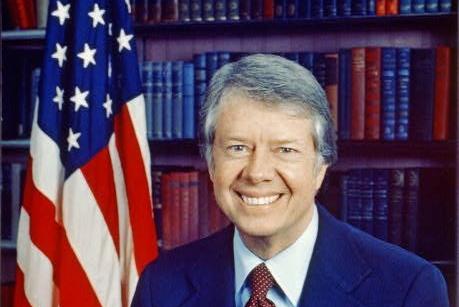
12. Jimmy Carter (1977-1981)
The one-time governor of Georgia, who promised the American people that he would never tell a lie, was born in December 1924 in Plains, Georgia. One of his ancestors, Andrew Cowan, was from Co. Antrim and in 1772 one of the first settlers of Bonnesborough, a frontier buffer zone in the South Carolina Piedmont region. During his single term, he successfully pursued the Camp David Accords between Egypt and Israel and confronted the chronic energy crisis that brought high petrol prices and what Carter called a ‘crisis of confidence’ in the American psyche. After losing the 1980 election in a landslide to Ronald Reagan, Carter became a ceaseless advocate for human rights throughout the world, with his work through the Carter Center earning him a Nobel Peace Prize in 2002. As of October 2023, at 98, he remains the longest-lived President in American history. Photo: Library of Congress