
Magheralin solar farm which 'will power 13,600 homes' given go-ahead by Armagh City, Banbridge and Craigavon planning committee
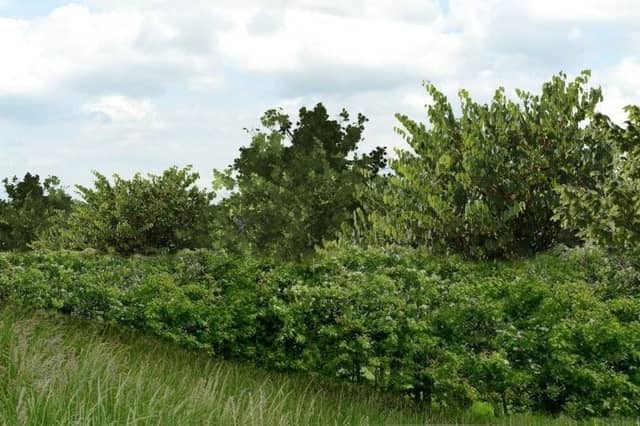

A planning application for a solar farm on lands near Magheralin and Dollingstown has been approved by ABC Planning & Regulatory Services committee members.
Some committee members did call for a site visit ahead of any decision, but were in the minority.
Four parcels of land will be used to accommodate the 29.9MW solar farm, with enough capacity to power 13,600 homes every year, offsetting 18,000 tons of carbon emissions annually.
Sheep will be able to graze underneath the solar panels, as these will be raised to a height of 3 to 3.5 metres.

The planning application was lodged by engineering consultants RPS, Boucher Road, Belfast, on behalf of Rachel Buchanan at RES (Renewable Energy Systems Ltd).
Planning permission was being sought for the installation and operation of a 29.9MW solar farm including photovoltaic panels, mounting frames, transformer/inverter units, and an on-site substation with associated ancillary development.
The proposed lifespan of the solar farm is 40 years.
While planning officers’ recommendation was to approve the application, it was brought in for discussion given its scale and because of some objections.

Letters of objection included one from Carla Lockhart MP, and from nearby residents David Vance and Adrian Lindsay, who were given speaking rights at the meeting.
Two letters of support were also sent to the ABC planning officers, from David Honeyford MLA, and from sustainability specialist Juan Mulder, who works at nearby Huhtamaki Fiber Packaging UK.
Principal planning officer, Sinead McAvoy explained extensive consultation had taken place, adding: “Officers are satisfied any visual and landscape impacts are mitigated through strategic planting and screening.
“The proposal does not affect public access, and land remains in agricultural use, with sheep grazing.
“Officers consider the design to be sensitive to landscape, and the proposal is therefore acceptable in this context.
“The application has been accompanied by an outline Construction Environmental Management Plan, Flood Risk and Drainage Assessment, Ecological Impact Assessment, a Glint and Glare Study, a Landscape and Visual Impact Assessment and Transport Assessment form, an Ecological and Cultural Heritage Assessment, a Design and Access Statement, an Ecological Appraisal, a Shadow Habitat Regulations Assessment, a Noise and Acoustics Assessment, and an Environmental Economic and Environmental Assessment Screening report.
“These documents have been reviewed by officers and the relevant consultees, all of which have raised no objection.
“Six objections and two letters of support were received, and these concerns have been fully appraised.
“Officers consider the Strategic Policy Statement in support for renewable energy, combined with the absence of significant adverse effects, weigh in favour of this proposal.
“There are four parcels distributed throughout the countryside.
“The PV modules are 3.5m in height, however in parcels A1 and 4, these are reduced to three metres in height, and that was due to some concerns expressed by objectors and Historic Environment Division.
“Underneath that, the land and agriculture use [can be maintained], where sheep can graze within these and underneath them.
“There’s a comprehensive mitigation plan, broken down into different parcels. The landscaping scheme will mitigate any impacts as regards to glare, glint or visual impacts from any roads or with sensitive receptors.
“If you look hard enough, you will be able to see the top of the panels, but the mitigation will ensure that it will not have a significant adverse impact.
“The view from the Drumlin Road, to the south of parcel 4, is quite open. We expressed some concern [for motorists] travelling on that road and we wanted the panels set back off that road, [with] landscaping from day one.”
David Lindsay, who lives on the Dromore Road, was given one minute and 30 seconds to outline his issues with the proposal.
He stated his bungalow “overlooks that big 40-acre field”.
"Initially, RES were going to put in panels 32 metres from our hedgerow. They came out and they agreed it was much too close. So they’ve [decided on] 78.8m. Some places here you could throw a stone 78.8 m.”
Mr Lindsay also claimed the proposed separation distance between the solar panels and his home was in breach of the company’s own recommendations.
He stated: “The study by RES recommends that no dwelling should be within 1,000 metres from any dwelling. That’s their own study that they commissioned, and that’s what their recommendation is. But yet they’re going to come in here and say 78 metres is sufficient. The World Health Organisation recommends two kilometres. We have been back and forward here to RES, and there’s no communication with them.
“Visual impact is very important. I can’t stop the height of our house overlooking this sloped field and all these panels. They talk about 4.5-metre trees going in to hide this. It’ll hide the first two or three rows perhaps, it won’t hide anything else.”
It was then Mr Vance’s turn to speak for 90 seconds on the application.
He stated: “We all support clean energy, but this project, in my opinion, comes at much too high a cost to our community, the environment, and the future.
“Three critical reasons why I don’t think you should allow this to proceed. First of all, this development, as relating to parcel 4 in particular, will devastate the landscape.
“It’s possibly the largest rolling field in this whole council area, and that’s what’s going to be paved over. It’s an eyesore. I believe it risks violating planning policies that protect our country’s visual amenity. So, we shouldn’t sacrifice that.
“Second, the ecological impact. Again, we’ve heard from the solar farm company their mitigation plans, which seem to me vague at best, regardless of what others say.
“And thirdly, and importantly, this will rob us of valuable agricultural land. I’ve lived opposite this site for 30 years. I’ve never seen sheep graze in it yet. So, it’s quite interesting that that’s how they get over the fact that they’re actually potentially damaging what should be a priority for us all, and that is agricultural land.